The air in the control room tasted of stale coffee and ozone. Screens flickered with endless streams of telemetry, painting the faces of men and women in pale, erratic hues of blue and amber. They watched the dots move.
Miles away, across an ocean carved up by ancient rivalries and modern ambition, the horizon split open.
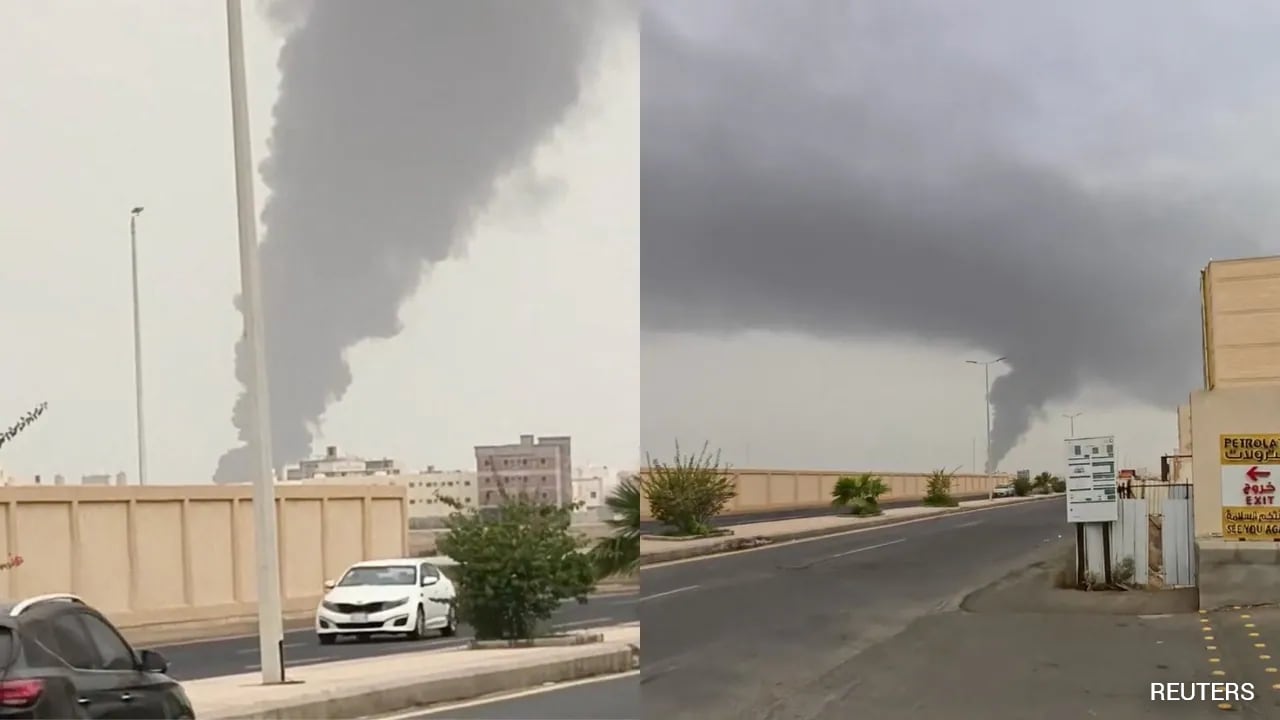
Smoke billowed over a Saudi oil facility, a jagged plume of black that choked the desert stars. It was not merely a physical structure burning; it was a pulse in the global economy catching fire. Every valve, every pipe, every gallon of crude processed in those sprawling complexes represents the unseen grease that keeps modern life spinning. When a Houthi drone finds its mark, the shockwaves travel far beyond the sands of the Arabian Peninsula. They reach the gas pump down your street. They reach the shipping lanes of the Mediterranean. They reach the quiet panic of a family budgeting for winter heating.
And then, the world held its breath for the response.
We are conditioned to expect the thunderclap. Decades of geopolitical theatre have taught us that when a strike lands, a counter-strike follows with the inevitability of gravity. The math of deterrence is supposed to be simple. You hit us, we turn your infrastructure to dust.
Except this time, the machinery of war jammed. Not because it was broken, but because someone, somewhere in the labyrinth of Washington, decided to pull his foot off the accelerator.
For the first time in two weeks of rising fury, the United States stayed its hand.
Consider the weight of that restraint. It is easy to view statecraft from a distance as a game of chess played by emotionless grandmasters. It is not. It is a room full of tired people staring at a blinking red light, knowing that pressing the button might unleash a chain reaction nobody can stop.
Imagine standing on a deck during a storm, knuckles white against the railing, watching a massive wave rise toward the hull. Every instinct screams to turn hard, to fight the water, to strike back at the sea. But the captain looks at the compass, looks at the fuel reserves, and chooses to ride the trough instead. It feels like cowardice to the untrained eye. It feels like weakness.
It is often the hardest form of courage.
The strike on the Saudi oil site was a message written in fire. The restraint shown in the days that followed was a message written in ink. Both were read very carefully in Tehran, in Riyadh, and in capitals across Europe.
We forget how fragile the architecture of peace actually is. We treat global stability like a concrete foundation, something poured decades ago that will support our weight forever. But it is closer to a house of cards built on a windy beach. Every missile launch, every drone buzz, every diplomatic hesitation pulls out another card.
When the dust settled over the burning refinery, no retaliatory bombs fell from American jets. The immediate crisis did not end with a glorious victory or a decisive defeat. It ended with silence. A heavy, pregnant silence that left diplomats scrambling, analysts guessing, and ordinary people to wonder if the storm had passed or merely paused to catch its breath.
That is the hidden reality of modern conflict. It rarely ends with a definitive period. It stutters. It lingers in the margins. It forces us to live in the space between what could happen and what we choose to do.
The fires in the desert eventually died down. The repairs began. The tankers kept moving, for now. But the memory of that hesitation remains, hanging in the air like smoke long after the flames have gone out.