The coffee in the paper cup had gone cold hours ago, but Mikhail didn't drink it anyway. He stared through the double-pane glass of his nineteenth-floor kitchen window, watching the jagged silhouette of the capital dissolve into the slate-gray predawn. Moscow was a city of millions, humming with late-night delivery vans, glowing digital billboards, and the quiet, steady rhythm of refrigerators and central heating.
Then, the air changed.
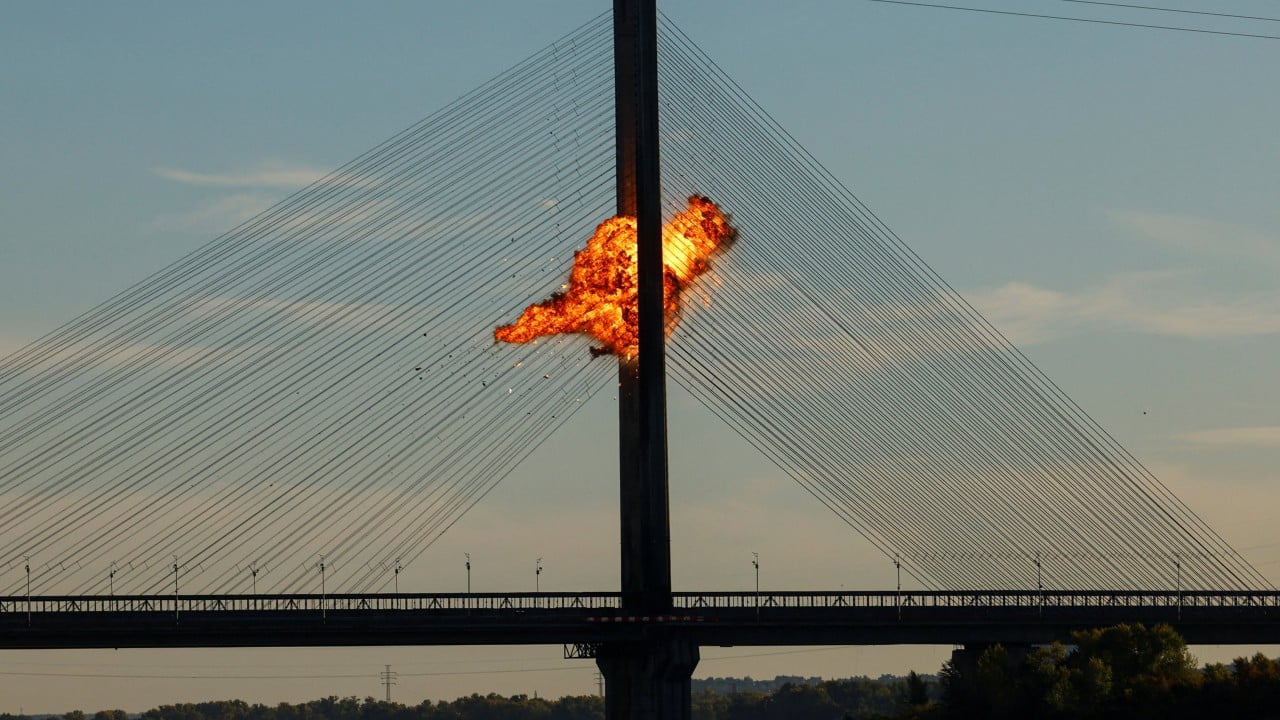
It was not a sound you heard with your ears first. It was a pressure in the chest, a sudden, heavy drop in barometric weight that made the hair on the back of your arms stand up. A low, angry buzz—like an enraged hornet the size of a tractor—tore across the low clouds. A flash of orange bloomed against the horizon, followed a heartbeat later by a concussion wave that rattled the windowpanes in their wooden frames.
Mikhail didn't flinch. That was the terrible thing about living through history: you learn the choreography of survival too well. He simply set his cup down, walked over to check if his daughter was still sleeping down the hall, and wondered, not for the first time, how a sky so vast had become so narrow.
Across the border, hundreds of miles away in a damp, dimly lit basement bunker smelling of damp earth and diesel exhaust, another man was watching a flickering green monitor. Oleksandr traced the contour of a plastic map with a calloused thumb. He hadn't slept in thirty-six hours. On his screen, digital blips flickered like dying stars. Six hundred and fifty. That was the number whispered through the encrypted radio channels. Six hundred and fifty low-flying metal birds, programmed with cold mathematics and algorithmic ruthlessness, carving paths through the dark toward the heart of the Russian Federation.
War had long since ceased to be an abstract debate about geopolitics. It had become an engineering problem of distance, mass, and combustion.
To understand what happened on that singular night when six hundred and fifty drones converged on the Moscow region, you have to strip away the sanitized terminology of military briefings. You have to look at the geometry of modern escalation. For months, the cadence of the conflict had settled into a grim, grinding routine. Artillery dueled in the muddy eastern tree lines; missile salvos struck power substations and apartment blocks with monotonous cruelty. Both sides had realized an uncomfortable truth: small tactical breakthroughs were no longer winning the war. To break the stalemate, you had to strike at the psychological center of gravity.
For Moscow, that meant piercing an air defense network designed during the Cold War to repel strategic bombers, not swarms of commercially engineered quadcopters and fixed-wing kamikaze drones assembled from off-the-shelf electronics.
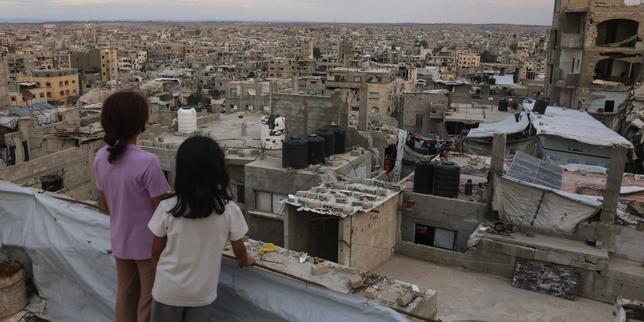
Consider what happens when a modern metropolis becomes a frontline.
The air defense systems—Pantsir batteries tucked into the forested outskirts, electronic jamming stations humming with invisible pulses of radio frequency—do not sleep. When the radar picks up the incoming swarm, the response is immediate, violent, and chaotic. Tracer fire stitches the night sky with molten red ribbons. Shrapnel falls like lethal hail onto suburban dachas, parked cars, and empty asphalt parking lots. Flights at Domodedovo and Sheremetyevo airports are grounded instantly, planes frozen on the tarmac with passengers trapped inside, staring out at a sky choked with smoke and intercepted fire.
In the villages ringing the capital, like Ramenskoye, residents woke to the shattering roar of windows blowing inward. Elena, a retired schoolteacher whose balcony overlooked a birch grove, described the sound as resembling tearing tin. A stray drone, deflected by electronic warfare systems, had lost its guidance link and slammed into the corner of a high-rise residential building, tearing a jagged orange wound into the concrete facade.
"You think you are far away," Elena would later tell anyone who listened, her hands trembling as she swept up shards of glass from her living room floor. "You read the news from the front lines, and you think the map protects you. But the sky has no walls."
That is the hidden cost of escalation. When both sides step up strikes, the buffer zones evaporate.
For months, Ukrainian strategists had faced an unyielding mathematical reality. Russia possessed a deeper reservoir of manpower, a vast industrial base churning out glide bombs, and an economy insulated by energy revenues. To shift the calculus, Kyiv had to bring the war home to the Russian populace. Not merely as a headline on an evening news broadcast, but as an immediate, physical reality. By launching waves of long-range loitering munitions—some flying hundreds of miles on pre-programmed coordinates—they sought to puncture the illusion of normalcy that Moscow's leadership had carefully cultivated.
Yet, military escalation is a dual-edged blade. Every action generates an immediate, compounding reaction.
When you test the perimeter of a superpower's capital, you do not induce a revolution; you harden resolve. You give the state apparatus the exact justification it needs to tighten control, mobilize resources, and accelerate its own counter-strikes. Within hours of the drone barrage, the retaliatory machinery across the border spun into overdrive. Sirens wailed in Kyiv, Kharkiv, and Odesa. More power plants went dark. More civilian apartments absorbed the kinetic debt of the night's raid.
It is a vicious, self-sustaining loop. One side strikes to prove invulnerability is a myth; the other strikes back to prove punishment is absolute.
We often talk about war as a clash of nations, but it is experienced entirely by individuals. It is Mikhail standing in his kitchen, calculating whether the glass will hold. It is Oleksandr in the damp bunker, watching a green dot vanish from his monitor, knowing that vanishing act represents a village incinerated or a target missed. It is the mechanic working through the freezing rain to patch a launch rail, and the babushka in a provincial town wrapping her remaining canned goods in blankets.
The numbers—650 drones, dozens of interceptions, miles of charred earth—are merely the skeleton of the story. The flesh and blood are found in the silence that follows the explosions.
When the sun finally crested the horizon over Moscow that morning, burning away the autumn haze, the city looked remarkably normal from above. The metro trains ran on time. Pedestrians hurried past kiosks selling hot coffee and newspapers. But beneath the surface, something fundamental had fractured. The invisible barrier separating the front line from the heartland had dissolved permanently.
There is no safe room left in the modern world. There is only the waiting, the watching of the radar screens, and the quiet, heavy realization that the sky can fall at any moment.