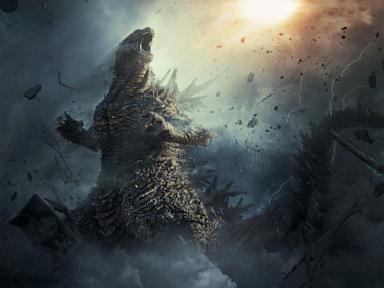
The sticky floor of a downtown multiplex on a Friday night smells like burnt butter, stale carpet, and low expectations. For years, if you walked into a theater showing a foreign-language film in North America, you could practically hear the echo of your own footsteps. You picked any seat you wanted. You stretched your legs across the empty vinyl chairs beside you, bracing yourself for a quiet, polite evening shared with maybe six other cinephiles who didn't mind reading white text at the bottom of the frame.
Then came the roar.
It didn't just rattle the armrests; it shook the foundation of how studio executives calculate risk. When Godzilla Minus Zero tore through the domestic box office to claim a record-setting $31.6 million opening weekend, the spreadsheets in Burbank and Culver City suddenly looked like relics from a dead civilization. Trade publications immediately reached for their favorite box-office verbs—stomps, crushes, devours—reducing a seismic cultural shift into a tidy afternoon headline.
But numbers on a balance sheet are cold things. They don't capture the feeling of sitting in a packed, sold-out IMAX auditorium in Ohio or Texas, surrounded by four hundred strangers holding their breath in unison while actors speak Japanese on a sixty-foot screen. To understand what that $31.6 million actually means, you have to look past the ledger and examine the quiet desperation of an industry that forgot how to make people care.
The Arithmetic of Doubt
Consider a hypothetical studio executive—let's call him Arthur—sitting in a glass-walled conference room three years ago. Arthur's job isn't to love movies; his job is to protect a nine-figure marketing budget from catastrophic failure. If you had pitched Arthur on a foreign-language sequel to a Japanese period piece, backed by a modest production budget and zero English dubbing in its primary theatrical rollout, Arthur would have smiled politely and offered you a bottled water.
In Arthur's world, subtitles were a ceiling. A hard, impenetrable glass lid sitting somewhere around ten or fifteen million dollars for the entire theatrical run. American audiences, the conventional wisdom dictated, were lazy. They wanted spectacle delivered straight to their retinas without the friction of translation, preferably anchored by a recognizable intellectual property wearing spandex or driving a fast car.
Hollywood spent the last decade building an assembly line based on that exact assumption. Budgets swelled to $250 million, then $300 million. Scripts were sanded down by committees until every sharp edge—every ounce of genuine grief, cultural specificity, or moral ambiguity—had been buffed into a smooth, globally digestible paste. The result was predictable. Audiences didn't get angry; they just stopped showing up. They stayed on their couches, scrolling endlessly through streaming menus, waiting forty-five days for the latest algorithmic blockbuster to arrive for free.
I remember sitting in a half-empty theater two summers ago watching one of those $250 million spectacles. Forty minutes in, a city collapsed on screen. Skyscrapers folded like wet cardboard. Thousands of digital people ran in digital panic. And the guy sitting two rows ahead of me checked his fantasy football score on his phone, the blue light illuminating his bored face. Nobody felt anything because nothing on that screen had any weight.
Why Minus Zero Felt Heavy
Godzilla Minus Zero succeeded because it refused to weigh nothing.
Coming off the unexpected triumph of Godzilla Minus One—which shocked the industry by grossing over $56 million domestically and taking home an Academy Award for Visual Effects on a budget smaller than the catering bill for most Marvel movies—expectations for the follow-up were dangerously high. Sequels are where magic usually goes to die. They tend to inflate the spectacle while hollowing out the soul, trading human vulnerability for louder explosions.
Director Takashi Yamazaki and the team at Toho did the opposite. They doubled down on the dirt under the fingernails.
To understand why audiences turned out in record numbers—pushing the opening weekend past the $31.6 million mark and shattering the domestic debut record for a live-action Japanese film—you have to look at what happens between the monster attacks. In most Western kaiju films, the human characters are administrative hurdles. They exist to stand in subterranean command centers, point at glowing radar screens, and explain the plot until the giant lizard punches the giant ape. You endure the talking to get to the fighting.
In Yamazaki's hands, the talking is the fighting. The monster isn't a cool action figure; it is a walking trauma, a physical manifestation of survivor's guilt, post-war devastation, and the terror of a future nobody knows how to rebuild. When the dorsal fins begin to glow with that eerie, cobalt blue light, your stomach drops not because you want to see a building blow up, but because you desperately want the people on the ground to survive. You know their names. You know what they lost. You know how hard they fought just to afford a roof that doesn't leak.
Silence. That is the secret weapon of the film. Not the deafening bass of the atomic breath, though that nearly rattled the fillings out of my teeth on opening night, but the agonizing quiet that precedes it.
The Myth of the "Niche" Audience
Box office analysts love to categorize moviegoers into neat demographic boxes. There is the four-quadrant family audience, the horror crowd, the prestige arthouse voter, and the comic-book faithful. For decades, international cinema was quarantined inside the arthouse box—a prestigious little corner reserved for coastal cities and university towns.
The $31.6 million debut of Godzilla Minus Zero blew the walls off that quarantine.
Look at where the tickets were sold. Yes, Los Angeles and New York posted massive numbers, as they always do. But the real story unfolded in suburban multiplexes across the Midwest, the South, and the Mountain West. Teenagers who grew up watching anime with subtitles didn't blink at reading Japanese dialogue. Older moviegoers, starved for classical, character-driven melodrama that takes its stakes seriously, found a throwback to the golden era of disaster cinema. Sci-fi fans marveled at visual effects crafted by a lean, fiercely dedicated team of artists who treated every frame like a painting rather than an outsourced line item.
Let's be honest about something that makes studio marketers deeply uncomfortable: audiences don't care about language anymore. They care about sincerity.
We live in an era saturated with irony. Every modern blockbuster seems terrified of its own premise, constantly pausing the action so a quippy protagonist can wink at the camera and assure the audience that nobody is taking this too seriously. It is a defense mechanism. If you mock yourself first, the internet can't hurt you.
Godzilla Minus Zero never winks. Not once. It plays every tear, every trembling hand, and every desperate sacrifice completely straight. When a character stands in the wreckage of their life and screams at the sky, the camera doesn't cut away to a comic-relief sidekick making a joke about property insurance. It stays right there in the mud. And in a culture starving for earnestness, that refusal to flinch feels revolutionary.
What $31.6 Million Really Buys
If you look closely at the economics behind this opening weekend, the implications for the broader entertainment business become almost dizzying.
Consider the math. A typical Hollywood tentpole needs to clear $600 million or $700 million worldwide just to break even once you factor in production costs, reshoots, global marketing campaigns, and the exhibitor cut. Because the financial margin for error is razor-thin, every creative decision is governed by fear. Risk becomes fatal.
Now flip the equation. Toho operates on a fundamentally different model—one built on fiscal discipline, tight creative control, and a refusal to throw money at problems that can be solved with better storytelling. When a film made for a fraction of a standard studio budget opens to $31.6 million in North America alone—before even accounting for its massive domestic haul in Japan and theatrical rollouts across Europe and Latin America—it isn't just profitable. It is a cash-generating juggernaut.
Imagine being a young filmmaker walking into a pitch meeting next Monday morning. For ten years, you've been told that mid-budget, earnest, visually ambitious storytelling is dead in theaters—that it belongs on a streaming platform where it will disappear into a content carousel by Tuesday afternoon. Suddenly, you have a weapon. You can slide a single sheet of paper across the mahogany table with one number printed in bold type: $31,600,000.
You can look the executives in the eye and say, People will leave their houses. They will pay eighteen dollars for a ticket and twelve dollars for popcorn. They will read subtitles in the dark. You just have to give them something worth feeling.
The Illusion of Safety
Of course, Hollywood has a long, storied history of learning the exact wrong lessons from unexpected hits.
When Jaws reinvented the summer blockbuster in 1975, studios didn't walk away thinking, We should hire visionary young directors to craft tight, character-driven suspense stories where you barely see the monster. They walked away thinking, We need more giant killer animals. Within three years, theaters were flooded with cheap knockoffs featuring killer bears, killer bees, killer piranhas, and killer orcas.
The danger now is that executives will look at Godzilla Minus Zero and conclude that audiences simply want more giant monsters, or that every studio needs to scramble for Japanese intellectual property to strip-mine for Western remakes. They will miss the heart of the machine entirely. They will copy the chassis and leave the engine sitting on the garage floor.
Because the magic wasn't the radioactive dinosaur. It was the conviction.
You can feel when a movie was made by people who had something burning inside them versus a movie made by people trying to hit a quarterly earnings target. You feel it in the pacing of a scene. You feel it in the way light hits a character's face in a cramped wooden room. You feel it in the restraint of an editor who knows that holding on a grieving expression for three extra seconds hurts more than a hundred explosions.
I sat in my car in the theater parking lot for ten minutes after the credits rolled on Godzilla Minus Zero. Around me, headlights flickered on. Tailpipes puffed white exhaust into the cool night air. People weren't rushing to their cars checking their notifications or complaining about pacing issues. Small clusters of friends stood by their trunks, gesturing wildly, replaying scenes with their hands, their voices tight with the kind of breathless excitement you usually only hear outside a stadium after an overtime victory.
Nobody was talking about box office records. Nobody was analyzing foreign-language market penetration or post-pandemic theatrical recovery curves. They were talking about the characters. They were debating the ending. They were wiping away stray tears while laughing at how completely a giant rubber-suit legacy had just broken their hearts.
Inside the lobby, a teenager in a faded hoodie stopped in front of the glowing cardboard standee for the film, pulled out his phone, and snapped a photo of the monster towering over a ruined city. Then he turned around, walked back toward the ticket counter, and bought another seat for the late show.