The ink on a treaty doesn't smell like peace. It smells like cheap copier toner and stale coffee room air.
For three decades, a microscopic tear in the fabric of global geometry sat precisely where the borders of Iran, Pakistan, and the interests of the United States collided. If you lived in Islamabad, Washington, or Tehran, you grew up expecting the low-frequency hum of anxiety to eventually turn into a roar.
Then came a Tuesday night that felt exactly like every other Tuesday night, until the tickers changed.
The announcement was stripped of poetry. The United States and Pakistan jointly declared that a comprehensive peace deal with Iran was not just negotiated, not just progressing, but complete. Done. Finished. The word itself carries a strange weight in diplomacy. It implies an ending, but for the people who actually have to live inside the geography of the map, it is a sudden, blinding beginning.
Consider a woman named Farida. She is hypothetical, but her kitchen in a quiet neighborhood of Isfahan is real enough. For twelve years, her daily economy has been dictated by the brutal arithmetic of international sanctions. When the price of basic medicine spikes because of banking restrictions half a world away, it isn't an abstract policy debate. It is a headache behind the eyes. It is the calculation of whether to buy meat or fuel.
When news of the accord broke, Farida did what most people do when history moves beneath their feet. She didn't celebrate. She looked out the window at the traffic below and wondered if the price of bread would drop by morning.
The Weight of an Open Border
The mechanics of this trilateral breakthrough rely on a precarious alignment of three wildly different national egos. For Washington, the deal represents a calculated pivot away from forty years of ideological frost. For Islamabad, it is a breath of oxygen into a regional economy that has been choked by proxy anxieties. For Tehran, it is a door opening after a long stay in a dark room.
But look closer at the map. The real story isn't in the capital cities. It is along the Balochistan border, a sun-bleached expanse of rock and dust where smugglers and soldiers have played a lethal game of hide-and-seek for generations.
Historically, this border wasn't a line on a map; it was a wound. Pakistan and Iran share over nine hundred kilometers of frontier. For years, that space was filled with the smoke of cross-border skirmishes, insurgent hideouts, and the mutual suspicion that the other side was secretly pulling the strings of regional instability. The United States, operating from a distance but with massive financial and military leverage, viewed this entire corridor as a fault line.
To bridge that gap required more than just compromised percentages on uranium enrichment or tariff agreements. It required an admission that the old way of doing business—isolation, threat, retaliation—had yielded nothing but exhausted populations and bloated defense budgets.
The mathematics of the deal are intricate. It unfreezes assets that have been locked in western banks since the generation before last. It establishes a joint security framework along the Pakistani-Iranian border, turning a zone of conflict into a zone of shared policing. Most importantly, it creates a legal mechanism for trade that bypasses the complex web of secondary sanctions that previously turned every regional business transaction into a federal crime.
The Ghost in the Briefing Room
To understand how we arrived at this point, we have to acknowledge the skepticism that sits like a heavy coat on the shoulders of anyone who has followed Middle Eastern politics. Agreements are made to be broken. That is the consensus of the cynical, and usually, the cynical are right.
The doubt is justified. We have seen grand bargains collapse under the weight of a single stray drone or a change in administration. Why should this one be different?
The answer lies in necessity, not altruism. None of the leaders who signed this document did so because they suddenly developed a deep affection for their adversaries. They did it because the status quo became more expensive than the alternative.
For Pakistan, an economy teetering on the edge of structural collapse could no longer afford a hostile neighbor to the west while maintaining its permanent vigilance to the east. For the United States, the strategic calculation shifted; maintaining an endless, resource-draining embargo on a nation of eighty-five million people ceased to serve a clear geopolitical purpose in a world where larger, more complex challenges were mounting elsewhere.
Think of a three-legged stool. If one leg shortens, the whole structure tilts. For forty years, the United States tried to balance the stool while kicking one of the legs. This agreement is the realization that the stool only stands when all three points touch the ground, however unevenly.
The Language of the Unseen
The true test of this deal won't be found in the press releases issued by the State Department or the official statements broadcast on Iranian state television. It will be found in the mundane realities of the coming months.
It will be found in the resumption of train service between Quetta and Zahedan.
It will be found in the eyes of international investors who have spent decades looking at Iran as a forbidden zone, a country with the world's second-largest gas reserves and a highly educated young population, entirely cut off from the global nervous system.
It is easy to get lost in the vocabulary of international relations—terms like strategic autonomy, multilateral verification, and diplomatic frameworks. But those words are just scaffolding. They hide the human reality underneath.
The human reality is that when a country is isolated, its people turn inward. They grow suspicious. The regime grows harsher because threat justifies control. By removing the external threat, or at least formalizing its reduction, the internal dynamic changes. The justification for emergency measures begins to erode.
This is the hidden gamble of the treaty. It isn't just about stopping a war; it is about changing the weather inside these countries.
The Long Road to Tuesday
The negotiations didn't happen in a vacuum. They were preceded by two years of quiet, agonizing backchannel meetings in neutral cities—places like Muscat and Geneva, where diplomats met in hotels under assumed names, drinking bad tea and arguing over the placement of single commas in paragraphs that threatened to derail the entire future of the region.
There were moments when the talks simply stopped. Weeks would pass where the parties refused to look at each other. The public face of the nations remained defiant, promising fire and fury, while behind closed doors, mid-level bureaucrats worked through spreadsheets of trade data, trying to find a compromise that would allow everyone to return home claiming victory.
That is the art of the deal that nobody writes songs about. It is the tedious work of face-saving. For the United States to sign, Iran had to offer verifiable concessions on its regional influence. For Iran to sign, the United States had to provide ironclad guarantees that the economic relief would be real and immediate. For Pakistan, the role was that of the indispensable bridge—the neighbor that could talk to both sides when neither side wanted to be seen talking to the other.
The result is a document that satisfies no one completely, which is precisely why it has a chance to survive.
The Shadow of Tomorrow
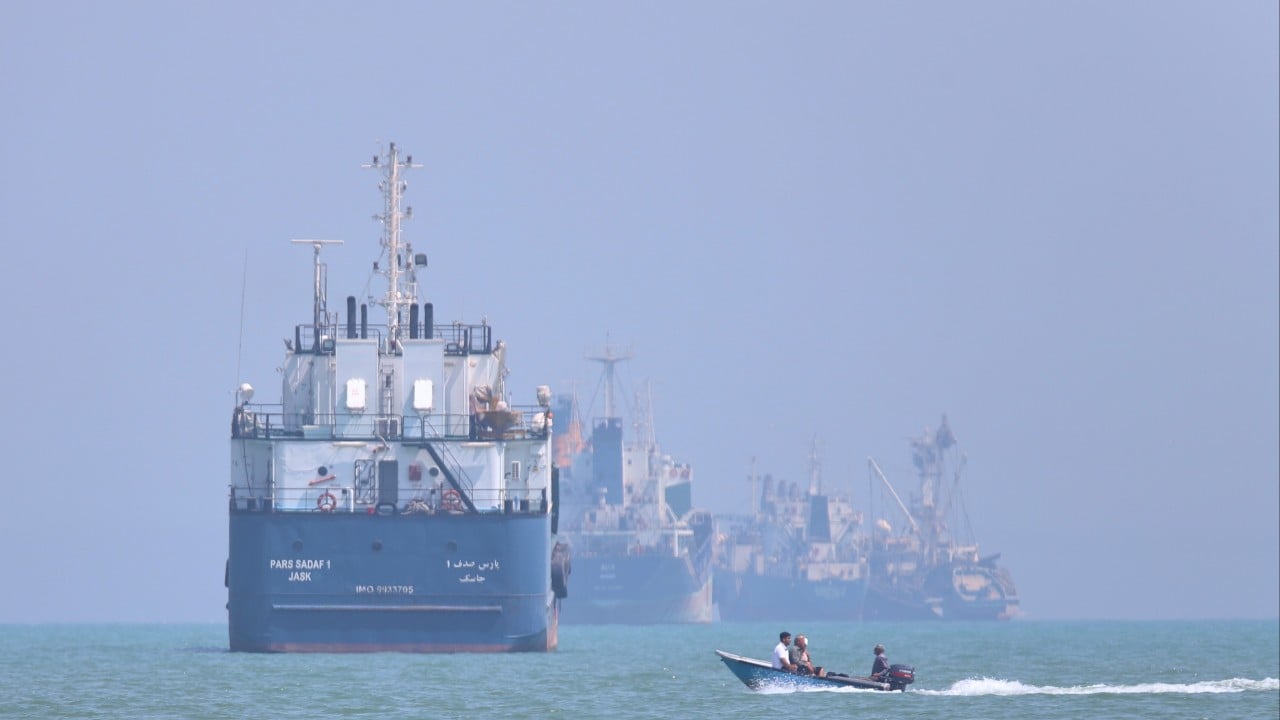
The day after the announcement, the sun rose over the Caspian Sea just as it always does. The tankers in the Strait of Hormuz continued their slow, heavy crawl through the blue water.
In the markets of Tehran, the exchange rate fluctuated wildly as speculators tried to guess what a world without sanctions looked like. There was no dancing in the streets. There were no grand parades. The emotion was something closer to collective exhaustion, followed by a tentative, cautious curiosity.
The peace is complete, the leaders say. But peace is never a finished monument. It is a garden that requires daily weeding, and the soil in this particular part of the world remains rocky, dry, and full of old bones.
The success of this day will not be measured by the signatures on the parchment. It will be measured by whether a generation of children growing up along the Indus and the Tigris can look at the sky without wondering what might fall out of it.
Farida turned off her kitchen light. The street outside was quiet, the headlights of passing cars cutting yellow arcs through the darkness, moving toward a future that had suddenly, without permission, changed its shape.