The dirt under Mateus’s fingernails was not ordinary soil. It was the dark, compacted loam of the Alentejo plains, mixed with the sticky, black residue of cork sap. For forty years, his hands had known only two states: raw from the heavy iron axe used to strip bark from the ancient cork oaks, or swollen from the winter chill that swept across the Portuguese scrubland.
To the casual traveler driving down the highway toward Lisbon, these plains look infinite, peaceful, and perhaps a little dead. They see a sun-bleached expanse dotted with gnarled trees. They do not see the war.
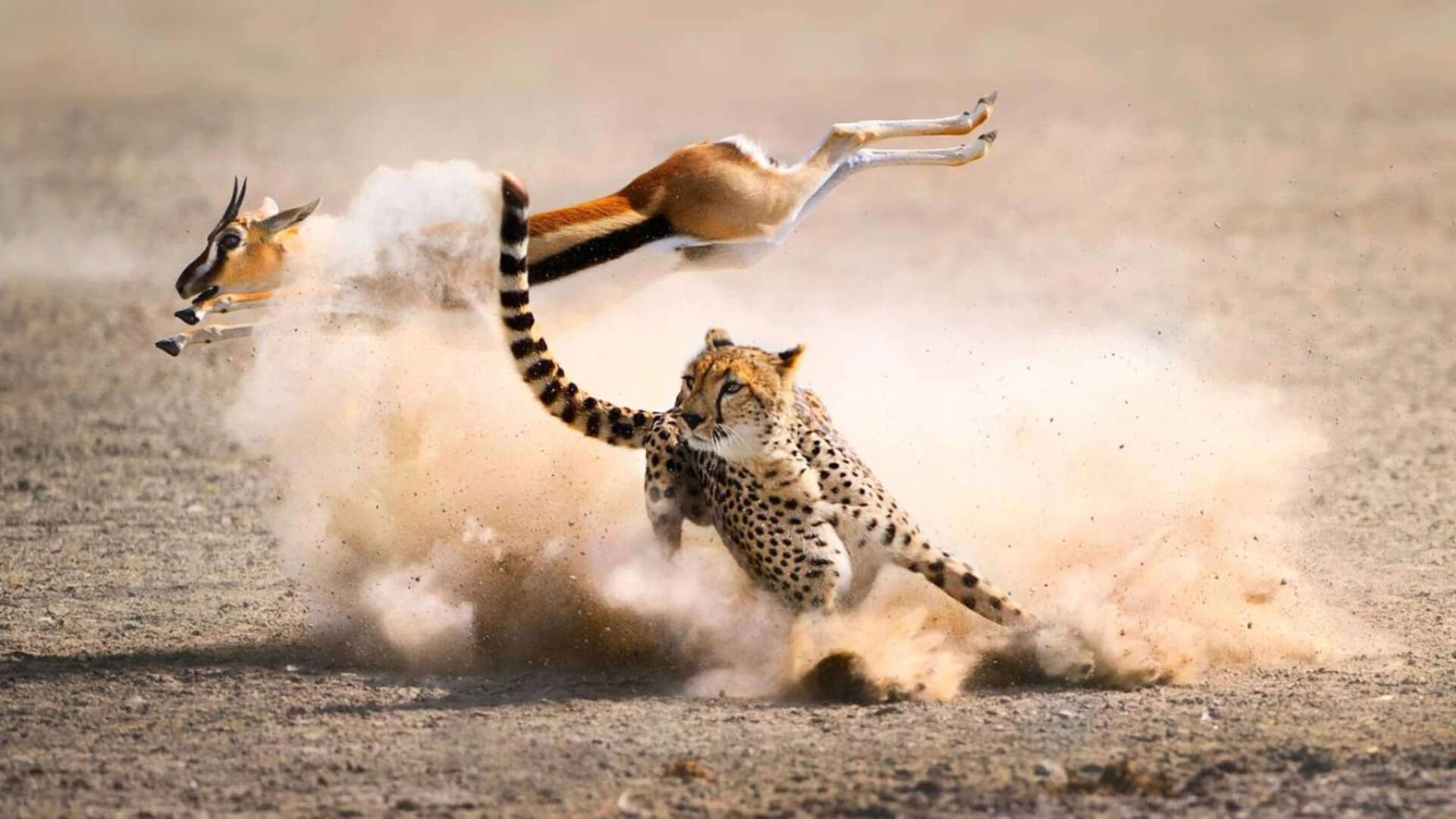
But Mateus knew the war intimately. Every day in the forest is a calculation of survival. In Portugal, they have a saying for this, born from centuries of watching the tides of luck turn in the brush: Um dia é da caça, outro do caçador. One day belongs to the prey, another to the hunter. It is a phrase thrown around casually over espresso in Lisbon cafes, but out here, where the horizon chews up weak men, it is a mathematical law of existence.
We live in a culture obsessed with permanent victory. We buy books by tech billionaires who promise we can optimize our lives so thoroughly that we never lose. We track our metrics, build our personal brands, and convince ourselves that if we just work hard enough, we can remain the hunter forever.
It is a lie. A dangerous one.
The old country folk who carved that proverb into the cultural bedrock of Iberia understood something we have forgotten. They knew that the roles of hunter and prey are not identities. They are just temporary shifts in the wind.
The Weight of the Axe
Consider how the cycle actually works on the ground. To understand the proverb, you have to understand the cork oak. It takes twenty-five years for a single tree to produce its first harvest. Twenty-five years of waiting, enduring droughts, avoiding wildfires, and resisting the teeth of foraging animals. For a quarter of a century, the tree is entirely at the mercy of the elements. It is the ultimate prey.
Then, the harvesters arrive.
Mateus was nineteen when his father first handed him the stripping axe. The tool was balanced perfectly, its handle made of supple ash wood, its blade sharp enough to shave the hair off an arm. His father pointed to a massive oak whose trunk was thick with rough, grey bark.
"Watch the blade," his father muttered, his voice dry like rust. "If you cut too deep, you slice the inner skin. You kill the tree. If you cut too shallow, the bark won't yield. You must feel the wood through the iron."
In that moment, young Mateus felt like a god. He held the power of life and death over a living thing that had stood since before his grandfather was born. With two precise, rhythmic blows, he sliced a vertical line down the trunk. He inserted the wedge-shaped handle into the seam and pried. The thick jacket of cork groaned, then popped free with a wet, earthy sigh.
He was the hunter. The forest was his bounty. For the next two decades, the market boomed. Wine producers from France to California begged for Portuguese cork. The money flowed into the small village. Mateus bought a tractor, built a house with bright blue borders around the windows to keep the devils out, and married a woman whose laughter sounded like running water. He believed the harvest would never end.
Then came the plastic stopper.
When the Forest Fights Back
It happened slowly, then all at once. In the late 1990s and early 2000s, a fault in the global wine supply shook the industry. A chemical compound known as TCA—cork taint—was ruining a small percentage of wine bottles, giving them a musty, cardboard taste. The global wine corporations didn't care about the history of the Alentejo. They cared about predictability.
Almost overnight, synthetic plugs and aluminum screw caps flooded the market.
The transition was brutal. The price of raw cork plummeted. Warehouses in the region grew silent, filled with stacked sheets of bark that nobody wanted to buy. Mateus found himself sitting on his porch, looking at the tractor he could no longer afford to fuel.
The shift was psychological as much as financial. When you are accustomed to being the one who drives the blade, discovering that you are the one being squeezed is terrifying. The market was the new predator, invisible and completely indifferent to how many generations of Mateus’s family had worked that soil.
He spent three years in that gray zone. He took odd jobs repairing stone walls. He ate soup made from cabbage and stale bread. His hands grew soft, a transformation that felt like a betrayal. Every morning he looked out at the oaks. They stood there, indifferent to the global economy, slowly regrowing their skin under the hot Iberian sun.
They were surviving their period of being hunted. He was not sure he could survive his.
The Anatomy of the Turn
Psychologists talk about a phenomenon called the illusion of control. It is a cognitive bias where we overemphasize our own agency in outcomes that are largely dictated by chance or massive, systemic forces. When things go well, we credit our genius. When things collapse, we blame bad luck.
The Portuguese proverb cuts through that psychological vanity with a rusty knife. It does not promise that the hunter will always fail, nor does it guarantee the prey will always escape. It simply states that the roles will inevitably reverse.
Why? Because success breeds complacency.
When a hunter is successful for too long, his movements become heavy. He steps on dry twigs. He forgets to check the direction of the wind. He assumes the clearing will always be filled with deer. Meanwhile, the prey is adapting. The prey learns the scent of the hunter, maps the locations of the traps, and develops a sharper, hungrier intelligence born of necessity.
This is not just folklore; it is historical pattern. Look at the corporate world. Think of the photography giants who laughed at the first crude digital sensors because their film business was too lucrative to fail. Think of the video rental empires that turned down the chance to buy a small DVD-by-mail startup for a pittance. They were the apex predators of their eras. They became food because they forgot that the sun eventually sets on every hunt.
The turn always happens when you are least prepared for it.
+------------------------------------+------------------------------------+
| The Hunter's Trap                  | The Prey's Evolution               |
+------------------------------------+------------------------------------+
| Complacency born of steady surplus | Hyper-vigilance forced by scarcity |
| Heavy, predictable movements       | Fluid, adaptive strategies         |
| Reliance on historical systems     | Creation of new pathways           |
+------------------------------------+------------------------------------+
The Return of the Tree
The salvation of Mateus’s village did not come from a government bailout or a sudden burst of charity. It came from the inherent quality of the material itself.
As the years crawled by, consumers began to notice something about those plastic wine stoppers. They didn't allow the wine to breathe. Complex reds turned flat and metallic inside the bottles. Worse, the world began to wake up to the ecological disaster of microplastics.
Suddenly, a material that was completely natural, biodegradable, and harvested without ever cutting down a single tree looked less like a relic of the past and more like a miracle of engineering. The cork oak had survived its winter.
Mateus was fifty-two when the trucks came back.
His joints ached more now. The ash handle of his old axe felt heavier in his palm. But when he walked back into the grove, he looked at the trees with a different kind of respect. He was no longer the arrogant youth who thought he owned the forest. He was a partner in a dance that had been going on for millennia.
He struck the bark. The sound was a deep, resonant thud that echoed through the hills.
But the real lesson of the proverb came three years later, during a summer so hot the crows fainted from the branches. A massive wildfire broke out in the northern hills, fueled by dry brush and shifting winds. It raced toward his property like an orange wall of teeth.
The villagers fled. Mateus stayed until the last possible second, pumping water into small ditches around his home before the smoke drove him out. He spent the night in a gymnasium three towns over, listening to the radio, convinced everything he had rebuilt was gone.
The next day, the landscape was a charcoal drawing. The pine plantations nearby were reduced to white ash and blackened toothpicks. But when Mateus walked into his cork grove, a strange sight greeted him.
The oaks were black on the outside, yes. Their outer bark was charred and singed. But because cork is one of the most effective natural fire retardants on the planet, the heart of the trees was untouched. The thick insulation had protected the sap, the life, the future.
Two months later, tiny green shoots began to push through the blackened branches.
The Wisdom of the Second Day
If you find yourself in the position of the hunter today—if your business is growing, your health is perfect, and your decisions seem infallible—enjoy the light. But do not unpack your bags there. Do not insult those who are currently struggling in the brush below you. Your position is rented, not owned.
And if you are the prey? If you are currently feeling the heat of the chase, running out of options, and wondering how much longer you can double back on your own tracks?
Listen to the forest.
The pressure you are under is currently forming the thick, protective bark you will need for the fire next time. The hunt is long, the terrain is vast, and the sun is already beginning to dip below the ridge.
Mateus still walks the grove. He does not hunt with the same ferocity he used to, because he knows that one day, the earth will claim his axe, his tractor, and his bones. He is fine with that compromise. He has learned to love both days of the proverb—the day of the harvest that feeds his family, and the day of the waiting that teaches him who he really is.
The brush rustles. The wind shifts. Somewhere in the distance, a trap snaps shut. Empty.