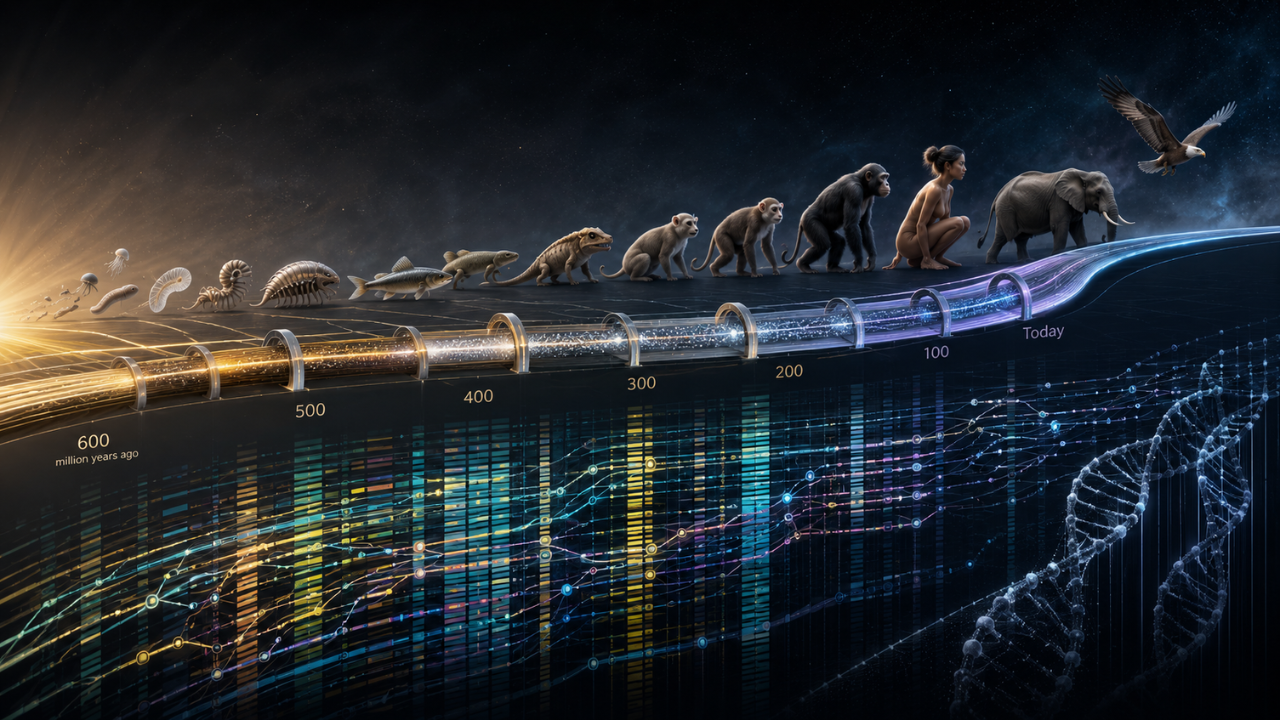
For decades, geneticists carried around a dirty little secret. They looked at the human genome, mapped out the protein-coding genes, and realized that only about two percent of our total DNA actually did anything important. The remaining ninety-eight percent? Dismissed as evolutionary trash. Junk DNA. Empty space filling up our cells because nature apparently loves clutter.
That lazy assumption just got blown apart.
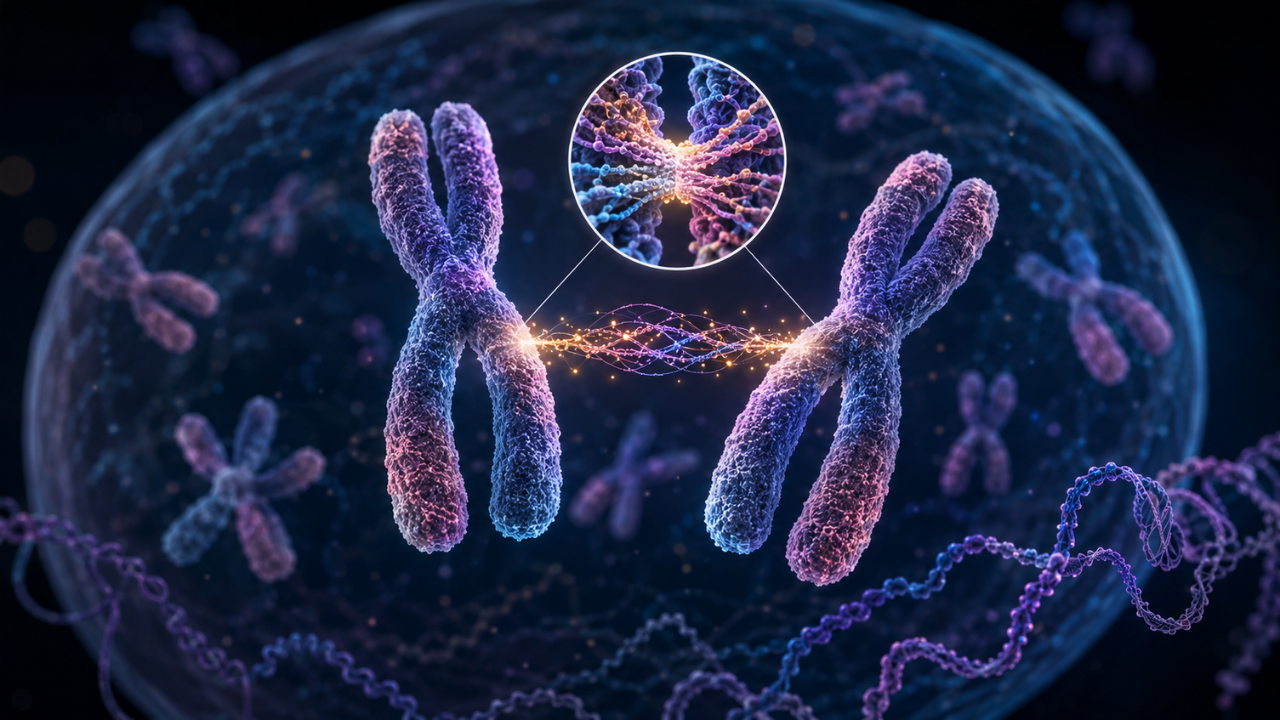
Researchers discovered that what we used to call genetic junk actually serves as the navigational system for chromosomes. When cells divide, chromosomes need to pair up precisely. Without the proper guidance, things go sideways fast, leading to developmental disorders, cancers, and cell death. The sequences we ignored for forty years are the exact maps chromosomes use to find their partners.
The Long History of Genetic Dismissism
Science loves a good trash heap. Back when sequencing first kicked into high gear, labs focused entirely on exons. Those are the segments that code for proteins. Everything else—introns, repetitive stretches, intergenic deserts—got lumped into the scrap bin.
It was arrogant, honestly. Just because our primitive tools couldn't read the function didn't mean the function wasn't there. Think of it like walking into a massive library, reading only the words printed in bold, and throwing away the pages containing grammar, spacing, and punctuation. You'd understand a few isolated sentences, but the actual story would be entirely lost.
The turning point happened when molecular biologists started looking closer at chromosome pairing during meiosis. They noticed that chromosomes weren't just floating around blindly inside the nucleus. They moved with absolute purpose. Something was pulling them together, lining them up down to the nanometer.
How Noncoding DNA Directs the Dance
To understand how noncoding DNA works, you have to picture a crowded dance floor in total darkness. How do partners find each other across a room packed with thousands of other people? They listen for specific signals.
That is what noncoding repetitive sequences do. They act as acoustic beacons.
Recent studies show that specific regions of noncoding DNA transcribe into specialized RNA molecules or bind with structural proteins to form physical checkpoints. When chromosomes prepare to segregate, these neglected stretches of code generate structural loops. These loops interact with the nuclear envelope, creating localized hubs where matching chromosome pairs can dock.
If you strip away or mutate these noncoding regions, the pairing process stalls. Chromosomes wander. They miss their cues. The entire cellular machinery grinds to a halt because the instruction manual for spatial organization was treated like waste material.
Rethinking the Blueprint
This discovery changes how we look at genomic medicine. For years, disease-association studies focused heavily on protein-coding mutations. When scientists found genetic variants linked to fertility issues, congenital defects, or specific cancers sitting deep inside noncoding deserts, they often scratched their heads.
Now the path forward is clear. Those variants aren't random noise. They are typos in the cellular GPS.
If a patient struggles with reproductive biology or chromosomal translocation disorders, the root cause might not be a broken gene. It could be a corrupted piece of structural scaffolding made from ancient, repetitive DNA that textbooks taught us to ignore.
What This Means for Future Research
We are finally stepping away from gene-centric biology and moving toward a structural view of the genome. Every base pair matters. Even the repetitive, seemingly parasitic elements that hitchhiked through our evolutionary history turned out to be the structural glue holding our cells together.
Stop thinking about genetics as a simple linear code. It is an intricate, three-dimensional architecture where the spaces between the words dictate how the entire book is read.
Take a closer look at your own diagnostic panels or research hypotheses if you work in molecular biology. If you are ignoring the noncoding regions because they do not produce proteins, you are missing half the picture. Map the structural RNAs. Look at the repetitive elements. That is where the real action is happening.