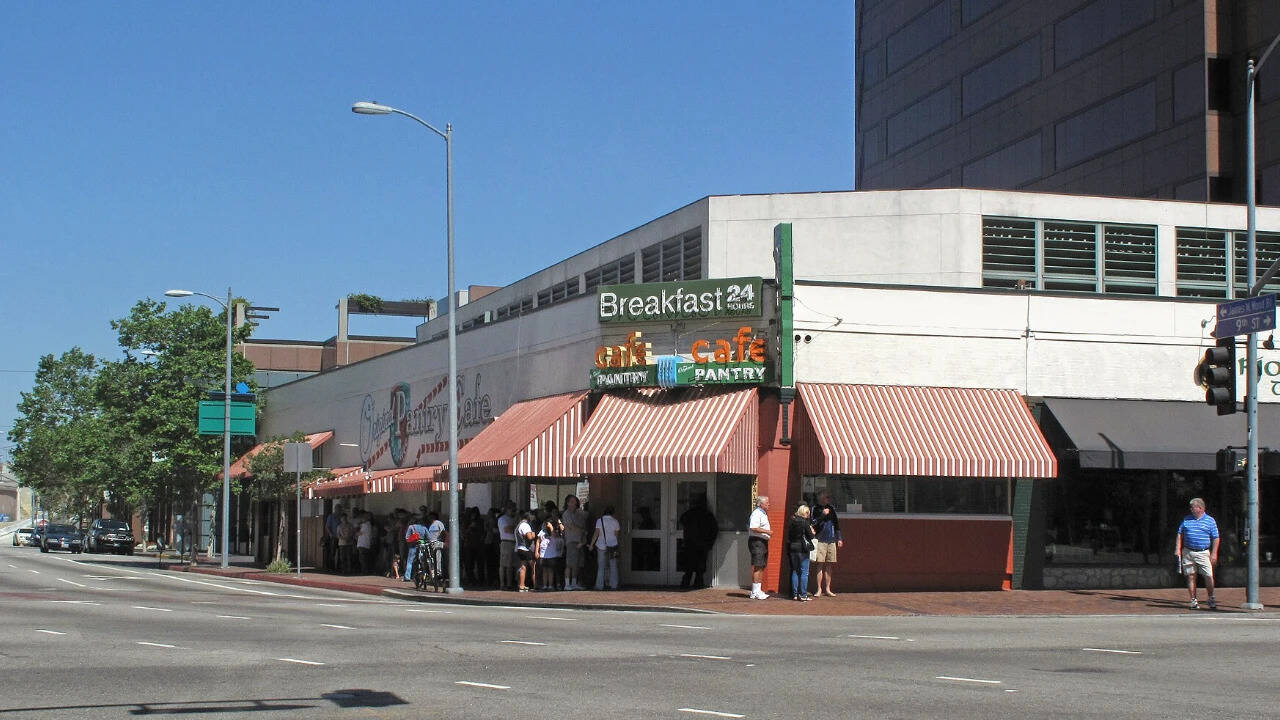
When a century-old diner closes and reopens under a nonprofit operator, sentimentality obscures the real structural test: can mission-driven governance fix a unit-economics model that broke under commercial ownership? This analysis deconstructs the closure-to-reopening arc of a multi-generational Los Angeles diner—founded in 1924, shuttered in 2025, and relaunched as a nonprofit—by separating operational facts from analytical hypotheses and mapping the economic, legal, and spatial mechanics that determine whether a civic landmark survives past its novelty phase. Because no external source text or named venue data was supplied alongside the reference headline, exact balance-sheet figures, lease terms, and specific reopening dates are treated as unverified variables rather than invented numbers. Instead, this article establishes the analytical blueprint for evaluating legacy diner transitions: how commercial hospitality fails legacy spaces, what nonprofit status changes and does not change, how multi-generational demand behaves after a shutdown, and which operating rules govern durability.
The Structural Failure Mode of Century-Old Commercial Diners
A diner operating since 1924 carries deep cultural equity, yet cultural equity does not pay monthly invoices. Commercial food service relies on high table turns, tight labor ratios, and continuous equipment reinvestment. Over a century, a building and its kitchen accumulate physical and financial friction that single-owner or family-run commercial operators struggle to absorb.
Three structural pressures typically converge before a legacy diner closes:
- Real estate and occupancy drift: In major metropolitan markets such as Los Angeles, land values, property taxes, insurance premiums, and commercial lease resets rarely move in lockstep with diner check averages. Even when a building is owned outright, opportunity cost and rising maintenance obligations squeeze operating margins.
- Cost-disease in labor and inputs: Diner menus depend on affordable, high-frequency meals—eggs, coffee, griddle items, counter service—while labor costs, utilities, and wholesale food inputs face persistent upward pressure. Raising menu prices aggressively risks alienating price-sensitive regulars who view low prices as part of the diner contract.
- Capital expenditure backlog: Commercial refrigeration, ventilation hoods, grease traps, plumbing, electrical panels, and accessibility upgrades degrade over decades. Deferring maintenance preserves short-term cash flow until a major system failure or code requirement forces a costly shutdown.
A closure in 2025 following a run since 1924 should therefore be read first as an economic mismatch between legacy pricing expectations and modern operating costs, rather than a sudden collapse in affection for the brand. A known fact from the reference framing is the multi-decade span from 1924 to 2025 and the shift to nonprofit operation; an educated hypothesis is that deferred capital upgrades, rising fixed occupancy or compliance costs, or generational transition friction played a decisive role prior to closure.
Why Nostalgia Alone Cannot Clear Fixed Overhead
Regular customers visit legacy diners for familiarity, consistency, and social belonging. Those traits generate repeat foot traffic, yet they also create a pricing ceiling. If patrons expect 1990s or early-2000s relative affordability at a 2020s cost base, gross margin per cover narrows. High foot traffic without sufficient contribution margin per guest simply accelerates wear on staff and equipment while leaving minimal cash reserve for emergencies.
What Nonprofit Governance Actually Changes in Hospitality
Transitioning a diner from a commercial model to a nonprofit operator alters incentives, capital access, and accountability, but it does not suspend physics or basic accounting. A nonprofit kitchen still buys ingredients, pays wages, cleans grease traps, and satisfies health inspectors.
The Governance and Capital Shift
Under a nonprofit structure, surplus revenue is reinvested into the mission rather than distributed to equity owners. That shift opens avenues unavailable to a standard for-profit restaurant:
- Philanthropic and civic capital: Donors, foundations, and community development funds may finance historic preservation, kitchen modernization, or working-capital reserves that commercial lenders view as too risky for low-margin food service.
- Mission alignment: A nonprofit can formally pair food service with workforce training, neighborhood food access, cultural preservation, or civic gathering space—objectives that justify staffing models or community programs a pure profit-maximizer would cut.
- Board oversight: Stewardship shifts toward a board of directors tasked with protecting the long-term mission and institutional integrity rather than maximizing short-term owner draw.
The Tax and Cost Realities Often Misunderstood
Converting a diner into a nonprofit does not automatically make every expense tax-exempt or cheap. Payroll taxes, sales tax collection on prepared food, workers' compensation, commercial liability coverage, and supplier pricing remain core obligations. Furthermore, unrelated business income rules and governance compliance add administrative overhead. If a nonprofit operator treats charitable goodwill as a substitute for disciplined cost-of-goods-sold tracking and shift scheduling, cash burn will match or exceed the prior commercial operator's losses.
The Economics of Reopening After a Shutdown
Reopening a shuttered venue is operationally harder than keeping an open venue running. A closure breaks habits, disperses institutional memory, and creates a restart penalty across supply chains and staffing.
Rebuilding Demand and Habit Loops
Diners thrive on routine: morning coffee rituals, weekend family breakfasts, and familiar faces behind the counter. When a venue shuts down in 2025, competitors absorb part of that routine, and displaced staff move to other jobs. Reopening triggers an initial wave of curiosity and loyalty support—former regulars returning to see the doors open again and supporters dining to back the mission.
The analytical trap is mistaking reopening momentum for steady-state baseline demand. Early post-reopening volume often benefits from earned media, civic pride, and pent-up sentiment. Sustainable operations depend on what happens in month six and month twelve, when novelty fades and repeat frequency must carry the schedule on ordinary Tuesdays and Wednesdays.
The Cost Function of Relaunching a Legacy Space
Reopening a space active since 1924 involves distinct cost layers:
- Pre-opening readiness costs: Permitting, health and fire inspections, deep cleaning, equipment calibration, menu testing, and initial inventory stocking occur before the first paying customer sits down.
- Labor ramp-up inefficiency: Newly assembled teams take time to reach speed and consistency on the line and floor, which can elevate labor cost as a share of revenue during early weeks.
- Ongoing asset upkeep: Historic fixtures and older mechanical systems require preventive maintenance schedules so the venue does not cycle back into another forced closure.
Four Operational Pillars for Sustaining a Nonprofit Diner
To turn a symbolic reopening into a durable institution, a nonprofit diner operator must align four functional pillars. Weakness in any single pillar creates a bottleneck that erodes mission impact.
1. Disciplined Unit Economics by Daypart
A diner spans distinct dayparts—breakfast, lunch, and potentially dinner or coffee service—each with different ticket sizes, labor intensity, and guest turnover. Operators must track prime cost (food and beverage cost plus total labor cost) and contribution margin by daypart rather than relying on aggregate weekly totals. If a subsidized community meal program or discounted staple runs alongside full-price service, the cross-subsidy must be budgeted explicitly so hidden losses do not drain operating cash.
2. Dual-Track Revenue Architecture
Relying solely on menu sales exposes a mission-driven diner to the same margin compression that strains commercial diners. Conversely, relying solely on grants or donations makes operations vulnerable to funding cycles and donor fatigue. A resilient nonprofit diner pairs earned hospitality revenue with dedicated mission funding—such as restricted preservation funds, program sponsorships, or community meal underwriting—keeping earned and contributed revenue streams clearly separated in accounting.
3. Standardized Kitchen and Front-of-House Systems
Institutional memory walks out the door when long-tenured cooks, bakers, and servers leave during a closure. Documenting recipes, prep yields, portion standards, ordering par levels, and opening/closing checklists protects both quality and cost control. Clear standard operating procedures also make onboarding faster if the nonprofit incorporates hospitality training or rotating staff.
4. Transparent Mission Metrics
A nonprofit diner answers to two standards at once: financial solvency and mission delivery. Defining concrete operational metrics—such as meals served under community programs, workforce hours completed, or historic preservation milestones achieved—alongside core financial indicators like cash runway and prime cost percentage prevents mission drift and gives donors objective evidence of impact.
Limitations and Failure Risks to Watch
No governance model guarantees survival. Nonprofit diners face specific failure modes that advocates often overlook:
- Mission-margin tension: Pursuing broad social goals without pricing or funding discipline can overwhelm kitchen capacity and depress margins.
- Volunteer and staff burnout: Relying heavily on goodwill or under-resourced shifts leads to high turnover, inconsistent food quality, and service bottlenecks.
- Governance bottlenecks: Slow board decision-making can clash with the fast, daily problem-solving required in a live restaurant environment.
- Over-dependence on founders or early champions: If momentum rests on a small group of initial organizers rather than repeatable systems, leadership transitions become destabilizing.
Strategic Play for Evaluating and Operating the Model
For anyone assessing or running a nonprofit diner that reopened after a long commercial history, the decisive strategic move is to run the venue on strict commercial prime-cost and cash-runway discipline while funding social and preservation goals through explicit, ring-fenced mission support. Do not price core menu items as if grants will cover daily food and labor shortfalls, and do not treat reopening crowds as proof of permanent demand. Build a rolling cash-flow forecast, codify kitchen and service standards immediately after launch, and tie every expansion of community programming to verified margin capacity or secured restricted funding so the diner's second century is anchored by durable operations rather than nostalgia alone.