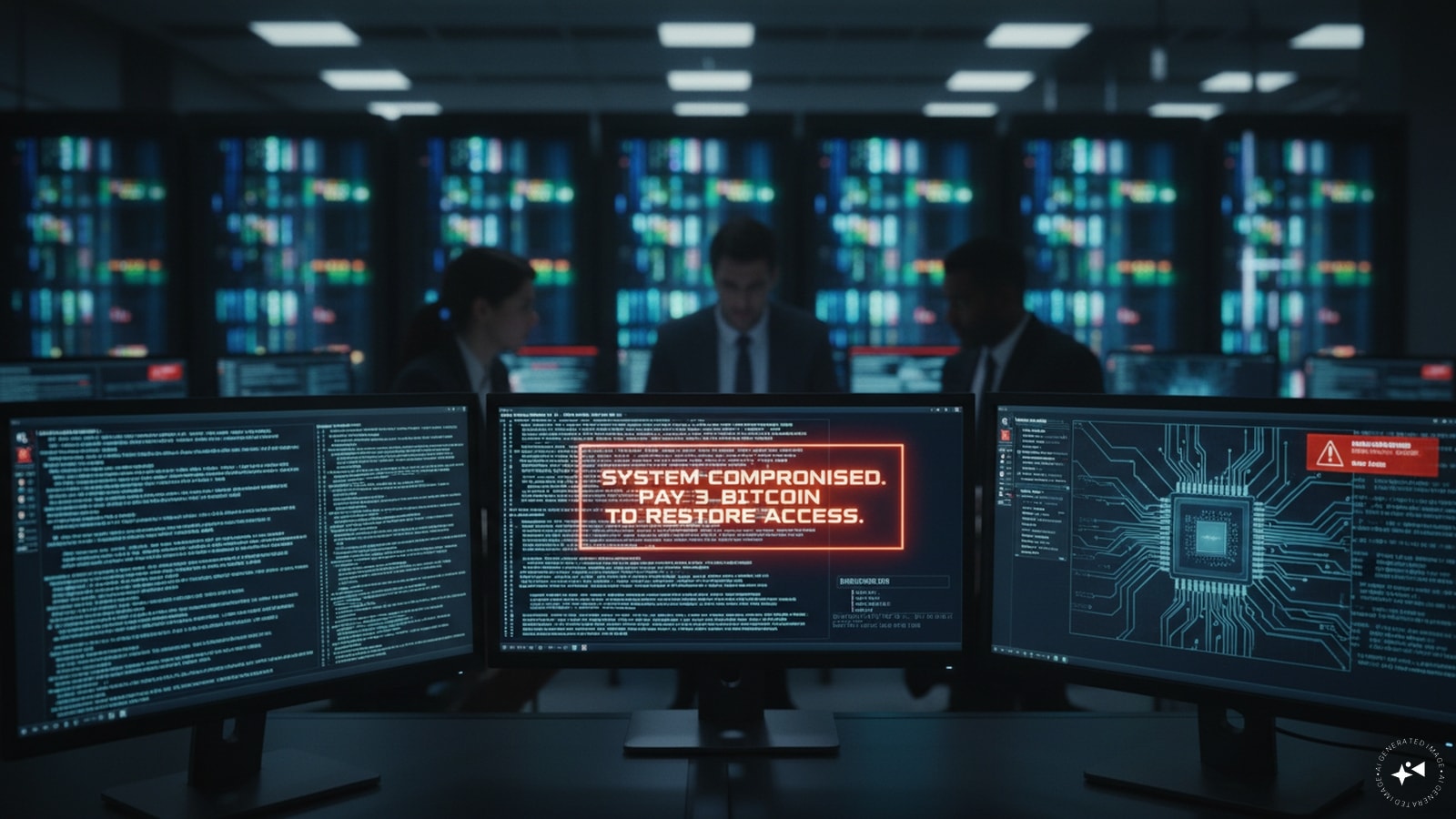
You hop on a quick Zoom call with a colleague you've known for two years. You see their face on screen, nodding along in their familiar home office, right before they drop a message in the chat saying they can't hear you. They send over a quick fix link, you click it to get the audio working, and just like that, North Korean state-sponsored hackers own your entire digital life.
It sounds like paranoid sci-fi, except it's happening right now. According to a November 2026 advisory from the Federal Bureau of Investigation, North Korean cyber operatives have drained more than $400 million in cryptocurrency over the past 18 months using a campaign called FaceStealer. And here's the kicker: they didn't even need fancy artificial intelligence to pull off most of it. They used real, secretly recorded webcam footage of over 900 tech workers and crypto insiders to impersonate them on fake video calls. For another perspective, check out: this related article.
Why Most People Get the FaceStealer Threat Wrong
When headlines mention fake video calls and crypto heists, everyone immediately jumps to deepfakes. People assume they're safe because they know how to spot weird AI artifacts, uncanny valley skin textures, or lagging lip-syncs.
That assumption will get your wallet drained. Related analysis regarding this has been shared by Mashable.
While the FBI noted that North Korean groups like BlueNoroff have recently started experimenting with AI-generated deepfakes of prominent blockchain figures, the core of the $400 million FaceStealer operation relies on something much harder to detect. It uses genuine video. When these hackers compromise a victim's machine, they don't just loot their crypto keys and vanish. They silently turn on the victim's webcam and record them sitting at their desk, nodding, looking attentive, and reacting normally.
You aren't looking at a computer-generated avatar. You're looking at a real recording of your actual friend or business partner. No amount of squinting at the screen for AI glitches will save you when the video feed is 100% authentic.
Anatomy of a $400 Million Social Engineering Trap
I've analyzed dozens of Web3 phishing campaigns over the years, and most fail because they feel sloppy. A weird DM from a stranger on Telegram or an unsolicited calendar invite with a sketchy attachment raises instant red flags. FaceStealer works because the attackers treat social engineering like a long-con intelligence operation.
Hijacking Trust Before Sending a Link
The attack always starts with an already compromised victim—let's call them Victim A. Once the hackers control Victim A's device, they gain full access to their Slack, Telegram, Discord, email, and social media accounts. Instead of blasting out generic spam to Victim A's contact list, the operatives sit back and read through past chat logs.
They study how Victim A talks to specific colleagues. They learn their inside jokes, their ongoing projects, and their typical meeting habits. When they finally reach out to you from Victim A's real account to suggest a quick catch-up call, the message sounds completely natural. Why wouldn't you agree to chat?
The Typo-Squatted Meeting Room
Once you agree to talk, the attackers send a legitimate Calendly invite to lock in a time. Notice what's missing from that initial calendar invite: the meeting link.
The hackers intentionally hold back the URL until just a few minutes before the scheduled call. By waiting until the last second, they keep their malicious domains out of automated security scanners and email filters for as long as possible. Right before the meeting, Victim A's account messages you a link that looks almost identical to a standard Zoom or Microsoft Teams URL. The FBI highlighted domains like uu01webzoom.us and teams.livemeet.us in its warning.
When you click that link, you don't land on Zoom. You land on a North Korean-controlled server hosting a pixel-for-pixel clone of the Zoom or Teams web interface.
The Audio Glitch and the Terminal Trap
You join the room, and there's Victim A on camera, nodding along. Sometimes the hackers even load up multiple stolen webcam feeds so it looks like a group meeting with three or four familiar faces.
Seconds later, Victim A types into the meeting chat: "Hey, I can't hear you. Your mic isn't working."
Because you see other people on the call who seemingly have no issues, social pressure kicks in immediately. You feel awkward holding up the meeting. Victim A helpfully drops a link or a snippet of text in the chat, telling you that your browser client needs a quick audio driver update or a configuration patch. They instruct you to click the update prompt, run a downloaded script, or copy and paste a command directly into your computer's terminal.
The second you run that command, it's over.
What Happens After You Run the Fake Update
The payload hidden behind that fake audio fix isn't a smash-and-grab script. It's a full surveillance and extraction suite designed to bleed you dry—and then turn you into the next puppet.
According to the FBI's technical breakdown, the malware quietly installs four distinct tools on your machine:
- Browser cookie harvesters that bypass two-factor authentication by stealing your active session tokens.
- Keyloggers that record every password and seed phrase you type.
- Screen capturers that take snapshots of your desktop whenever you open sensitive apps.
- Persistent backdoors that give the hackers ongoing remote access to your files and webcam.
The most chilling part of this campaign is the patience involved. In several cases documented by federal investigators, North Korean operatives didn't immediately drain the victim's crypto wallets. If a target didn't hold much money at the time of infection, the hackers simply sat quietly on the machine—sometimes waiting over a year—monitoring balances until a major payout or token unlock hit the wallet.
Meanwhile, they activate your webcam, record a few minutes of you sitting quietly at your desk, and add your face to their library of over 900 stolen videos. Then they open your Telegram or Slack, read your chat history, and pick their next target. The infection spreads exponentially through trusted professional networks.
Why North Korea Keeps Winning These Crypto Heists
Pyongyang's cyber units—including notorious subgroups like Lazarus, TraderTraitor, and BlueNoroff—aren't basement-dwelling teenagers looking for quick cash. They are state-funded intelligence operatives whose primary job is generating hard currency to fund North Korea's weapons and missile programs under heavy international sanctions.
Because they operate with state backing, they have unlimited time to refine their social engineering playbooks. They understand human psychology better than almost any other threat group on the planet. Think about how well-trained most tech workers are to spot a bad email link. Now think about how completely defenseless those same workers are when they see a trusted friend's actual face on a video call asking for a tiny favor.
The FBI's seizure of over 900 victim videos and disruption of several FaceStealer servers puts a dent in their current infrastructure, sure. The Department of Justice has also ramped up asset seizures against North Korean crypto laundering networks. But taking down a few domains won't stop a state apparatus that just banked $400 million from a single playbook. As the FBI warned, these operatives are already blending their stolen video library with synthetic AI deepfakes of well-known industry executives to scale up their reach.
How to Bulletproof Your Video Calls Right Now
You don't need enterprise-grade cybersecurity software to defeat FaceStealer. You just need to break the hackers' core assumption: that you will blindly trust a link sent in a chat window.
Start enforcing these strict habits across your personal devices and your team today:
- Never join a meeting by clicking a link. Open your official, locally installed Zoom, Microsoft Teams, or Google Meet desktop app directly. Type in the numeric meeting ID and passcode manually. If a link forces you into a web browser instead of launching your native desktop app, close the tab immediately.
- Treat terminal commands as radioactive. No legitimate video conferencing platform will ever ask you to open your computer's terminal, command prompt, or PowerShell to fix an audio glitch. If anyone on a call tells you to copy-paste a script to update a driver, hang up.
- Verify through a second channel. If a colleague suddenly claims your audio is broken and sends a troubleshooting link, pick up your phone and text or call them via SMS or Signal. Do not use the same Slack or Telegram app they used to set up the call, because that account is likely compromised.
- Physically cover your webcam. It sounds old-school, yet a $5 plastic webcam slider completely ruins the entire FaceStealer collection pipeline. If hackers can't record you sitting passively at your desk, they can't use your face to trick your friends.
- Audit your active sessions. If you suspect you clicked a bogus meeting link recently, immediately disconnect that device from the internet. Use a completely separate, clean device to revoke active sessions on your email, Slack, Telegram, and exchange accounts, change your passwords, and move any crypto assets to a brand-new hardware wallet.
Don't keep quiet if you get hit, either. Warn your coworkers and contacts the moment you suspect a compromise so they don't become the next face in North Korea's video library.
For a quick visual breakdown of how the FaceStealer scheme operates, watch North Korea's $400 Million Scam to see how attackers weaponize everyday video calls against crypto workers.