For forty years, we've interacted with personal computers the exact same way. You click an icon. You open an app. You type something, hit save, and close it.
Nvidia thinks that era is dead.
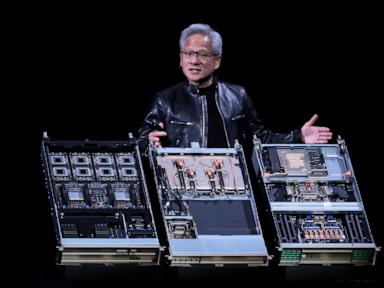
At Computex in Taipei, Nvidia CEO Jensen Huang took the stage to announce something the tech industry has whispered about for years. The company is officially building its own system-on-a-chip (SoC) for consumer laptops and desktops, called the RTX Spark. Developed in partnership with MediaTek and manufactured on TSMC's 3-nanometer process, this isn't just another processor. It is a massive, unified-memory superchip designed to fundamentally change how a Windows laptop operates.
Instead of just launching software, Nvidia and Microsoft want you to talk to your computer and let local AI agents execute multi-step workflows across your apps while you do something else.
This isn't a vague promise for the distant future. Laptops powered by the RTX Spark are hitting shelves this fall from Asus, Dell, HP, Lenovo, Microsoft, and MSI. If you've been sitting on the fence about buying an "AI PC," this is the moment where the hardware finally matches the marketing hype.
What is Inside the RTX Spark Superchip
Most regular laptops split their brain power. You have a central processor (CPU) from Intel, AMD, or Qualcomm, and maybe a separate graphics card (GPU) from Nvidia. They have to pass data back and forth across a narrow pipeline, which slows things down and hogs battery power.
Nvidia copied the Apple Silicon playbook but scaled it up for heavy-duty computing. They fused a 20-core ARM-based Nvidia Grace CPU directly to a massive Blackwell-architecture GPU packing 6,144 CUDA cores.
The secret sauce is the memory structure. The RTX Spark supports up to 128GB of LPDDR5X unified memory. Because the CPU and GPU share the exact same pool of high-speed RAM, the chip can handle workloads that would melt a standard premium laptop. We are talking about locally running 120-billion-parameter large language models with a massive 1-million-token context window right on your device. No internet connection or cloud subscription required.
For context, that means you can feed an entire technical manual or thousands of pages of corporate documents directly into your local machine, and a private AI agent can analyze it instantly without sending a single byte of data to an outside server.
Moving Beyond the App Ecosystem
The first wave of AI PCs focused on a dedicated Neural Processing Unit (NPU) designed for minor tasks like blurring your webcam background or generating text summaries. Frankly, consumers didn't care. Microsoft's initial Copilot+ PC launch struggled to capture mainstream excitement because the features felt gimmicky and raised privacy red flags.
Nvidia is pivoting the conversation toward "agentic AI". An agent doesn't just answer a prompt; it performs actions across your operating system.
Imagine telling your laptop: "Find the invoice from John that arrived last week, extract the line items, update my budget spreadsheet, and draft a polite email asking him to verify the shipping address."
To make this happen safely, Nvidia partnered with Microsoft to build a software layer called OpenShell. This runtime allows popular open-source agent frameworks like OpenClaw and Hermes to run natively within Windows. OpenShell acts as a security perimeter, letting you set hard boundaries on what an AI agent can see, touch, or modify on your primary computer. You can even set it to automatically scrub sensitive data like social security numbers or private financial info before a local model passes a query to a cloud-based service.
Adobe is already completely rearchitecting Photoshop and Premiere Pro from the ground up to utilize the RTX Spark. Tools like Generative Fill and Generative Extend will run up to twice as fast because they don't have to wait on cloud servers to process the pixels.
Fixing the Windows on Arm Gaming Problem
Windows laptops using ARM-based processors have traditionally been terrible for gaming. Emulating games written for traditional x86 Intel or AMD processors resulted in stuttering, broken anti-cheat systems, and abysmal frame rates.
Nvidia is using its decades of graphics dominance to brute-force a fix for this problem. The Blackwell GPU core inside the RTX Spark delivers up to 1 petaflop of AI compute performance. Combined with DLSS 4.5 frame generation and Reflex technology, these ultra-thin machines are built to run modern AAA games at 1440p resolution at over 100 frames per second with full ray tracing enabled.
They are also working directly with game developers to ensure anti-cheat software runs natively on this new ARM architecture, removing the final massive hurdle for PC gamers who want a thin, light machine with great battery life.
The Real-World Tradeoffs to Consider
Before you run out and clear your savings account, let's look at the practical reality of these upcoming machines.
The initial wave of hardware coming this fall targets the premium tier. These laptops will be exceptionally sleek—measuring down to 14mm thin and weighing around 3 pounds—featuring aluminum chassis and gorgeous tandem OLED or mini-LED displays. Microsoft's upcoming Surface Laptop Ultra, for example, pairs the RTX Spark with up to 128GB of RAM and a blindingly bright 2,000-nit screen.
But "premium" means expensive. While Nvidia notes that less powerful versions with 16GB of RAM will eventually exist, the top-tier configurations capable of running massive 120B models locally are going to carry a hefty price tag.
Furthermore, global supply constraints are currently squeezing the hardware market. The massive amount of high-speed unified RAM required by these superchips means components are expensive and supply shocks could limit availability at launch.
If you are a casual user who mostly answers emails, browses the web, and watches streaming video, you absolutely do not need to buy into the RTX Spark ecosystem yet. Your current x86 machine will handle those cloud-connected tasks perfectly fine for years.
However, if you are an AI developer, a heavy-duty creative professional editing 12K video, or a gamer who wants MacBook Pro-level battery efficiency without sacrificing AAA gaming performance, this hardware launch is the most significant shift in the PC ecosystem in decades.
Keep an eye on the hardware reviews dropping this fall. Look closely at real-world battery life tests when running local AI workloads, and see how quickly the OpenShell developer ecosystem matures. The transition from personal computers acting as passive tools to autonomous teammates has officially begun.