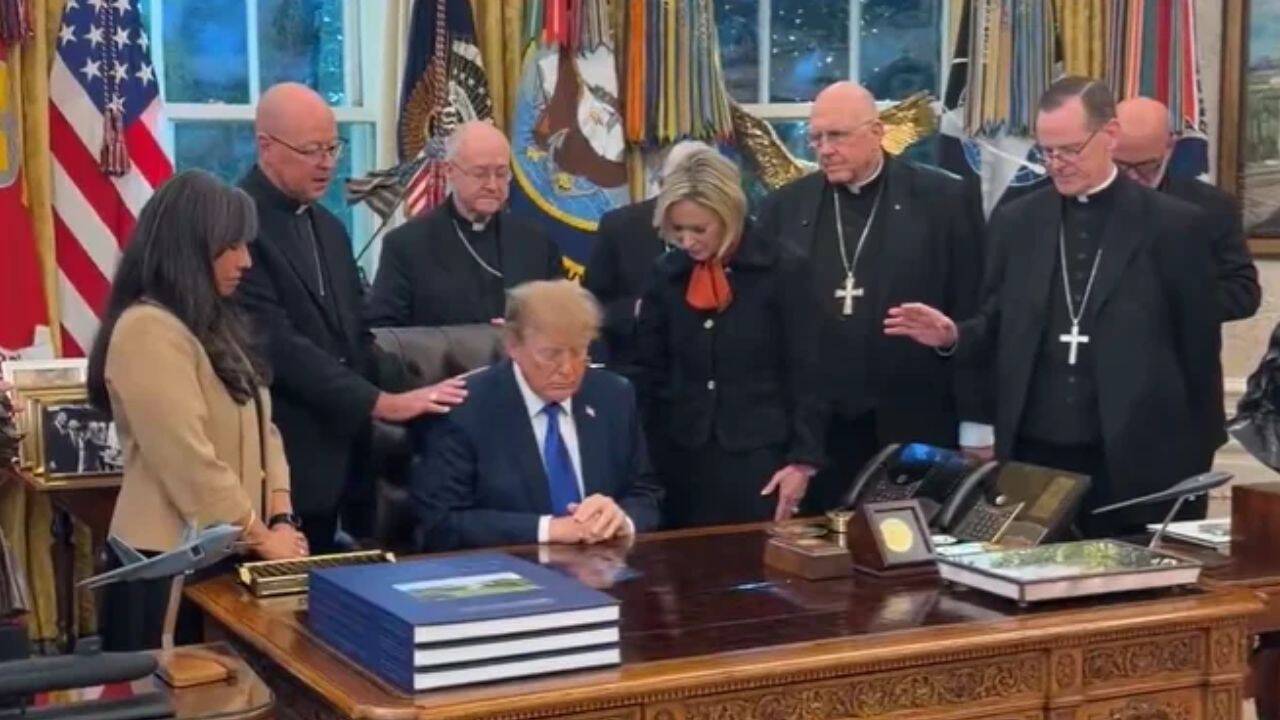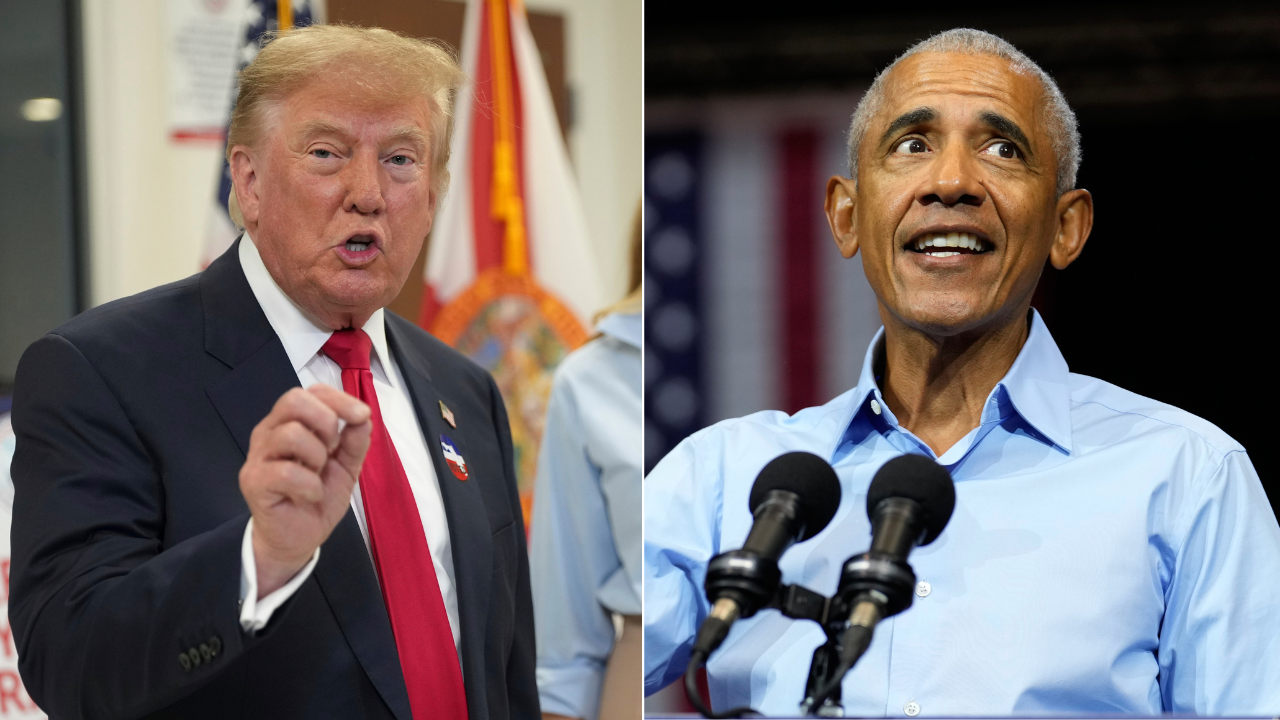
One pastry joke was all it took to set political social media on fire. When former President Barack Obama poked fun at the opulent, gold-heavy aesthetic of Donald Trump’s White House by invoking a playful spin on Marie Antoinette’s infamous line—essentially "let them eat cheesecake"—conservative commentators and MAGA supporters erupted almost immediately.
It sounds trivial on the surface. A former president cracks a joke about interior design and dessert, and the internet loses its mind for forty-eight hours. Yet if you've spent any time watching how modern political messaging operates, you know this wasn't really about baked goods or gold leaf trim. It was a collision of class optics, populist branding, and two vastly different styles of political theater. Recently making headlines recently: Anatomy of Mass Displacement and Asymmetric Violence in Northern Nigeria.
The Anatomy of the Joke and Why It Landed
To understand why the comment triggered such a fierce reaction, you have to look at the exact nerve Obama pressed.
Throughout his political career, Donald Trump has leaned heavily into a specific brand of luxury. Gold accents, ornate moldings, chandelier-lit ballrooms, and Mar-a-Lago styling aren't accidents—they're central to his public persona. For decades, Trump sold the American public on the idea that his personal wealth and taste for grandeur meant he couldn't be bought, and that he would bring that same level of "winning" and prestige to the presidency. More information regarding the matter are covered by Associated Press.
Obama’s jab flipped that narrative on its head. By pairing the gilded look of a Trump White House with a riff on "let them eat cake," Obama wasn't just mocking interior decorating choices. He was painting Trump as an out-of-touch aristocrat indulging in royal extravagance while everyday Americans worry about grocery bills, housing costs, and inflation.
That framing stings because populism is the lifeblood of the MAGA movement. Trump's entire political appeal rests on the argument that he fights for forgotten working-class voters against coastal elites. When Obama—whom conservatives routinely cast as an elitist professor—turns the exact same critique back onto Trump using a single dessert metaphor, it disrupts the narrative his supporters rely on.
Why Cheesecake Specifically
The choice of cheesecake over traditional cake wasn't random either. In American pop culture and political shorthand, extravagant desserts carry heavy symbolic weight. Think back to Marie Antoinette, who never actually said "let them eat cake" according to most historians, yet remains the permanent historical mascot for tone-deaf rulers disconnected from starving citizens.
By updating the phrase for a modern American audience, Obama kept the delivery conversational and sharp. He didn't deliver a dry policy lecture about wealth inequality or tax brackets. He used humor—his sharpest rhetorical weapon—to draw a mental picture that sticks in a voter's head far longer than a five-point economic plan ever could.
Inside the MAGA Backlash
The response from conservative media and Trump allies followed a familiar, rapid-fire playbook. Within hours, prominent commentators, podcasters, and lawmakers flooded X and cable news panels to push back against the remark.
Their counterarguments generally fell into three distinct buckets:
- Accusations of hypocrisy. Critics immediately pointed to Obama’s post-presidency lifestyle, bringing up his Martha’s Vineyard estate, celebrity vacations, and high-profile speaking fees. To MAGA supporters, hearing a wealthy former president mock someone else’s luxury felt less like a populist critique and more like projection.
- Defending the White House aesthetic. Trump loyalists argued that restoring grandeur to the executive mansion isn't selfish indulgence—it's a sign of national pride and strength. From their perspective, the White House should look majestic, impressive, and unapologetically grand on the world stage.
- Reframing the economic record. Rather than debating interior design, conservative pundits pivoted straight to economic comparisons, arguing that working-class families fared better financially under Trump’s policies than during the Obama-Biden years.
What made the reaction notable wasn't just the pushback itself, which happens after virtually every major political speech. It was the sheer volume and intensity of the anger. The joke clearly got under the skin of people who pride themselves on shrugging off mainstream criticism.
How Political Humor Weaponizes Class Optics
If you study political communication, you quickly realize that direct attacks rarely change minds. If a Democrat stands at a podium and calls Donald Trump a threat to democratic norms or criticizes his tax policies, voters retreat into their usual partisan corners. Nobody moves an inch.
Mockery works differently. Ridicule punctures the aura of strength that strongman-style politicians work tirelessly to maintain.
When Obama joked about a gilded White House and cheesecake, he didn't treat Trump like an existential villain. He treated him like a punchline—a guy obsessed with shiny gold trim who doesn't understand how normal people live. For a political movement built around projecting dominance, toughness, and blue-collar authenticity, being laughed at is far more damaging than being feared.
I've watched countless political cycles play out over the years, and the moments that actually break through the noise almost always share this exact DNA. They're visual, simple, and rooted in an everyday truth that doesn't require a degree in political science to grasp. You don't need to read a single white paper to understand the contrast between gold-plated luxury and a struggling household budget.
The Double-Edged Sword for Democrats
Still, leaning into populist mockery carries real risks for Obama and the Democratic Party. The "elitist" label is sticky, and Republicans have spent nearly two decades gluing it onto Democrats.
Every time Obama steps into the spotlight to critique Trump’s wealth or lifestyle, conservative outlets have an archive of ready-made counter-images—photos from Hollywood fundraisers, billionaire donor lists, and expensive coastal properties. If voters view both sides as wealthy insiders trading barbs from gated estates, the populist punch loses half its force.
That's the tightrope Democrats have to walk whenever they use this line of attack. The critique only lands when voters believe the messenger actually understands their daily financial pressure, not when it sounds like one wealthy politician roasting another wealthy politician's taste in furniture.
What This Moment Reveals About Modern Media Cycles
Look past the partisan yelling, and this entire episode serves as a textbook case study in how political news travels in 2026.
Notice what didn't drive the headlines. Nobody spent three days dissecting a forty-minute policy speech on trade tariffs, healthcare subsidies, or judicial appointments. Instead, a five-second throwaway line generated thousands of articles, millions of video views, and endless cable news segments.
Modern media ecosystems reward friction and emotional clarity above everything else:
- Short clips beat long arguments. A ten-second soundbite fits cleanly into vertical video feeds on TikTok, Instagram Reels, and X, stripped of surrounding context.
- Outrage fuels algorithmic reach. When MAGA influencers quote-tweeted the clip in anger, they inadvertently amplified Obama’s joke to millions of users who never would have watched his original remarks.
- Symbols replace substance. Gold trim and cheesecake become instant visual shorthand for an entire ideological debate about wealth, power, and who actually represents the working class.
Both sides understand this dynamic completely. Obama’s team knows how to craft a clean, memorable line built for viral distribution, and conservative media figures know that reacting loudly drives massive engagement from their base. Everybody gets the exact fight they want.
Reading Between the Lines of Political Theater
Next time a seemingly silly political comment blows up your feed, pause before taking the bait at face value. Ask yourself what deeper insecurity or strategic goal sits underneath the noise.
In this case, the cheesecake jab wasn't about dessert, and the MAGA backlash wasn't really about defending interior decorating. It was a turf war over who owns the populist mantle in American politics—a battle over whether voters see Donald Trump as a champion of the working man or a billionaire living in a gilded bubble.
Pay attention to how candidates talk about class, money, and everyday struggles over the coming months. Watch which jokes trigger defensive meltdowns and which ones get ignored, because a politician's loudest reaction almost always points directly to their biggest vulnerability.