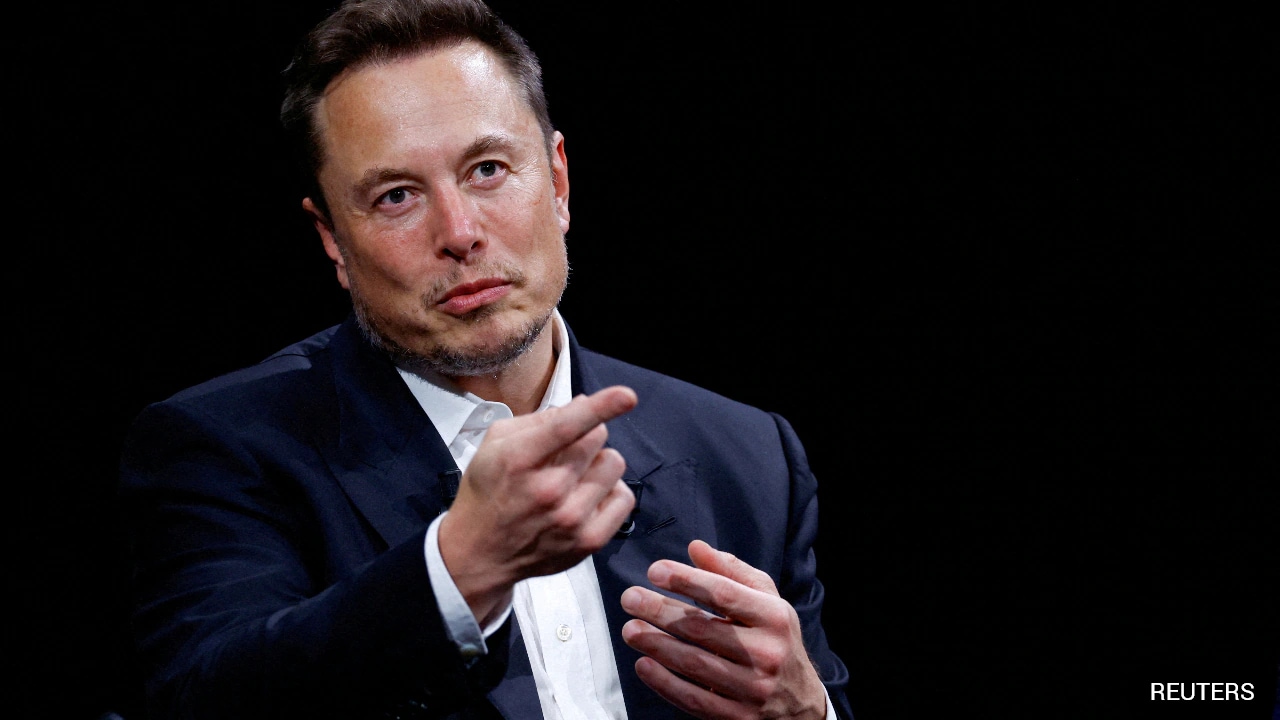
Political reporters love a big, round number. They print "$3.6 million a day," slap Elon Musk’s face on the thumbnail, and call it journalism.
It is lazy math. Worse, it is a total misread of how power actually moves in Washington.
If you believe that writing eight-figure checks to a Super PAC is what makes Musk dangerous—or effective—in US midterm elections, you are still fighting the campaign finance wars of 2012. You are staring at the magician’s left hand while the right hand rewrites the rules of reality.
I have spent over a decade watching billionaires light nine-figure fortunes on fire in federal races. I sat in war rooms during the 2016 and 2020 cycles watching consultants bleed mega-donors dry for 30-second television spots that voters muted before the candidate’s name even hit the screen. Cash is loud. Cash makes headlines. Cash is also the least efficient weapon in a modern political arsenal.
When mainstream outlets frame Musk purely as the "biggest donor," they flatten a structural shift into a simple accounting story. They treat him like Sheldon Adelson with a rocket company. That comparison is fatal to anyone trying to understand modern political influence.
The Myth of the Mega-Donor Monopoly
Let’s look at the numbers the press loves to wave around, and then look at what those numbers actually buy.
Under Federal Election Commission (FEC) rules, an individual cannot just hand $3.6 million a day to a congressional candidate. Hard-money limits cap direct contributions to a candidate’s campaign committee at a few thousand dollars per election cycle. To move tens of millions, a billionaire has to route funds through an independent expenditure-only committee—commonly known as a Super PAC.
Here is the catch that political commentators routinely gloss over: Super PACs get the worst advertising rates in media.
By law, broadcast television stations must offer candidates the "Lowest Unit Charge" during the 45 days before a primary and the 60 days before a general election. Super PACs do not get that discount. In swing districts during October, a Super PAC often pays three to four times more than a candidate’s campaign for the exact same slot on local news.
When you hear that a billionaire is spending $3.6 million a day, roughly 15% to 20% of that goes straight into the pockets of media buyers, consultants, and production vendors before a single voter sees an ad. Another massive chunk gets eaten up by inflated ad inventory prices in saturated media markets like Phoenix, Philadelphia, or Atlanta.
Consider the historical track record of pure cash dumps:
- Michael Bloomberg (2020): Spent over $1 billion of his own money in a matter of months. Result: Won American Samoa and dropped out before Super Tuesday was even cold.
- Tom Steyer (2020): Burned through more than $340 million. Result: Zero delegates.
- Meg Whitman (2010): Spent $144 million of her personal wealth running for Governor of California. Result: Lost by 13 points.
Money buys volume. It does not buy persuasion. In hyper-polarized midterm elections, where the vast majority of voters have already hardened their tribal allegiances months before Labor Day, carpet-bombing swing districts with Super PAC mailers and cable spots yields diminishing returns. By the time a donor is spending $3.6 million a day, they are mostly paying to annoy people who have already made up their minds.
What $3.6 Million a Day Actually Buys (And Why It’s Clumsy)
To be fair, midterm elections are not presidential primaries. Turnout drops. Margins shrink. In a House race decided by 2,500 votes, a targeted ground game funded by a Super PAC can tip the scales.
When Musk funnels millions into ground operations—canvassers, door-knocking apps, voter registration drives in low-propensity precincts—he is targeting the one area where cash still matters: turnout engineering. You do not use Super PAC money to convince a lifelong Democrat to vote Republican, or vice versa. You use it to find the 4,000 people in a suburban county who agree with your candidate, rarely bother to vote in non-presidential years, and need three knocks on their door to actually mail in their ballot.
Even here, though, throwing billions at the problem creates friction.
Rapidly scaling a field operation with outside money almost always leads to vendor bloat and fraud. When a Super PAC suddenly injects tens of millions of dollars into third-party canvassing firms six weeks before an election, those firms hire anyone with a pulse to hit door-knocking quotas. GPS spoofing, fake check-ins, and unmotivated canvassers become endemic.
I have seen field directors tear their hair out watching millions of dollars vanish into paid canvassing firms whose canvassers sat in parked cars tapping "not home" on their tablets to collect hourly wages. Money cannot manufacture genuine grassroots enthusiasm overnight. It can only rent mercenaries. And mercenaries do not fight like true believers.
The Real Currency Isn't FEC Filings—It’s Distribution
If the $3.6 million daily burn rate is largely an inefficient, expensive flex, why are political operatives on both sides terrified of Musk?
Because they are looking at his wallet instead of his servers.
Every dollar Musk spends through a Super PAC has to be disclosed to the FEC. Watchdog groups like OpenSecrets track it. Journalists write breathless stories about it. Opponents use it as a fundraising boogeyman ("Help us stop Elon Musk from buying this seat!"). In fact, being labeled the "biggest donor" often backfires by giving the opposing party a unifying villain to energize their own small-dollar base.
Meanwhile, Musk owns X.
Owning a major global information network is worth infinitely more than any Super PAC, and it does not require a single FEC disclosure form.
Think about the mechanics of political communication. A Super PAC has to pay tens of millions of dollars to interrupt a user's experience with an obvious political advertisement—an ad that the user’s brain is trained to ignore.
The owner of an algorithmic feed does not need to buy ads. The feed is the environment.
When a platform owner posts a meme, replies to a fringe account, or boosts a specific narrative about border security, inflation, or election integrity, that content hits tens of millions of screens organically. There is no "Paid for by America PAC" disclaimer at the bottom. There is no media buyer taking a 15% commission. There is no lowest-unit-charge penalty.
More importantly, the platform sets the frame for the entire political press corps. Political journalists live on X. They get their story ideas there. They measure "momentum" by what is trending in their feeds. When Musk shapes the conversational gravity on X, he dictates what cable news producers talk about at 6:00 PM. That earned media is worth billions, and it costs him zero marginal dollars.
The Structural Leverage Nobody Wants to Talk About
The obsession with daily campaign burn rates also obscures a second, far quieter source of power: federal contracting dependency.
Most mega-donors give money to get access, ideological satisfaction, or favorable tax policy. Musk is in a completely different category. His companies—specifically SpaceX and Tesla—are deeply entangled with the United States government.
SpaceX is not just a vendor; it is critical national security infrastructure. The Pentagon relies on Falcon 9 rockets to launch military satellites. NASA relies on Dragon capsules to reach the International Space Station. Starshield, SpaceX’s military satellite unit, holds classified contracts with intelligence agencies.
When a traditional donor writes a check, they are asking politicians for favors. When the man who launches America's spy satellites writes a check, the power dynamic is inverted. Lawmakers on the House Armed Services Committee or the Senate Commerce Committee cannot simply ignore him, regardless of which party holds the gavel.
Campaign contributions are merely the public-facing receipt for a relationship that is actually cemented by rocket engines, satellite constellations, and federal regulatory approvals. Focusing on the $3.6 million a day is like analyzing a shark’s diet by looking at the remoras attached to its belly.
Answering the Questions Voters Are Actually Asking
When headlines scream about billionaire spending, the public naturally asks a set of predictable questions. Most of them are built on faulty premises.
"Can Elon Musk legally buy a midterm election?"
No, and anyone telling you otherwise is selling fear for clicks. You cannot purchase votes, and campaign finance laws strictly prohibit coordinating Super PAC spending directly with candidates. What a billionaire can buy is agenda-setting power and turnout infrastructure in razor-thin districts. In a wave election—where national economic mood or presidential approval ratings swing voters by five to ten points—no amount of Super PAC cash can save an unpopular party. Money only matters at the margins, in races decided by less than two percentage points.
"Why doesn't the FEC stop one person from spending $3.6 million a day?"
Because the Supreme Court settled this in 2010 with Citizens United v. FEC, followed by SpeechNow.org v. FEC. The legal doctrine equates independent political spending with protected First Amendment speech. Unless Congress passes a constitutional amendment—which requires a two-thirds majority in both houses and ratification by 38 states—there is no legal mechanism to cap how much of his own money a citizen spends on independent political advocacy. Complaining about the daily dollar figure is yelling at a hurricane.
"Does billionaire money actually change how people vote?"
Almost never. Decades of political science research, including landmark field experiments by scholars like Donald Green and Alan Gerber, show that television ads have minimal, rapidly decaying effects on voter choice. Personal contact—a neighbor knocking on a door—moves the needle far more than a glossy mailer funded by a tech mogul. When voters see a billionaire’s name attached to a campaign, it often triggers psychological reactance: people resent feeling manipulated by the ultra-wealthy and dig their heels in further.
The Downside of the Contrarian View: Where Cash Still Kills
I have spent this entire piece dismantling the myth of the omnipotent mega-donor. Now, let me tell you where my own argument has a blind spot.
While billionaire cash rarely flips a general election in a high-profile race, it is devastating in low-information primaries and down-ballot races.
In a congressional primary where only 12% of eligible voters show up, name recognition is everything. If a Super PAC drops $5 million into a primary race four weeks out, they can define an unknown candidate before that candidate ever raises enough money to introduce themselves. They can bury an incumbent who wasn't expecting a fight.
Even more insidious is the deterrence effect.
When Musk signals he is willing to burn $3.6 million a day, the real impact isn't the ads that air—it is the candidates who never run. Talented, moderate, or independent-minded challengers look at that war chest, realize they will spend the next year getting buried under a mountain of negative attack ads, and decide to stay in the private sector. Conversely, sitting members of Congress alter their votes on tech regulation, artificial intelligence oversight, or labor law—not because Musk bribed them, but because they are terrified of waking up to a $10 million primary challenger funded by his pocket change.
Fear of the checkbook is far more potent than the checkbook itself.
How to Actually Read Campaign Finance News
If you want to understand who is winning the battle for political power, stop reading the top-line numbers in campaign finance press releases. They are vanity metrics designed to intimidate rivals and generate headlines.
Instead, apply these three filters every time a mega-donor makes the news:
- Follow the primary threats, not the general election spend. Watch where the money goes six months before November. Primary spending enforces ideological discipline and terrifies incumbents into compliance. General election spending is mostly noise.
- Separate media buys from data infrastructure. If a billionaire is pouring millions into generic TV spots, they are wasting money. If they are quietly funding voter-file integration, ballot-chasing software, and legal challenges to state voting rules, pay close attention. Infrastructure outlasts election cycles; ads evaporate the second they air.
- Watch the platform, not the PAC. Measure a tech mogul’s political influence by how effectively they steer the daily news cycle and shape algorithmic visibility, not by how much they report to the FEC.
The press will keep counting Elon Musk’s money by the day, the hour, and the minute because simple arithmetic makes for easy copy. Let them count the pennies. Power in America isn't bought at the FEC window anymore—it is built into the networks we scroll through before we ever step into a voting booth.