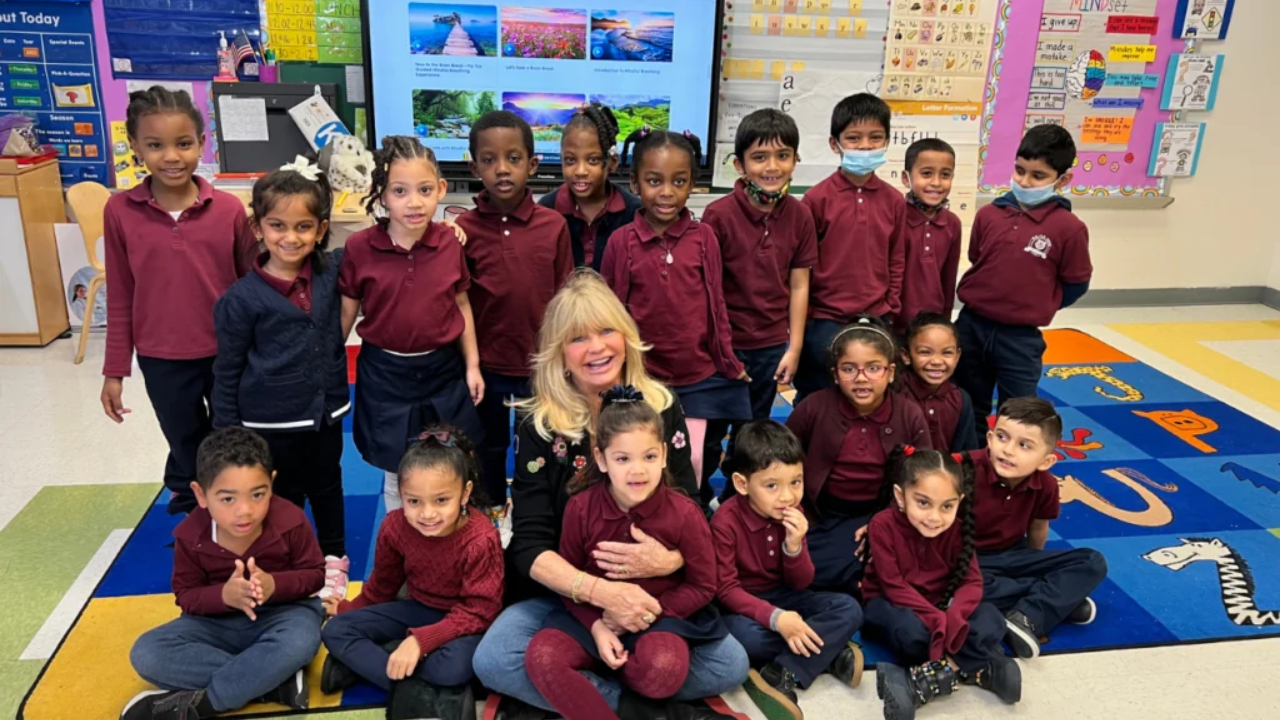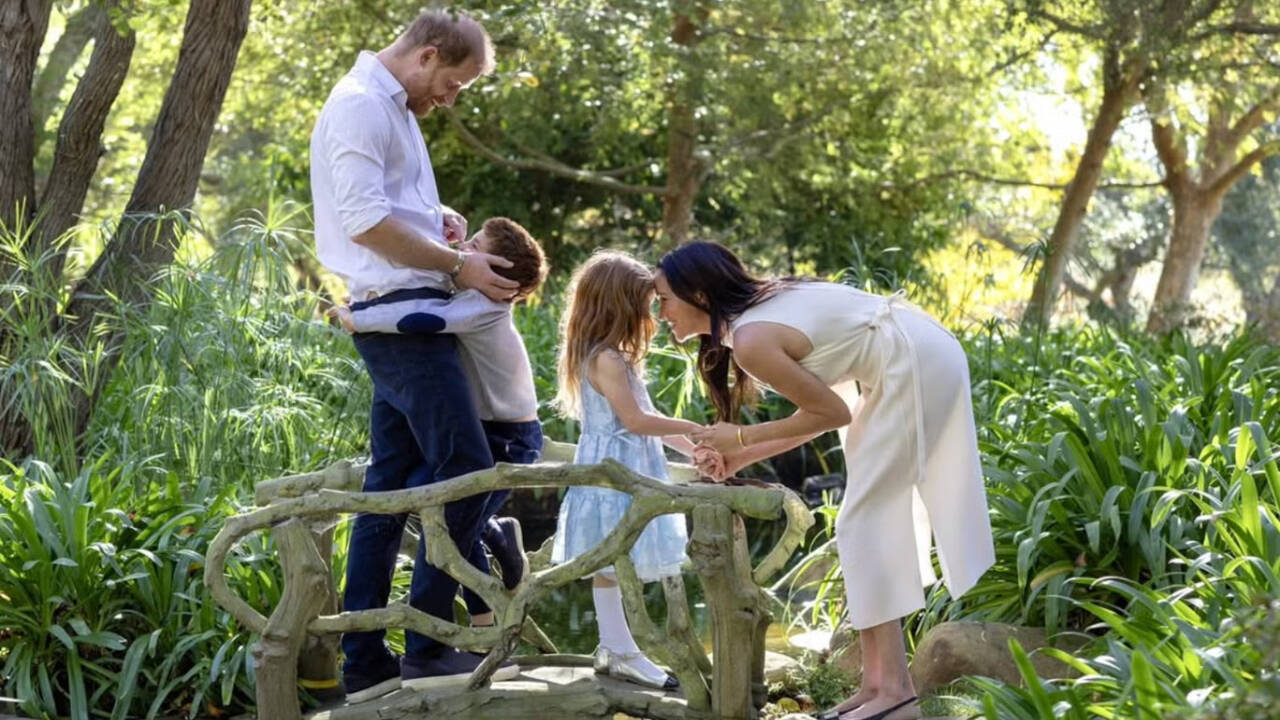
Everyone wants to talk about the uniforms. They want to dissect the accent shifts, the security perimeters, and whether an English prep school magically manufactures self-esteem faster than a California Montessori.
You are looking at the wrong scoreboard.
When headlines claim that UK school life has boosted Archie and Lilibet’s confidence, the celebrity press treats geography like a magic pill. Move across the Atlantic, drop a child into a centuries-old institution, and watch the shyness evaporate. It is lazy storytelling. Worse, it tricks everyday parents into believing that postcode prestige and tuition price tags are the primary drivers of childhood resilience.
They are not. In fact, treating elite schooling as a confidence factory often masks the exact environmental stressors that hollow kids out from the inside.
The Geography Fallacy in Child Development
Let’s dismantle the core premise first. Does a British classroom inherently build stronger kids than an American one? No.
Having spent fifteen years advising ultra-high-net-worth families and independent school boards on student transitions and institutional culture, I have watched hundreds of children bounce between London, Los Angeles, New York, and Geneva. The passport stamp never fixes the child. When a kid suddenly blooms after a transatlantic move, the school rarely deserves the credit. The household friction just dropped.
Think about what actually changes when a high-profile family shifts a child’s schooling environment. It is not the phonics curriculum. It is the predictability of the daily perimeter.
In developmental psychology, what casual observers call "confidence" is usually felt safety paired with earned competence. Decades of attachment research—pioneered by John Bowlby and Mary Ainsworth—established that children only explore, take social risks, and project assurance when their secure base is stable. When a child’s surroundings are chaotic, hyper-scrutinized, or constantly shifting, their nervous system stays locked in threat detection. You cannot learn long division or make friends on the playground when your brain is scanning the perimeter for cameras or bracing for parental stress.
If Archie and Lilibet are thriving in a UK setting, look at the mechanics behind the curtain:
- Strict Institutional Boundaries: Traditional British independent schools run on rigid, non-negotiable routines. Uniforms eliminate morning status anxiety. Clear hierarchies tell a seven-year-old exactly where the walls are. For children living under a global microscope, external structure feels like relief, not restriction.
- Cultural Deflection: In Montecito, celebrity proximity is the local currency. In a traditional English schoolyard, overt attention-seeking is socially penalized. Blending into a sea of identical blazers gives famous kids something money rarely buys in Southern California: functional anonymity among peers.
- The Novelty Reset: Moving schools wipes the social slate clean. A child who was labeled "quiet" or "the famous kid" in one room gets to reintroduce themselves without baggage in another.
None of this requires a British passport. Any parent who thinks flying their kid to Surrey will cure social anxiety is buying an expensive placebo.
The Dark Side of the Prep School Confidence Machine
Before you start researching boarding and prep school admissions, let’s talk about the bill that comes due later. Because the British independent school model—the very one praised for churning out articulate, poised youngsters—has a well-documented shadow side that glossy royal coverage conveniently ignores.
Psychotherapist Nick Duffell spent decades studying adults educated in the British elite school system, coining the term Boarding School Syndrome—though its day-school equivalents share plenty of DNA. When a school demands early emotional self-reliance, stiff-upper-lip composure, and rapid adaptation to rigid social codes, children learn to perform confidence long before they actually feel it.
They develop what Duffell calls a "strategic survival personality." On the surface, the child looks dazzling. They shake adults' hands firmly. They speak in complete, well-modulated sentences. They project effortless poise at age eight.
Inside, they are often dissociating from their actual emotional needs to keep the peace and fit the mold.
I have sat across from dozens of forty-year-old executives—graduates of the most prestigious prep and public schools in England—who could command a boardroom of five hundred people without blinking, yet could not tell their spouse they were sad without having a panic attack. Early institutional poise is not proof of psychological health. Sometimes it is just very polished armor.
When celebrity media celebrates a child "coming out of their shell" in a structured UK school, ask a harder question: Is the child genuinely relaxing into who they are, or are they simply mastering a stricter set of performance rules?
Why Your Search History Is Asking the Wrong Questions
Whenever a story like this trends, search engines light up with predictable parental anxieties. Let’s tear apart the most common questions parents ask when comparing royal or celebrity schooling to their own lives.
Do British schools really build more confidence than American schools?
The question assumes national school systems are monoliths. They are not. An underfunded comprehensive in Birmingham has nothing in common with a £30,000-a-year prep school in Windsor, just as a progressive private academy in Santa Barbara bears zero resemblance to a public middle school in Ohio.
What differs between mainstream UK and US educational philosophies is where they place the locus of validation:
| Feature | Traditional UK Prep Model | Progressive US Private Model |
|---|---|---|
| Primary Currency | Stoicism, collective conformity, etiquette | Self-expression, emotional articulation, individuality |
| Social Friction | Managed through uniforms and strict rules | Managed through restorative circles and dialogue |
| How Confidence Looks | Composure under pressure, articulate speech | Unapologetic self-advocacy, questioning authority |
| The Hidden Trap | Emotional repression disguised as maturity | Fragility when the world refuses to validate feelings |
Neither system holds a monopoly on resilient kids. Each produces its own specific brand of dysfunction when taken to extremes.
How do royal and celebrity kids handle the pressure of fame at school?
Poorly, unless the adults around them build an airtight firewall between public mythology and daily life.
Imagine a scenario where a seven-year-old walks into class knowing that millions of strangers debate their parents' marriage over morning coffee. The danger isn't that classmates will bully them. Seven-year-olds mostly care about who has the best trading cards or who runs fastest at break time. The real danger is adult projection—teachers treating the child with weird deference, other parents angling for playdates to climb a social ladder, or family members venting their media grievances at the dinner table.
Kids absorb parental stress like dry sponges. If the parents are at war with the press, the court system, or their own relatives, no school on earth can insulate the child from the fallout. Conversely, when parents regulate their own nervous systems and treat school as an ordinary, non-negotiable part of growing up, the kid relaxes.
Should parents relocate or switch schools to boost a shy child’s self-esteem?
Almost never as a first move. Pulling a child out of their environment to cure shyness teaches them a dangerous lesson: When social friction gets uncomfortable, we flee and reset the board.
Resilience requires friction. Psychologist Angela Duckworth’s work on grit and Carol Dweck’s research on mindset both point to the same uncomfortable truth—kids build durable self-belief by surviving manageable failures in familiar territory, not by getting airlifted into a shiny new campus every time they feel awkward.
You only pull the ripcord and switch schools when the institution itself is toxic, unsafe, or fundamentally misaligned with how your child’s brain is wired (for instance, forcing a neurodivergent kid through a rigid rote-memorization factory). Switching schools to chase an aesthetic or a vibe is parental vanity dressed up as strategy.
What Actually Builds Unshakeable Childhood Confidence
Strip away the royal titles, the transatlantic flights, and the bespoke blazers. Whether your child attends a state primary school in Manchester, a public elementary school in Austin, or an elite academy in Berkshire, real confidence comes from four unglamorous mechanics.
1. Radical Boredom and Unsupervised Risk
Modern parenting—especially among the wealthy—has engineered every ounce of organic risk out of childhood. Between scheduled enrichment classes, monitored playdates, and security details, kids rarely get to navigate a conflict without an adult referee stepping in within ten seconds.
Psychologist Peter Gray has documented the direct correlation between the decline of free, unsupervised play and the spike in youth anxiety. When kids organize their own games, negotiate their own rules, and skin their own knees without an adult swooping in to narrate the experience, they discover a foundational truth: I can handle things when they go sideways.
If you want a confident kid, stop curating their afternoons. Kick them outside, put away the itinerary, and let them figure out what to do when nothing is planned.
2. Competence Before Praise
The self-esteem movement of the late twentieth century ruined a generation of parents by convincing them that telling kids they are special makes them confident. It doesn't. Kids have finely tuned radar for fake praise. When you applaud a mediocre drawing like it belongs in the Louvre, you don't build confidence—you teach the child that your standards are meaningless and that they cannot trust your feedback.
Real self-assurance is the byproduct of observable mastery. It comes from struggling with something hard—tying shoelaces, learning an instrument, mastering times tables, cooking an egg without burning it—and watching their own effort produce a tangible result. Give your child real responsibilities around the house that actually matter to the family's daily survival. Nothing makes an eight-year-old stand taller than knowing their contribution is genuinely needed, not invented to keep them busy.
3. Predictable Friction at Home
Watch how a child handles a firm "no" at home, and you will know how they handle the schoolyard. Households that negotiate every bedtime, snack choice, and screen limit exhaust their children. Decision fatigue isn't just for CEOs; when a six-year-old feels like they are co-piloting the family, the responsibility terrifies them.
Calm, benevolent authority—where the adults hold the boundaries without anger or guilt—frees children to actually be children. They don't have to test the fences all day to see if the adults are awake.
4. Separation of Identity From Performance
High-achieving environments breed a lethal virus: conditional worth. When a child senses that parental pride spikes after a glowing school report or a winning goal, and cools when they stumble, their confidence becomes a house of cards. One bad exam or social snub flattens them.
Make sure your kids know—through your actions, not just speeches—that their standing in your house is completely divorced from their academic output, social popularity, or athletic trophies. Laugh at your own mistakes in front of them. Let them see you fail at something new and shrug it off. Modeling emotional recovery beats hiring a dozen private tutors.
The Honest Catch With Stepping Off the Prestige Treadmill
There is a real price to pay if you reject the status-driven schooling mindset and focus strictly on psychological fundamentals. Let’s not pretend otherwise.
Elite schools and prestigious postcodes do buy network access. They open doors to specific universities, legacy internships, and social circles that remain stubbornly closed to outsiders. If you opt out of the high-pressure credential race in favor of a slower, grounded childhood, your kid might have to work twice as hard later to get their foot in certain institutional doors. You are trading early social leverage for long-term emotional durability.
And if you do choose the high-prestige path—whether out of security necessity, family tradition, or genuine academic fit—you have to work twice as hard at home to counteract the pressure cooker. You cannot outsource emotional grounding to a headmaster.
Stop reading royal parenting headlines like they are an instruction manual for your living room. A school uniform is just fabric, a British accent is just geography, and a press release about a child’s confidence is just public relations. Look at your own kid across the dinner table tonight—without the noise, without the comparisons, and without the status anxiety—and ask yourself whether they feel safe enough to fail in front of you.