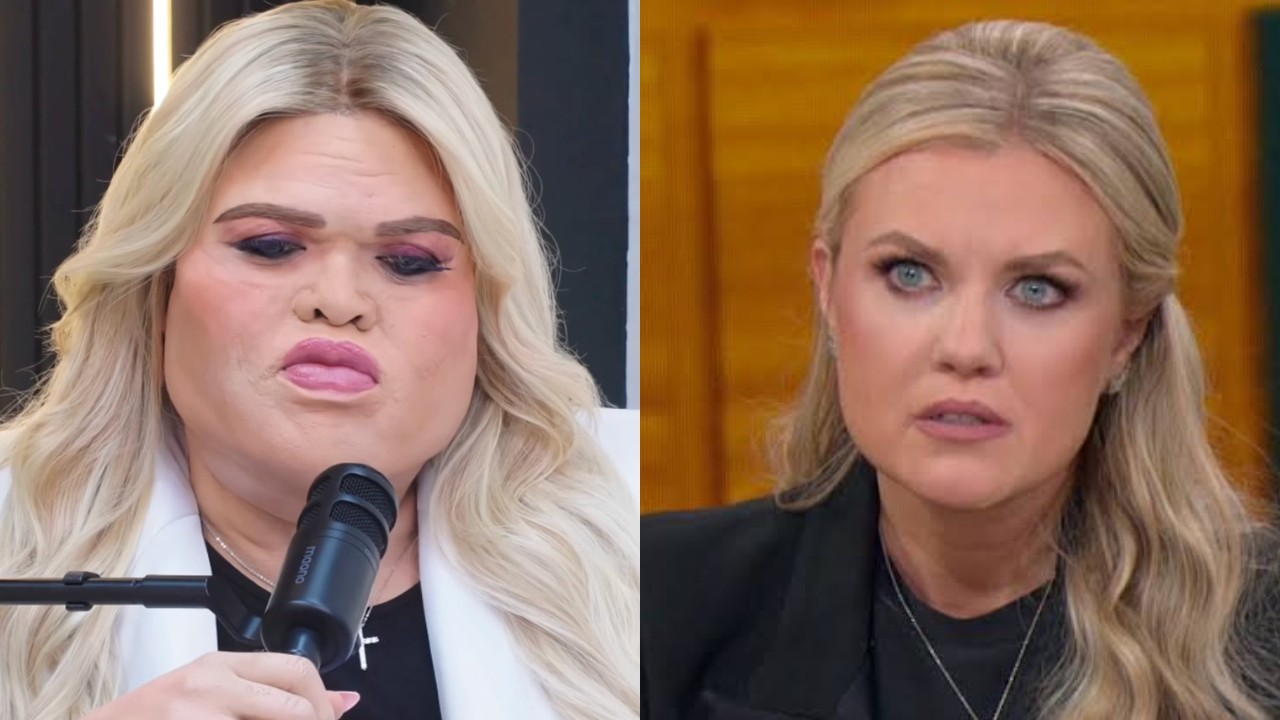
The internet is currently drowning in "fact-checks" trying to determine if YouTuber Druski and Erika Kirk actually traded blows on social media after their viral skit. Most outlets are patting themselves on the back for "debunking" the rumors, pointing to timestamps and lack of direct tags as proof that it was all a staged performance.
They are missing the point so spectacularly it borders on professional negligence. Don't forget to check out our previous article on this related article.
By asking "Is it real?" you’ve already lost the game. In the modern attention economy, the binary between "fake" and "real" is a relic of the analog age. Druski isn't just a comedian; he is a structural engineer of digital friction. Whether he and Erika Kirk sat in a green room and scripted a rebuttal or simply understood the unspoken assignment of "engagement at all costs" is irrelevant.
The real story isn't the response. It's the fact that you are still Pavlovian enough to care. To read more about the history of this, GQ provides an excellent breakdown.
The Myth of the "Organic" Viral Moment
Mainstream entertainment reporting treats viral moments like lightning strikes—unpredictable, natural, and rare. That is a lie. I have watched digital creators spend more on "organic" seeding than some indie films spend on production.
The "Could This Be Real?" cycle is the product.
When Druski drops a skit that leans into the uncomfortable—specifically his "Coulda Been Records" persona—he isn't just looking for laughs. He is looking for a reaction that triggers a secondary wave of content. The "response" from the subject of the skit isn't an interruption of the bit; it is the second act of the play.
Competitors argue that because there was no "official" statement, the beef is debunked. That is a fundamental misunderstanding of how Gen Z and Gen Alpha consume conflict. They don't want a PR statement via Variety. They want a cryptic Instagram Story that disappears in 24 hours. They want a "leak."
By debunking the rumor as "fake," traditional media is actually doing Druski's marketing for him. They are keeping the narrative alive while claiming to kill it.
The Druski Method: Exploiting the Empathy Gap
Druski’s genius lies in his ability to weaponize second-hand embarrassment. It’s a specific psychological trigger. When Erika Kirk appears in a skit and subsequently "responds," the audience is forced into a state of hyper-analysis.
- "Is he going too far?"
- "Is she actually offended?"
- "Am I a bad person for laughing?"
This internal monologue is what drives retention.
Most "insiders" will tell you that the goal of a skit is to be funny. Wrong. The goal is to be debatable. Comedy is subjective; debate is algorithmic gold. If Druski makes a funny video, it gets shared. If Druski makes a video that looks like it might have actually ruined someone's reputation, it gets analyzed, fact-checked, and litigated across every platform.
The "fact-checkers" are just unpaid interns in Druski's marketing department.
Why the "Fact-Check" Industry is Failing You
You see these headlines everywhere: "Fact check: Did [Influencer A] really say [Thing B]?"
These articles exist for SEO, not for truth. They target "People Also Ask" queries like:
- "Is Druski and Erika Kirk's beef real?"
- "What happened between Druski and the girl in his video?"
The answers provided are usually a lukewarm "It appears to be a joke."
Here is the brutal truth: In the world of high-stakes content creation, the joke is the reality. If a "fake" beef results in a 20% spike in followers for both parties and a lucrative brand deal for the "victim," in what world is that beef not real? The financial outcomes are tangible. The data is real. The bank accounts are real.
Labeling it "debunked" suggests that the audience was being tricked. They weren't. They were participating in a simulation where the primary currency is attention, not sincerity.
Stop Looking for "Sincere" Content
The biggest misconception in the entertainment space right now is that "authenticity" is the gold standard. It’s not. Compulsion is the standard.
You didn't click on the Druski/Kirk news because you wanted the truth. You clicked because the friction of the interaction made you feel something uncomfortable.
I’ve worked with talent who would trade their left arm for the kind of "negative" press these viral skits generate. Traditional celebrities are terrified of looking like bullies or losers. Digital-native stars like Druski understand that "The Villain" and "The Victim" are just roles you rotate through to keep the audience from scrolling.
If you want to understand the Druski phenomenon, stop looking at the content and start looking at the comment section.
- The people saying "He's wrong for this" are providing the engagement.
- The people saying "It’s just a skit" are providing the defense.
- The people asking "Is this real?" are providing the longevity.
It is a self-sustaining ecosystem that requires zero input from "truth-seekers."
The Actionable Truth
If you are a creator or a brand trying to learn from this, do not try to "be real." Try to be resonant.
Resonance happens in the gray area between truth and fiction. If you clarify the joke, you kill the momentum. Druski never confirms, never denies, and never apologizes. He allows the vacuum of information to be filled by the frantic typing of bloggers and fact-checkers.
The "Fact-Check" is the final stage of a viral cycle. Once the "truth" is out, the moment is dead. Druski’s goal is to delay that death for as long as possible.
The next time you see a "viral rumor debunked" headline, realize that you are reading an obituary for a moment that already served its purpose. The creators have already cashed the checks. The audience has already moved on. The only person left behind is the one still asking if it actually happened.
Stop trying to find the line between the skit and the reality. The line was erased years ago. Druski didn't trick you; he invited you to a play, and you’re trying to sue the actors for not actually being the characters they played on stage.
The beef isn't fake. Your understanding of reality is just outdated.
Turn off the fact-check. Start watching the mechanics.