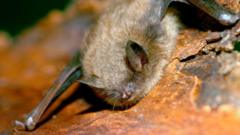
The media recently went into a predictable, copy-paste frenzy over the tragic death of an 11-year-old Canadian boy who contracted rabies after waking up with a bat on his face. The headlines screamed with primal terror. They painted nature as a horror movie villain creeping through your bedroom window.
This is lazy, sensationalist journalism at its worst. It feeds a systemic misunderstanding of public health priorities. You might also find this connected story useful: Why Trump Massive Crypto Windfall Matters More Than He Admits.
Every single mainstream outlet missed the actual story. They focused on the gothic horror of a bat bite in the dark rather than the structural failure of risk assessment. The tragedy in Ontario wasn’t a failure of wildlife management or a sign of a mutant bat uprising. It was a failure of statistical literacy and clinical protocol execution.
While the public panics over an animal that weighs less than a golf ball, they ignore the dull, mundane risks killing thousands of people every single day. Let's dismantle the hysteria and look at the hard data. As discussed in recent articles by NPR, the implications are notable.
The Mathematical Absurdity of Rabies Hysteria
Public health policy cannot be driven by anomalies. To understand how warped the coverage of this tragedy is, we have to look at the actual numbers provided by agencies like the Centers for Disease Control and Prevention (CDC) and Health Canada.
In Canada, human rabies cases are so rare they are practically statistical noise. There have been fewer than 30 cases since the 1920s. In the United States, a nation of over 330 million people, human rabies cases average one to three per year. You are statistically more likely to be struck by lightning twice, killed by a vending machine, or crushed by an escalator than to contract rabies from a bat in North America.
Yet, look at the media allocation. Look at the public terror.
Compare this to the quiet killers. Cardiovascular disease claims roughly 700,000 lives annually in the U.S. alone. Medical errors account for an estimated 250,000 deaths per year. If journalists actually cared about saving lives rather than farming clicks through primal dread, they would spend less time writing campfire ghost stories about bats and more time auditing hospital cleanliness and sedentary lifestyles.
The Myth of the Invisible Bite
The standard narrative pushed by the competitor article is that bat bites are completely undetectable. They claim that because bat teeth are tiny and sharp, you can be bitten in your sleep and never know it. Therefore, the logic goes, if you even see a bat in a room, you must immediately rush to the emergency room for expensive post-exposure prophylaxis (PEP).
This is a massive oversimplification that drives unnecessary emergency room crowding and wastes precious medical resources.
As a clinical reality, a bat cannot bite you without making physical contact. If you wake up and a bat is clinging to your skin, yes, you assume exposure. But the idea that bats are ninja-like phantom assaulters gliding through rooms, biting sleeping humans without waking them up, is largely a myth.
Most people wake up when something lands on them. The tragedy in Ontario occurred precisely because the child did wake up to a bat on his face. The breakdown wasn't that the bite was invisible; the breakdown was that the parents and the initial medical consult failed to recognize that a bat touching a sleeping person constitutes an automatic indication for PEP, regardless of whether a visible wound is present.
Why the Medical Community Failed, Not the Parents
We love to blame individuals or freak accidents because it spares us from looking at institutional incompetence. The mainstream narrative treats this case as a bizarre act of God. It wasn’t.
I have spent years analyzing how frontline clinical staff handle low-probability, high-consequence events. Emergency rooms are hyper-optimized for heart attacks, strokes, and broken bones. They are shockingly poor at managing rare infectious diseases.
When a patient walks into a clinic and says, "A bat touched my face, but I don't see a mark," a shocking number of general practitioners or triage nurses will look for a puncture wound, find nothing, and send the patient home with a basic antiseptic.
That is a lethal mistake.
The rabies virus is neurotropic. It hitches a ride along the peripheral nervous system to the central nervous system. Once it reaches the brain and clinical symptoms appear—hydrophobia, hallucinations, localized paralysis—the mortality rate is virtually 100%. The Milwaukee Protocol, a famous attempt to cure symptomatic rabies through a chemically induced coma, has been thoroughly discredited by subsequent trials as a statistical fluke rather than a reproducible cure.
The lesson here isn’t "fear the woods." The lesson is that our medical triage systems are failing to train clinicians on the absolute zero-tolerance nature of wildlife exposure. If there is any potential contact with a bat during sleep, PEP must be administered immediately. No exceptions. No waiting for symptoms. No looking for bite marks.
The High Cost of False Positives
Let’s look at the flip side of this panic, an angle the mainstream media completely ignores because it requires nuance.
Because of hysterical reporting, emergency rooms across North America are flooded every summer by thousands of people who saw a bat flying outside their window or found a dead bat in their attic and want the rabies vaccine.
A standard course of Post-Exposure Prophylaxis—consisting of human rabies immune globulin (HRIG) and four doses of the vaccine—costs between $5,000 and $10,000 per person in the United States.
Imagine a scenario where a small town of 20,000 people panics because a single rabid bat is found in a local park. If 500 anxious parents rush their children to the ER for precautionary shots, that single media-driven panic costs the local healthcare economy up to $5 million.
That is capital diverted away from mental health services, prenatal care, addiction treatment, and preventative cardiology—areas where $5 million could save dozens of actual, verifiable lives. Instead, it is spent mitigating an infinitesimal risk driven by sensationalist headlines.
Stop Fixating on the Wrong Threats
We live in an era of profound risk asymmetry. We obsess over the spectacular, cinematic threats while ignoring the systemic ones.
The competitor's article wants you to check under your bed for bats. They want you to live in a state of hyper-vigilant anxiety about the natural world. This fear is misplaced.
If you want to protect your family, don’t buy bat nets for your windows. Inspect your home for entry points to maintain basic hygiene, sure, but then focus your energy where the danger actually lies. Fix your diet. Fix your driving habits. Audit the prescriptions your doctor hands you.
The real danger to your life isn't a freak encounter with wildlife in the middle of the night. It is the boring, everyday choices you make that slowly degrade your health while you waste your time worrying about statistical anomalies.
Stop reading the horror stories. Look at the data, demand better training for your local ER staff, and stop letting the media dictate what you fear.