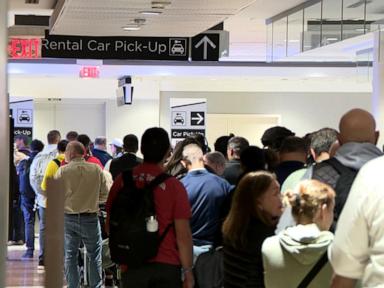
When an airport ground stop traps thousands of exhausted travelers in terminal purgatory, the rental car counter transforms into a pressure cooker where corporate failures meet human desperation. Recently, a short video clip of a rental car branch manager calmly de-escalating a massive line of stranded passengers went viral across social media. Instead of hiding behind rigid corporate scripts or disappearing into a back office, the manager stepped out from behind the counter, communicated transparently about vehicle inventory, and managed the crowd with rare composure. The clip racked up millions of views not because the manager performed a miracle, but because basic competence and human empathy have become shockingly rare in modern travel logistics.
The Anatomy of a Terminal Meltdown
To understand why a single manager keeping their cool qualifies as front-page news, you have to look at how airport ground stops break the travel ecosystem. When the Federal Aviation Administration halts departures due to severe weather, air traffic control staffing shortages, or technical outages, airlines immediately begin canceling flights. Thousands of passengers instantly pivot from waiting at the gate to scrambling for ground transportation. They rush down the escalators to the rental car facility, all demanding a vehicle at the exact same moment. Meanwhile, you can explore related developments here: The Quiet Decay of Luxury When David Beckham Meets the Gas Station Counter.
The math never works. Airport rental locations operate on strict fleet utilization models designed around predictable flight schedules and historical booking data. They do not keep hundreds of extra sedans sitting idle in overflow lots just in case an airline's scheduling software crashes or a thunderstorm stalls East Coast air traffic. Within twenty minutes of a major ground stop, every unreserved car is gone. Within forty minutes, even customers with confirmed reservations find themselves staring at an empty lot because incoming renters missed their flights and never returned the cars those reservations relied upon.
At this exact moment, the traditional corporate playbook fails entirely. Frontline agents are typically hourly employees armed with outdated terminal screens, zero authority to waive fees, and strict instructions not to make promises they cannot keep. When faced with a wall of angry, sleep-deprived travelers, most branch operations retreat into bureaucratic defense mechanisms. Agents stare at their monitors, repeat policy statements that make no sense to a stranded parent, and wait for security to handle the fallout. The viral manager broke that script by doing the one thing corporate training rarely emphasizes: telling the truth immediately and treating adults like adults. To explore the full picture, check out the recent report by CNBC.
Why Viral Empathy Masks a Broken Business Model
The internet loves a hero story. Watching a frontline worker absorb the rage of a hundred stranded strangers and turn it into quiet cooperation feels good. It restores a bit of faith in humanity. Yet celebrating individual heroism in the travel sector lets massive multi-billion-dollar conglomerates off the hook for systemic operational failures.
Over the past several years, the car rental industry underwent a radical structural shift. During the global travel shutdowns, major rental corporations liquidated hundreds of thousands of vehicles to survive. When demand roared back, supply chain bottlenecks prevented them from rebuilding their fleets at pre-pandemic speeds. Even after vehicle production stabilized, corporate executives realized something profound about their balance sheets. Running leaner fleets drove daily rental rates to historic highs while slashing maintenance and depreciation costs. Wall Street rewarded the discipline.
Fleet tightness became a permanent feature rather than a temporary crisis. When you run a system at ninety-five percent capacity every single day, you eliminate all margin for error. A single disruption—a blizzard in Chicago, a software glitch in Atlanta, a coastal hurricane—causes an immediate, cascading collapse across the entire network.
The burden of that corporate financial strategy falls squarely on the shoulders of branch managers and counter agents. They are the human shields absorbing customer fury generated by executive decisions made thousands of miles away in corporate headquarters. When a manager goes viral for keeping a crowd calm, we are witnessing a skilled improviser successfully managing a crisis that corporate headquarters engineered through lean inventory management.
The Mechanics of De-Escalation Under Fire
Strip away the feel-good social media framing, and what that viral manager actually demonstrated was a masterclass in high-stakes crowd psychology and operational triage. In a crisis, ambiguity breeds panic. When travelers stand in a line that has not moved for forty-five minutes, their minds fill the information vacuum with worst-case scenarios. They assume the staff is incompetent, lazy, or actively hiding vehicles for preferred loyalty members.
Effective crisis management at the counter relies on three specific tactical shifts that almost no corporate manual teaches properly.
Stepping Out From Behind the Barrier
A physical counter is a psychological dividing line. It establishes an "us versus them" dynamic before a single word is spoken. By walking out into the lobby and standing on the same floor as the customers, the manager immediately dismantled the physical barrier between the corporation and the consumer. Vulnerability disarms aggression. It signals that the person in charge is willing to share the physical space and the discomfort of the situation rather than hiding behind a computer monitor.
Radical Inventory Transparency
Most travel companies hoard bad news until the last possible second, hoping a miracle will occur before they have to admit failure. They let people wait in line for two hours only to tell them at the podium that no cars exist. The viral approach flips this entirely. Announcing to the entire room exactly how many cars are currently being washed, how many are expected back within the hour, and what the realistic odds are for walk-up customers allows travelers to make informed decisions. Some people will immediately leave to book a hotel or split a rideshare, instantly reducing the pressure on the queue.
Triaging Human Needs Over Loyalty Tiers
Standard rental protocols dictate that top-tier loyalty members get served first, regardless of circumstance. During a genuine ground stop, rigid adherence to status tiers sparks riots. A family with an infant or an elderly traveler needing medical supplies cannot wait behind a frequent flyer who just wants to drive two hours instead of waiting until morning. Skilled managers quietly reorganize the queue based on genuine human urgency while explaining the reasoning openly to the room. Remarkably, when people understand the why behind a temporary rule change, almost everyone complies without complaint.
The Hidden Friction of Modern Rental Tech
The viral video also inadvertently exposed how badly technology fails when travel goes sideways. For years, rental car giants have poured millions into mobile apps, automated kiosks, and skip-the-counter loyalty programs. On a normal Tuesday afternoon, these tools work wonderfully. You land, check your phone, walk to aisle four, pick a midsize SUV, and drive through the exit gate without speaking to a human being.
During a ground stop, that entire digital infrastructure collapses into uselessness.
Apps continue to accept reservations for locations that have zero physical cars on the asphalt because the software lags behind real-time lot realities. Automated kiosks freeze or throw generic error codes when inventory drops below threshold buffers. Customer service chatbots trap panicked travelers in endless loops of pre-programmed responses that cannot process an FAA ground stop.
Consider a hypothetical scenario that plays out weekly at major hubs. Imagine a traveler books a car through a third-party travel site while sitting on a grounded plane. The third-party site communicates with a central reservation database, which approves the booking based on projected returns that are currently stuck in traffic three states away. The traveler runs to the garage, shows a confirmation number on their phone, and discovers forty other people holding identical confirmations for three available vehicles.
Technology scales efficiency during predictable operations, yet it magnifies chaos during anomalies. No algorithm can look a exhausted traveler in the eye, acknowledge that the system failed them, and negotiate a creative workaround like putting four strangers heading to the same city into a single minivan. Only a seasoned human operator with actual authority can solve that puzzle.
What Corporate Headquarters Gets Wrong About Training
If you ask retail and hospitality executives what their frontline staff needs, they will inevitably point to digital learning modules, customer satisfaction surveys, and standardized greeting scripts. This is precisely backward. Scripts work when transactions are routine. The moment an exception occurs, a script becomes an insult to the customer's intelligence.
True operational resilience requires decentralization. During the golden era of aviation and hospitality, station managers and branch directors operated like autonomous mayors of their respective terminals. They had the authority to buy pizza for delayed crowds, pay cash for local shuttle vans, override system pricing on the spot, and make unilateral decisions to clear bottlenecks.
Over the past two decades, corporate centralization stripped away that local autonomy in the name of cost control and brand consistency. Today, a branch manager often needs regional director approval just to comp a single day's rental or authorize overtime for a car wash crew during an unexpected surge. We have handcuffed the very people closest to the problem and then acted surprised when they freeze during an emergency.
The viral manager succeeded because they ignored the handcuffs. They acted like an owner rather than a middleman. They prioritized solving the immediate human crisis in their lobby over protecting an arbitrary metric on a regional spreadsheet.
The Realistic Cost of Being the Viral Hero
There is a dark postscript to almost every viral workplace video that the public rarely sees. While social media users shower praise on the charismatic employee, corporate public relations teams scramble to claim credit for the good press, even as internal operations teams quietly scrutinize whether the employee violated company policy.
Did the manager promise discounts they weren't authorized to give? Did they bypass loyalty tier protocols? Did they admit on camera that the company had run out of vehicles, potentially hurting brand perception among shareholders? Behind closed doors, corporate compliance departments often view viral heroes as liabilities rather than assets.
Furthermore, emotional labor at that intensity is unsustainable. Absorbing the collective trauma, anger, and anxiety of hundreds of stranded people takes a severe psychological toll. You cannot build a reliable travel infrastructure on the expectation that underpaid branch managers will regularly perform superhuman feats of emotional regulation to compensate for corporate understaffing and razor-thin fleet margins. When you rely on miracles to get through a Tuesday night thunderstorm, your business model is fundamentally broken.
How Travelers Can Survive the Next Ground Stop
Until the travel industry rebalances its obsession with maximum utilization against basic operational resilience, passengers remain on their own when the skies close. Watching a feel-good video will not get you a set of keys when the terminal turns into a war zone, so you have to outmaneuver the crowd before the crowd even forms.
The moment you hear the words "ground stop" from the cockpit or see departure times creeping backward at the gate, do not wait for an official cancellation notice. Open your phone and book a refundable rental car immediately while you are still sitting on the plane. By the time the gate agent announces the cancellation and three hundred people sprint toward the baggage claim escalators, the digital inventory will already be wiped out.
Skip the third-party booking aggregators entirely during weather events or system outages. When inventory shrinks to single digits, rental locations honor direct bookings and loyalty members long before they acknowledge reservations made through discount travel portals. If you do find yourself standing in a massive terminal queue, look past the counter for the person who is actually directing traffic rather than typing on a keyboard. Approach them calmly, acknowledge the chaos they are dealing with, and ask a direct, helpful question about off-airport neighborhood branches. Airport locations run out of cars first, while suburban branches ten minutes away via rideshare often sit on dozens of unrented vehicles because nobody thought to check outside the terminal perimeter.
Ultimately, that viral rental car manager deserves every bit of praise they received, not because they invented some revolutionary new management technique, but because they refused to let a broken system strip away their basic humanity. Yet until corporations stop treating frontline workers as shock absorbers for lean inventory models, the next airport meltdown is already queuing up at the gate.