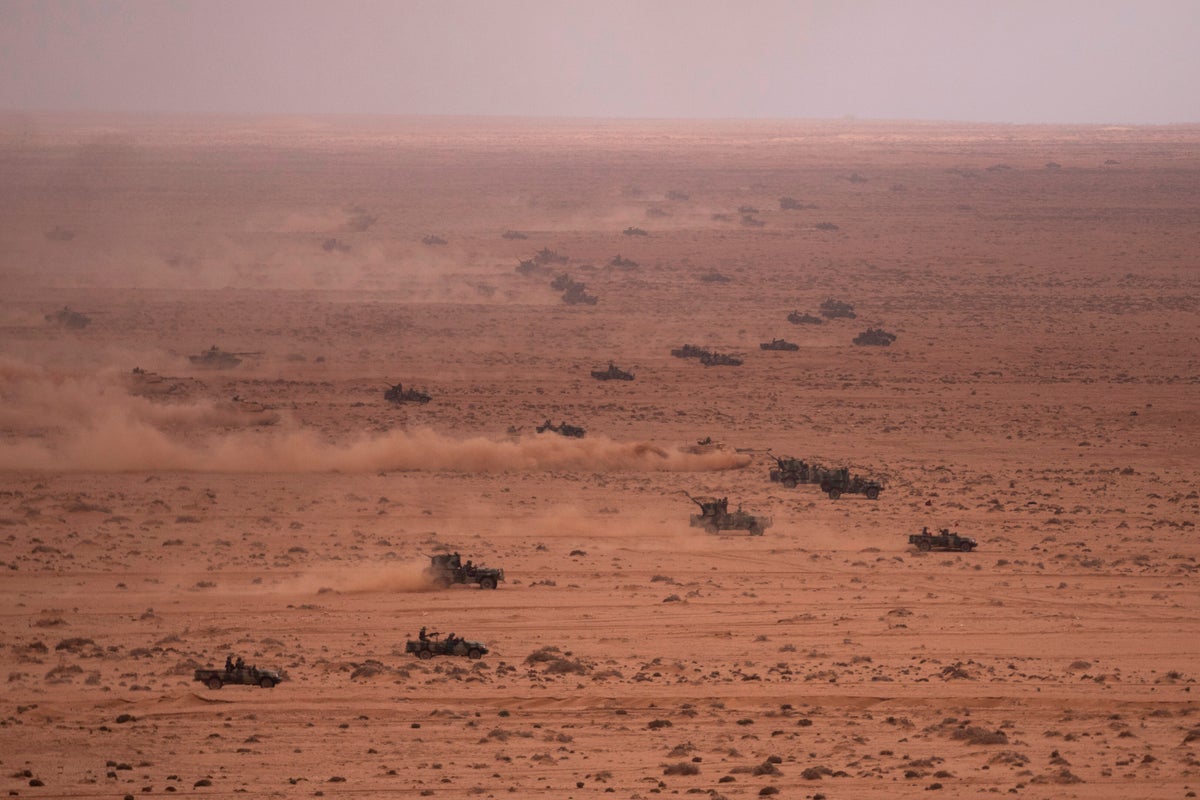
The recovery of a U.S. Army soldier’s body off the coast of Morocco following a disappearance during the African Lion 2025 exercise exposes a critical failure point in littoral combat training: the intersection of high-velocity environmental variables and the limits of rapid-response maritime search parameters. While initial reporting focuses on the emotional gravity of the loss, a strategic audit reveals that such incidents are rarely the result of a single mechanical failure. Instead, they represent a "Swiss Cheese" model of systemic breakdown where oversight in environmental modeling, real-time tracking telemetry, and localized oceanographic volatility align to create a fatal outcome.
The African Lion exercise serves as the premier annual exercise for U.S. Africa Command (AFRICOM). It is designed to test the interoperability of multi-national forces across vast, unforgiving geographies. However, the coastal geography of North Africa introduces specific hydraulic complexities—namely rip currents, shifting sandbars, and unpredictable Atlantic swells—that test the physiological and technical limits of standard-issue military gear. You might also find this connected story interesting: Narges Mohammadi and the Strategic Theater of Medical Diplomacy.
The Triad of Littoral Training Failure
To understand how a routine training evolution transitions into a recovery operation, the incident must be viewed through three distinct analytical lenses: the Environmental Variable Set, the Technological Tracking Gap, and the Physiological Stress Ceiling.
1. The Environmental Variable Set
The Moroccan coastline, particularly near Tan-Tan and Agadir where these exercises often center, is characterized by a high-energy maritime environment. The Canary Current interacts with local coastal topography to produce complex subsurface eddies. As extensively documented in latest reports by NPR, the implications are significant.
- Bathymetric Volatility: Sudden changes in seafloor depth can cause wave energy to focus into specific "death zones" where the force of the water exceeds the swimming capacity of even highly trained personnel.
- Thermal Shock and Buoyancy: Even in temperate climates, sudden immersion leads to the "Cold Shock Response," which triggers involuntary gasping. If an operator is carrying a standard combat load (often exceeding 40–60 lbs), the margin for error in maintaining positive buoyancy is narrowed to seconds.
2. The Technological Tracking Gap
A primary question in any missing person case at sea is the failure of localized telemetry. Standard military GPS and radio frequencies often struggle with "water masking," where even a few inches of seawater can attenuate signals to the point of invisibility.
The delay between the initial "Man Overboard" or "Missing Personnel" report and the deployment of Search and Rescue (SAR) assets creates an exponential expansion of the search grid. In maritime search theory, this is defined by the Probability of Detection (POD) vs. the Probability of Area (POA). As time ($t$) increases, the area ($A$) grows by the square of the drift velocity ($v$), represented by:
$$A = \pi(v \cdot t)^2$$
If the initial position is not fixed within 120 seconds, the search area expands beyond the immediate visual range of surface vessels, necessitating satellite or aerial thermography—technologies that are not always tethered to the individual soldier during a standard beach landing or water crossing.
3. The Physiological Stress Ceiling
Soldiers participating in African Lion are often operating in a state of chronic fatigue. The cumulative effect of sleep deprivation, caloric deficit, and high-stakes decision-making lowers the cognitive threshold for managing equipment malfunctions. A snagged riser or a failed quick-release buckle on a plate carrier becomes a life-threatening crisis when the heart rate is already at 160 BPM and the lungs are fighting the surf.
Logistics of the Recovery Phase
The transition from a "Search and Rescue" (SAR) mission to a "Search and Recovery" (SR) mission marks a shift in asset allocation. Once the survival window—determined by water temperature and the specific gear worn—closes, the operation moves from high-speed surface scanning to sub-surface imaging and forensic drift modeling.
The recovery of the soldier off the Moroccan coast suggests that the body remained within a predictable drift corridor or was caught in a localized gyre. Recovery in these contexts relies on:
- Synthetic Aperture Radar (SAR): Used to detect anomalies on the water surface that do not match the sea state's fractal patterns.
- Acoustic Pingers and Sonar: If the individual was equipped with emergency beacons, though these are more common in naval aviation than ground force littoral crossings.
- Local Maritime Intelligence: Utilizing Moroccan Royal Navy assets who possess the "tribal knowledge" of local currents that generalized satellite models often miss.
The Cost Function of Multi-National Exercises
Military exercises are calculated risks. The "cost" of a training fatality is not merely the loss of life—which is an absolute and tragic loss—but the operational degradation of the unit and the diplomatic friction it may cause with the host nation.
When an incident occurs in international or foreign waters, the Status of Forces Agreement (SOFA) dictates the jurisdictional flow of the investigation. The tension here lies between the U.S. military’s need for an internal, closed-loop safety investigation and the host nation’s sovereign right to oversee incidents occurring in their territorial seas.
The second-order effect is the "pause" in training. A recovery operation often necessitates a tactical stand-down. This breaks the momentum of the exercise, preventing the validation of the very interoperability goals the mission set out to achieve. The trade-off is a binary choice: proceed with the exercise and risk further safety lapses, or halt and lose millions of dollars in logistical staging and multi-national coordination.
Operational Hardening Recommendations
To mitigate future occurrences in the AFRICOM theater, the U.S. Army and its partners must move beyond manual accountability and adopt a distributed, automated safety net.
Implementation of Mesh-Network Personal Locators
Ground forces operating in littoral zones should be equipped with low-profile, salt-water-activated beacons that integrate with the Aegis or similar combat management systems. This removes the "human reporting delay" from the search equation.
Dynamic Environmental Modeling (DEM)
The current reliance on static weather reports is insufficient for littoral crossings. Units require real-time, sensor-driven data on localized rip currents and surge heights at the specific point of insertion. If the "Sea State" exceeds a calculated safety coefficient ($C_s$), the evolution should be automatically scrubbed by an automated risk-assessment algorithm, removing the "pressure to perform" that often leads commanders to green-light dangerous operations.
Integrated Buoyancy and Quick-Release Systems
There is a fundamental design conflict between body armor meant to stop projectiles and the physics of maritime survival. The next generation of plate carriers must feature integrated, low-volume CO2 inflation systems that activate upon immersion, or a universal "single-point release" that sheds the entire combat load in under one second without requiring fine motor skills.
The recovery of the soldier in Morocco is a data point that demands a shift from reactive mourning to proactive systems engineering. The littoral environment is the most chaotic theater of operations; treating it as a standard "ground" exercise is a categorical error that the data no longer supports. The strategic path forward involves tightening the loop between environmental sensing and individual soldier telemetry to ensure that "Search and Rescue" never has to transition into "Recovery."
Commanders must now prioritize the "Digitization of the Individual" in maritime environments, ensuring that every operator is a trackable node in a fail-safe network. Failing to do so ensures that the Atlantic coast remains a high-probability zone for avoidable attrition during what should be the peak of multi-national readiness.