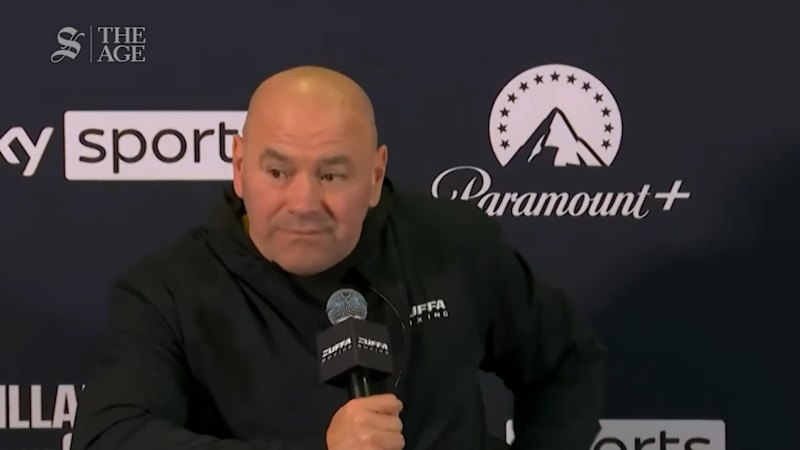
Transitioning from the chief executive seat of a high-growth combat sports monopoly to a federal bureaucratic role represents a catastrophic negative-sum trade for an founder-operator. When Donald Trump publicly floated or privately extended the prospect of a formal administrative position to Ultimate Fighting Championship (UFC) CEO Dana White, White’s immediate, unambiguous refusal was not merely a statement of personal preference. It was a rational execution of executive capital allocation. Standard political commentary frames these interactions through the lens of personal loyalty, ideological alignment, or media optics. An operational analysis reveals a much simpler reality: the structural incentives, regulatory constraints, and financial mechanics of the United States federal government are fundamentally incompatible with the operational model that built TKO Group Holdings.
To understand why White declined—and why any high-autonomy private sector operator would do the same—one must deconstruct the friction between private enterprise governance and public sector administration.
The Structural Asymmetry of Executive Authority
The primary barrier to a private-sector CEO entering government is the sudden vaporization of unilateral decision-making power. In corporate governance, particularly within founder-led or tightly controlled private equity structures, the CEO operates with high-velocity execution authority. Under the Endeavor and subsequent TKO Group Holdings umbrella, White functions as the operational nexus of the UFC. While he answers to a board of directors and institutional shareholders, his domain over talent acquisition, matchmaking, venue logistics, and brand positioning remains virtually absolute within his vertical.
Federal appointments invert this power dynamic. A cabinet secretary, agency head, or special advisor enters a matrix of distributed veto power. Every major initiative is subjected to:
- Legislative Oversight: Congressional committees possess subpoena power and budgetary control, forcing executives to spend operational bandwidth defending decisions rather than executing them.
- Administrative Procedure Act (APA) Constraints: Policy shifts cannot be enacted by fiat; they require public notice, comment periods, and judicial review, extending execution timelines from days to years.
- Civil Service Entrenchment: Unlike a corporate workforce that can be restructured at will, the federal bureaucracy is insulated by union protections and statutory tenure, preventing rapid cultural or operational realignment.
For an operator accustomed to resolving logistical crises—such as securing private island infrastructure to run live events during global lockdowns—the friction of federal procurement rules and interagency consensus is an intolerable operational bottleneck. The velocity of capital and decision-making in combat sports relies on speed; government machinery is explicitly engineered for friction to prevent unilateral overreach.
Financial Mechanics and the Divestiture Penalty
Beyond operational friction lies a severe financial disincentive governed by federal ethics statutes, specifically 18 U.S.C. § 208 and the Ethics in Government Act of 1978. Accepting a high-level federal appointment triggers mandatory financial disclosure and conflict-of-interest remediation. For an executive whose net worth is heavily concentrated in equity, profit-sharing agreements, and complex licensing structures tied to a publicly traded entity like TKO Group Holdings (NYSE: TKO), the compliance costs are punitive.
The Office of Government Ethics (OGE) typically requires incoming officials to divest assets that pose a direct or perceived conflict with their official duties. While a Certificate of Divestiture allows officials to defer capital gains taxes by rolling proceeds into permitted diversified funds (such as U.S. Treasuries or broad-market mutual funds), this mechanism still forces the liquidation of high-upside, concentrated equity positions.
- Loss of Asymmetric Upside: Liquidating TKO equity or surrendering executive compensation packages caps the operator's financial upside at the yield of passive index instruments.
- Tax Drag and Structuring Costs: Untangling complex multi-entity ownership stakes, endorsement contracts, and ancillary business ventures (such as Power Slap or Zuffa Boxing initiatives) requires millions in legal and accounting fees prior to Senate confirmation.
- Opportunity Cost of Active Management: White’s compensation is directly tied to the enterprise value of the UFC. Stepping away during critical media rights negotiations—such as the renewal cycles for domestic and international broadcast packages—introduces succession risk that could depress the valuation of his remaining holdings.
From a pure balance-sheet perspective, entering public service requires an executive to pay a massive upfront liquidity penalty to accept a fixed, statutory salary capped at Level I of the Executive Schedule (roughly $246,400 annually as of recent adjustments). The financial asymmetry is absolute.
Brand Equity and the Polarization Tax
In consumer-facing businesses, brand architecture dictates revenue resilience. The UFC occupies a unique demographic position in global sports. Its audience skews younger, more international, and more politically heterogeneous than legacy North American sports leagues like the NFL or MLB. While White has never concealed his personal friendship with Trump—having spoken at multiple Republican National Conventions and hosted Trump at marquee pay-per-view events—there is a distinct strategic boundary between personal political expression and official state integration.
Maintaining this boundary protects the UFC’s enterprise value through three mechanisms:
- Broadcast Partner Insulation: Live sports rights are the primary revenue driver for modern sports properties, routinely accounting for over 70% of total top-line revenue. Media conglomerates (Disney/ESPN, Warner Bros. Discovery, Netflix, Amazon) rely on advertiser-supported tiers. An executive who remains a private citizen can absorb political controversy as a personal brand attribute; an executive who becomes a literal government official transforms the corporate entity into a state-affiliated political target, alienating risk-averse blue-chip sponsors.
- International Market Access: The UFC’s aggressive expansion into the Middle East (specifically Abu Dhabi and Riyadh), Europe, and Asia relies on bilateral relationships with sovereign wealth funds and foreign ministries. Operating as a private sports promoter allows White to negotiate seamlessly across disparate geopolitical regimes. Assuming a formal role in a U.S. administration immediately subjects every international venue negotiation to diplomatic scrutiny, State Department protocols, and foreign policy blowback.
- Regulatory Neutrality: Combat sports require continuous licensing and sanctioning from state-level athletic commissions (e.g., the Nevada State Athletic Commission, New York State Athletic Commission). Formal political office creates severe appearances of impropriety regarding regulatory favoritism or retaliation, inviting litigation from competitors and antitrust scrutiny from the Department of Justice or the Federal Trade Commission.
The Informal Advisory Equilibrium
White’s rejection of a formal title does not equate to a reduction in political influence. In modern political economy, the highest-leverage position for a corporate leader is that of the unencumbered informal advisor. By remaining outside the formal organizational chart of the executive branch, White retains maximum influence with zero statutory liability.
This positioning achieves a strategic equilibrium:
- Zero Senate Confirmation Exposure: Formal appointments require invasive FBI background checks, public financial disclosures, and hostile confirmation hearings designed to extract damaging soundbites for rival media networks. Informal advisors bypass the entire vetting apparatus.
- Asymmetric Access: White maintains direct, unmediated communication channels with the presidency without being bound by the White House Chief of Staff’s scheduling hierarchy or the Presidential Records Act, which mandates the archiving of all official communications.
- Selective Engagement: An informal ally can weigh in exclusively on high-interest verticals—such as deregulation, tax policy, or international business friction—while remaining completely insulated from the daily crisis management of unrelated policy failures, foreign conflicts, or legislative stalemates.
The historical precedent for this dynamic is well-established. Media moguls, labor leaders, and industrialists have consistently wielded greater executive influence from private dining rooms and stadium suites than from cabinet chairs. Formalizing the relationship degrades the utility of both parties: the politician loses an independent, culturally resonant validator who appeals to non-traditional voters, and the executive loses the operational freedom that made them valuable in the first place.
Limitations of the Outsider Model
While remaining in the private sector optimizes for wealth preservation and operational autonomy, the strategy carries distinct vulnerabilities that must be managed actively.
First, proximity without protection still attracts regulatory scrutiny. Even without a government badge, an executive closely aligned with a polarizing political figure faces heightened reputational risk among institutional investors. ESG-mandated funds and conservative pension boards constantly evaluate "key-person risk." If White’s personal political visibility begins to measurably depress TKO’s stock multiple or stall corporate partnerships, the board of directors faces fiduciary pressure to insulate the company’s public image.
Second, informal influence lacks institutional permanence. Without statutory authority, an outside advisor’s recommendations can be overridden by entrenched cabinet officials, legal counsel, or shifting political winds within the administration. If a specific regulatory outcome—such as favorable antitrust treatment or labor classification rulings—is critical to the business, relying on informal goodwill rather than formal administrative control introduces execution uncertainty.
Third, public alignment creates asymmetric media targeting. Investigative journalists and political opponents routinely treat high-profile corporate allies as proxies for the administration itself. This results in sustained media audits of the company’s labor practices, fighter pay structures, and ongoing class-action antitrust litigation, using the CEO’s political ties as the narrative hook to amplify corporate vulnerabilities.
Strategic Execution for High-Autonomy Operators
When a founder or chief executive is approached for a formal political appointment, the decision matrix should be governed entirely by capital efficiency and operational leverage rather than prestige. The playbook for navigating this intersection requires strict adherence to four operational rules:
- Reject All Line-Management Roles: Never trade equity-backed executive authority for a fixed-salary administrative post. The structural friction of civil service management and congressional oversight will destroy the velocity that defines an effective private-sector operator.
- Monetize the Boundary: Keep personal political endorsements clearly delineated from corporate governance. Utilize the media attention generated by political proximity to drive top-of-funnel consumer awareness for the core product, while ensuring the corporate entity remains legally and financially insulated from campaign apparatus.
- Deploy Issue-Specific Lobbying Over Personal Appointments: If regulatory outcomes are required, deploy institutional capital through dedicated government relations firms and industry trade associations rather than surrendering personal operational control. Capital is infinitely more scalable in Washington than personal time.
- Maintain Strategic Ambiguity: Preserve the public perception of high-level access without formalizing the role. In both corporate negotiations and international expansion, the perception of direct presidential access serves as a force multiplier with foreign counterparties, delivering the diplomatic benefits of office without a single line of statutory restriction.
Dana White’s response to Trump’s overture was a textbook execution of this framework. By staying in the promoter’s chair, he preserved his equity upside, protected TKO Group Holdings from regulatory and sponsor contagion, and retained direct access to executive power without surrendering a fraction of his operational autonomy.