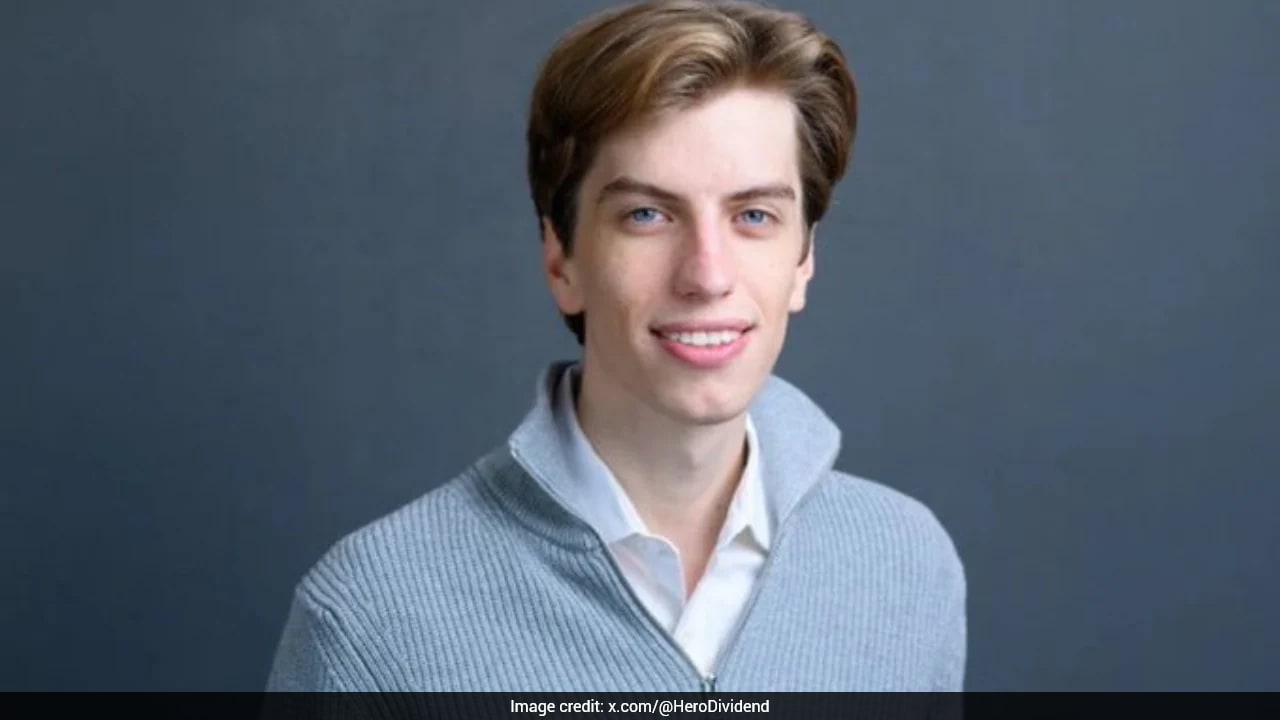
Numbers do not sweat. Silicon does not panic. Yet, behind the glass-fronted offices of high-stakes algorithmic trading, the human pulse remains distressingly fragile.
We built them to be infallible. We crowned them. We called them prophets of the digital age, men who could gaze into the swirling vortex of global data and extract tomorrow’s certainty. They were supposed to outsmart chaos. They were engineered to transcend the messy, tear-stained panic of human intuition.
Then came the morning the math broke.
Consider the weight of a billion dollars vanishing before the first cup of coffee cools.
It starts quietly. A hum of server racks. A flicker on a multi-monitor display. To the untrained eye, it looks like progress. To the man steering the vessel, it felt like destiny. For years, the financial press whispered his name with reverent awe. He was the architect of modern quantitative prophecy, the rare mind that translated neural networks into absolute wealth.
Let us call him the Seer of the Spreadsheet. In reality, he was simply a man who trusted models more than mirrors.
Markets are not rational. They are living, breathing ecosystems forged by millions of frightened, hopeful, greedy humans. When you feed that chaotic beast into a machine, you assume the machine can digest the irrationality. Most days, it can. Until it encounters a tail event. A black swan. A moment so unprecedented that historical data becomes a useless ghost story.
The fund began to hemorrhage. Not slowly, like a punctured tire, but catastrophically, like a dam giving way under a wall of water.
Billions. Gone in days.
Why do we keep falling for the myth of absolute prediction?
We crave certainty. The human brain is a machine designed to spot patterns, even where none exist. When an algorithm consistently beats the market for consecutive quarters, we stop seeing it as a tool and start treating it as a deity. We bow to the backtest. We worship the optimization curve.
We forget that every predictive model is built on yesterday's history. And history is under no obligation to repeat itself with exactness.
When the market shifted, the fund's models did what they were programmed to do: they doubled down on their core assumptions. They reacted to volatility with mathematical rigidity. But rigidity in a storm is a death sentence. While human traders might have paused, felt a knot in their stomach, and stepped back to question the fundamental reality of the trade, the code kept executing. Flawlessly. Ruthlessly. Straight off a cliff.
The irony cuts deep. The very brilliance that earned him the title of Nostradamus of artificial intelligence was the architecture of his undoing. Complexity is a fragile thing. The more intricate the system, the more magnificent the collapse when a single gear slips out of alignment.
We stand now at a strange crossroads.
Every day, new prophets emerge promising absolute answers. They offer automated futures, flawless portfolios, and algorithmic shields against the unpredictable world. We buy in because the alternative is terrifying. We want to believe that someone, or something, has figured out how to turn the unpredictable future into a predictable spreadsheet.
Look closer at the wreckage.
The billions are gone, converted into zeros on someone else's ledger, but the lesson remains stubbornly human. No amount of computing power can erase the fundamental truth of risk. We can disguise uncertainty in sophisticated code, wrap it in elite jargon, and project it across glowing screens.
At the end of the wire, we are still just people trying to make sense of the dark.
The screen goes black. The trading floor empties. The ticker tape rolls on, indifferent to the ghosts of yesterday's certainty.