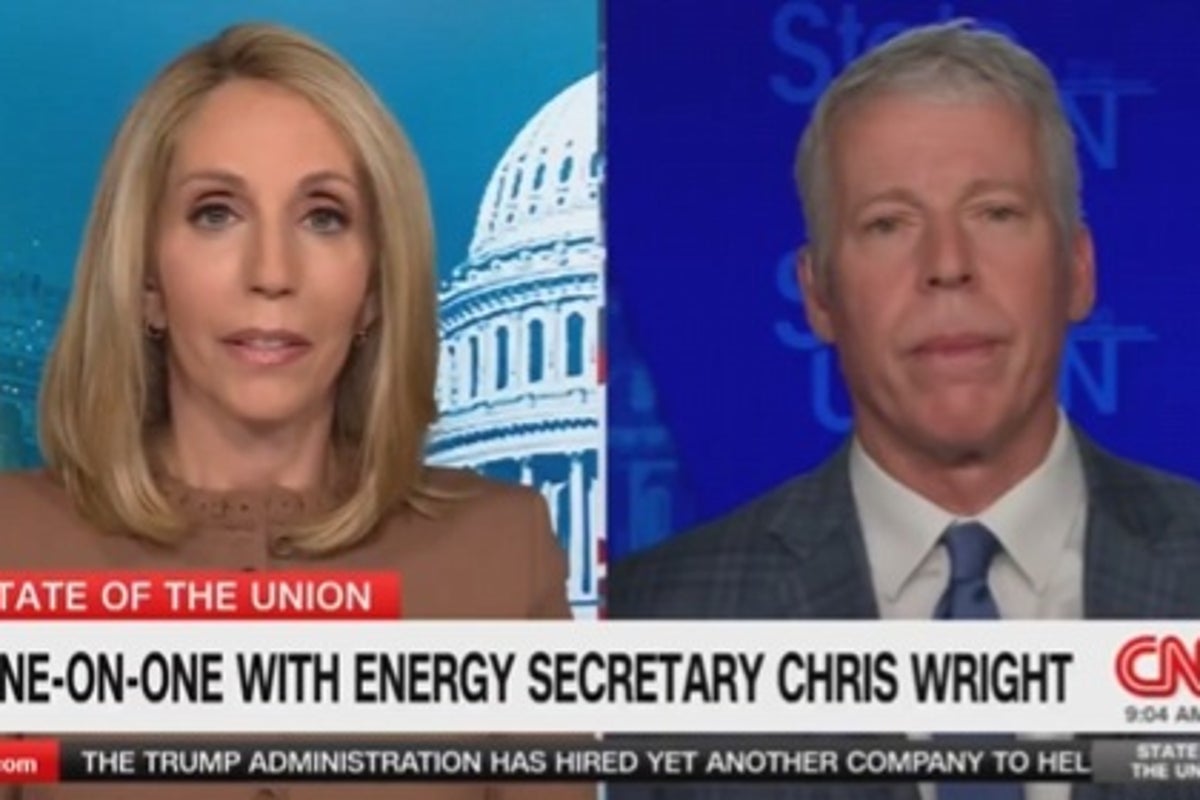
The air inside the congressional hearing room always smells faintly of old paper, nervous sweat, and the distinct metallic tang of unyielding bureaucracy. Outside, the morning traffic of Washington crawls along K Street, indifferent to the high-stakes theater playing out under fluorescent lights. Inside, men in dark suits sit rigidly behind elevated mahogany desks, guarding their words like state secrets.
For months, the average driver stepping out of a sedan at a suburban pump has felt a tightening in their chest. They watch the digital numbers spin upward—three dollars, four dollars, sometimes more—and wonder what unseen gears are grinding their household budgets into dust. They want answers. They want a roadmap. They want certainty in a world that feels increasingly unmoored. For another look, see: this related article.
So, they look to the top. They look to the Department of Energy.
Picture the scene. The cameras zoom in. Flashbulbs pop in rapid, rhythmic staccato. The microphone picks up the dry rustle of briefing notes being shuffled. A lawmaker leans forward, eyes narrowed, hunting for the kind of absolute prediction that makes evening news segments and stock market trades. The question is deceptively simple, designed to trap or to illuminate: What happens next to gas prices? Related analysis on the subject has been shared by Associated Press.
Silence.
For a fraction of a second, the room holds its breath. The nominee, tasked with steering the nation's energy future, does something shockingly rare in modern politics. He hesitates. He admits he has no opinion.
No opinion.
To the internet, it was a feeding frenzy. To the critics, it was an admission of staggering incompetence. To the cynical observer, it was proof that the people steering the ship are asleep at the wheel. How could the nation's energy secretary sit in the hot seat and shrug at the single metric that dictates whether millions of Americans can afford to drive to work?
Then came the pivot. Cornered by the relentless ticking of the clock and the accusatory stares of the committee, he took a shot in the dark. He made his best guess.
And in that single moment of forced prophecy, a deeper truth was revealed about how modern power actually operates.
We crave oracles. We demand that our leaders possess crystal balls, economic divine right, and absolute control over vast, chaotic global markets. We want them to stand before us and declare with unshakeable conviction that fuel will cost precisely two dollars and eighty-five cents next Tuesday. We want comfort disguised as policy.
Reality refuses to cooperate.
Energy prices are not dials on a dashboard in a basement beneath Washington. They are the violent, unpredictable intersection of geopolitical friction in the Middle East, the daily output of Texas shale fields, the maintenance schedules of aging refineries along the Gulf Coast, and the whim of global shipping lanes. When an official confesses that he has no opinion on the immediate future of gas prices, he is often telling the only honest truth available. The future is unwritten, messy, and fundamentally unguessable.
Consider what happens when we punish that honesty. By treating a moment of candor as an embarrassing gaffe, we train our public servants to become professional liars. We incentivize them to spit out polished, focus-grouped certainties that they know are false, just to survive the twenty-four-hour news cycle. We beg to be lied to, as long as the lie sounds confident.
The secretary's eventual guess—his attempt to satisfy the bloodlust of the committee room—was essentially a coin toss wrapped in diplomatic vocabulary. It mattered very little in the grand scheme of supply and demand. What mattered was the psychological theater of it all. We live in an era where the illusion of control is valued far above the sobering reality of stewardship.
Think back to the last time you filled your tank. You probably didn't think about the global Brent crude index. You didn't calculate OPEC quota agreements or the crack spread of refined gasoline. You just saw a number that made your stomach drop, swiped your card, and drove away, silently calculating which grocery items you would have to put back to balance the ledger.
That is where the policy meets the pavement. Not in the velvet-draped committee rooms, but in the quiet panic of a Tuesday afternoon at the fuel station.
When leaders pretend they can tame these titanic economic forces with a flick of a wrist or a clever soundbite, they insult our intelligence. And when we demand that they act like magicians instead of managers, we ensure that the theater will always eclipse the truth.
The energy transition we are stumbling through right now is arguably the most complex logistical puzzle in human history. We are trying to rewire the arteries of global civilization while the patient is running a marathon. It is messy. It is expensive. It is terrifyingly unpredictable.
An energy secretary with no immediate, magical answer isn't necessarily broken. He might just be paying attention.
The next time a politician is dragged before a camera and pressured to pull a price prediction out of a hat, remember the empty space before the guess. Remember the hesitation. That pause isn't where leadership fails. It is where reality begins.