Old flashpoints don't die easily. When a Northern Ireland court cleared an Orange Order parade to march down the Garvaghy Road in Portadown for the first time in nearly thirty years, it didn't feel like a legal victory. It felt like a match struck near dry tinder.
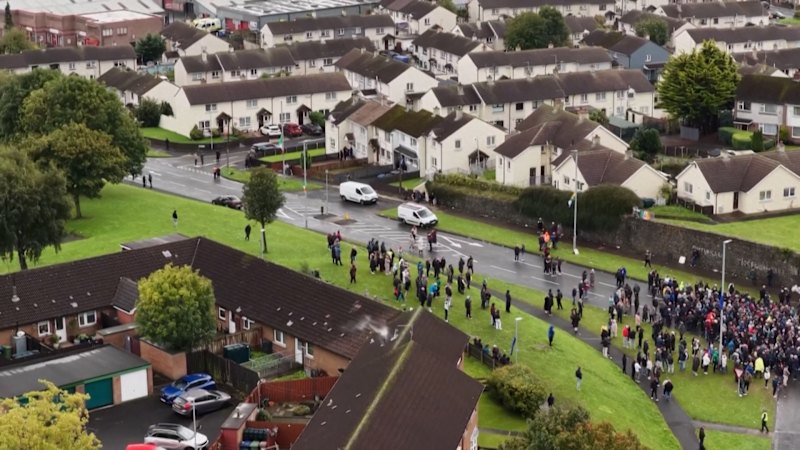
Thousands of nationalist protesters wasted no time. They linked arms, blocked the road, and drew a hard line against a procession they viewed as a deliberate provocation. This wasn't just about a stretch of tarmac in a County Armagh town. It was about whether the hard-won peace of the Good Friday Agreement can withstand the weight of its unresolved symbols.
The Ghost of Drumcree
If you lived through the 1990s, the name Drumcree sends an immediate shiver down your spine. The standoff at Drumcree Church was the defining crisis of the Northern Ireland peace process, turning Portadown into a global symbol of sectarian hatred. For decades, the restriction of the Orange Order march along the Garvaghy Road was a fragile compromise designed to keep the peace.
When the High Court in Belfast overturned the ban on a technicality, authorizing a restricted march of 35 people without bands or supporters, legal analysts called it adherence to precedent. Residents on the Garvaghy Road called it an insult.
Public bodies and courts often look at these disputes through a narrow legal lens. They weigh administrative frameworks, commission rulings, and case law. But communities don't live in a legal vacuum. They live with memory. For the Catholic residents who lined the route, the return of the parade felt less like a routine civil liberties ruling and more like a tactical retreat into the darkest days of the Troubles.
Why This Court Ruling Struck a Raw Nerve
The decision exposed the deep structural fragility at the heart of Northern Ireland's power-sharing government. Sinn Féin leaders, including First Minister Michelle O'Neill and party president Mary Lou McDonald, joined the protesters on the ground. They didn't just observe; they openly condemned the ruling, calling the situation primitive and intolerable.
When sitting government leaders join street protests against a court-sanctioned police action, you know the political architecture is straining under immense pressure. Unionist defenders argued that lawful processions are a fundamental democratic right, and bowing to crowd blockades sets a dangerous precedent where the rule of law is dictated by whoever can mobilize the largest crowd.
Both arguments miss the deeper reality. Freedom of expression and freedom from sectarian harassment are locked in a permanent, grinding collision here. When one community sees a parade as a cultural celebration of heritage, and the neighboring community sees it as a triumphalist assertion of dominance, compromise becomes nearly impossible.
The Fragile Illusion of Post-Conflict Normalization
Too often, international observers treat Northern Ireland as a completed puzzle. The Good Friday Agreement was signed, the guns fell silent, and tourists flock to Belfast for black cab tours.
Yet episodes like the Portadown standoff expose how thin the veneer of normalization really is. Beneath the surface, neighborhoods remain rigidly segregated by peace walls. Political institutions stall for months over identity disputes. Every generation inherits the unresolved trauma of their parents, weaponizing history against their neighbors.
The irony of the 2026 standoff is that it involved just 35 marchers. It wasn't a massive display of Orange fraternity power; it was a symbolic test case. Yet it drew thousands of counter-protesters and brought the political leadership to the barricades because everyone understood what was truly at stake. It wasn't about thirty-five men walking down a road. It was about whether the hard boundaries of respect that kept the peace for decades are beginning to fray.
Prime Ministers in London and Dublin quickly issued calls for calm, urging cooler heads to prevail as mediation efforts scrambled for a solution. But statements from distant capitals rarely resonate on a tense street corner where families feel their hard-won safety is being bartered away for legal technicalities.
The real test for Northern Ireland isn't whether courts can hand down legally sound judgments. The test is whether society can build a shared future when the past is constantly marching back to the front door.
If you're tracking the stability of the region, keep your eyes on how local mediation handles the aftermath. The legal system can open a road, but it takes actual human trust to walk down it without starting a fire.
Protesters block Orange Order march in Northern Ireland
This short video captures the immediate tensions on the ground as residents mobilized to block the contested route.