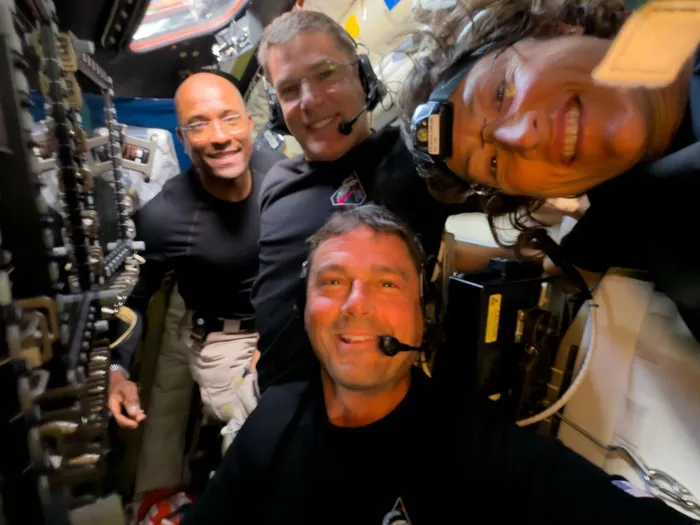
The Artemis II mission represents the first human expansion beyond Low Earth Orbit (LEO) since 1972, but its significance lies less in the "distance record" itself and more in the specific orbital mechanics required to validate a life-support system in a high-energy environment. While public discourse focuses on the crew surpassing the distance from Earth achieved by the Apollo 13 mission, this metric is a byproduct of a Hybrid Free Return Trajectory. The mission's success is defined by the tension between three variables: life support endurance, thermal protection system (TPS) margins, and the gravitational influence of the lunar far side.
The Physics of the Lunar Flyby Architecture
The Artemis II mission profile differs fundamentally from the Apollo-era lunar insertions. Apollo missions utilized a Lunar Orbit Insertion (LOI) burn to enter a stable orbit around the Moon. Artemis II, by contrast, employs a trans-lunar injection (TLI) that puts the Orion spacecraft on a path to swing around the Moon and return to Earth using only gravity and minor correctional burns. Don't miss our previous article on this related article.
The "record-breaking" distance is dictated by the altitude of the lunar flyby. To ensure a safe return without a massive engine burn at the Moon, the spacecraft must pass behind the lunar far side. The specific geometry of this trajectory—known as a free-return—requires the spacecraft to reach a point roughly 10,300 kilometers (6,400 miles) beyond the lunar surface. Because the Moon will be near its apogee (its farthest point from Earth) during the mission window, the cumulative distance from Earth will naturally exceed the 400,171 kilometers reached by Apollo 13.
The Three Pillars of Deep Space Validation
The distance achieved is an external metric. Internally, the mission is structured around three critical engineering validations: If you want more about the background here, The Next Web provides an excellent breakdown.
- Life Support System (LSS) Stress Testing: In LEO, a CO2 scrubber failure or a pressure leak can be addressed by an emergency de-orbit within hours. On a lunar flyby, the "abort to Earth" timeline is measured in days. The mission must prove that the Orion’s LSS can maintain atmospheric chemistry and thermal regulation across a 10-day duration without resupply or immediate abort options.
- Radiation Shielding and Dosimetry: Once the crew exits the protective magnetosphere of Earth, they are exposed to Galactic Cosmic Rays (GCRs) and potential Solar Energetic Particles (SEPs). Artemis II serves as a live-data collection point for the effectiveness of the spacecraft’s "storm shelter" configuration, where the crew moves to the center of the cabin during solar events.
- High-Velocity Re-entry Dynamics: The return from the Moon involves velocities of approximately 11 kilometers per second (24,600 mph). This generates heat levels reaching 2,760°C (5,000°F), roughly half the temperature of the sun's surface. Artemis II must validate the skip entry maneuver, where the capsule dips into the atmosphere, bounces back up to dissipate heat and velocity, and then re-enters for a final descent.
The Mechanical Bottleneck of Human-Rated Spaceflight
The distance record is limited by the Delta-v ($\Delta v$) budget of the Space Launch System (SLS) and the European Service Module (ESM). The $\Delta v$ is the total change in velocity a spacecraft can achieve with its available propellant.
The relationship between mass and propellant is governed by the Tsiolkovsky rocket equation:
$$\Delta v = v_e \ln \frac{m_0}{m_f}$$
where $v_e$ is the effective exhaust velocity, $m_0$ is the initial total mass (including propellant), and $m_f$ is the final mass (without propellant).
The Orion spacecraft is significantly heavier than the Apollo Command/Service Module due to modern safety requirements, redundant systems, and larger cabin volume. This increased mass creates a constraint on the $\Delta v$ available for maneuvers. Consequently, the record distance is not an arbitrary choice of "going further" for prestige; it is the mathematical limit of what can be achieved while maintaining enough fuel for the mid-course corrections required for a precision splashdown in the Pacific Ocean.
Navigational Precision in the Deep Space Network
The mission's distance necessitates a shift from ground-based radar to the Deep Space Network (DSN). At distances exceeding 400,000 kilometers, the signal lag and beam divergence require high-gain antenna arrays located in Goldstone, Madrid, and Canberra.
The primary risk factor during the peak distance phase is communication latency. While not as severe as Martian latency, the 1.3-second light-speed delay creates a feedback loop that precludes real-time remote piloting from Houston. This necessitates a high degree of autonomous flight software capability. The spacecraft must be able to execute State Vector updates—calculating its exact position and velocity relative to both Earth and the Moon—using optical navigation if the DSN link is compromised.
Structural Hazards of the Van Allen Belts
Before reaching the Moon, Artemis II must navigate the Van Allen radiation belts. The mission uses a High Earth Orbit (HEO) period to test systems before committing to the TLI. This involves an elliptical orbit with a high apogee, exposing the spacecraft to the heart of the inner and outer radiation belts.
The decision to linger in HEO is a strategic trade-off. It allows the crew to test the Proximity Operations (maneuvering the spacecraft relative to the spent ICPS rocket stage) while still being close enough to Earth for a rapid return if systems fail. However, it increases the cumulative radiation dose. The engineering solution is a "hardened" avionics suite, designed to resist Single Event Upsets (SEUs)—bit-flips in the computer memory caused by high-energy particles.
The Economic and Geopolitical Function of Distance
The distance record serves as a de facto validation of the multi-billion dollar investment in the SLS architecture. The SLS Block 1 configuration is the only current launch vehicle capable of sending over 27 metric tons to TLI in a single shot. By surpassing the Apollo 13 record, the mission provides a quantitative proof of concept for the "Moon to Mars" trajectory.
The bottleneck for future records is not the rocket's power, but the Thermal Protection System (TPS). To go further or return faster would require a fundamental shift in material science beyond the current Avcoat heat shield. The current distance is the "Goldilocks" zone: far enough to test deep-space systems, but within the thermal limits of existing ablative materials.
Strategic Operational Imperative
The Artemis II mission should not be viewed as a commemorative flight, but as a stress test for the Artemis III lunar landing. To maximize the utility of this mission, NASA must prioritize the following operational outputs:
- Systemic Reliability Data: The failure rate of the LSS must be quantified against the predicted Mean Time Between Failures (MTBF) to adjust the spares kit for the 30-day missions planned for the Gateway station.
- Ablative Wear Analysis: Post-flight inspection of the Avcoat heat shield must determine if the "charring" patterns match the computational fluid dynamics (CFD) models. Any deviation in the erosion rate will dictate a redesign of the re-entry angle for subsequent missions.
- Human Performance Metrics: Monitoring the crew’s circadian rhythms and cognitive load in the high-radiation, microgravity environment beyond the magnetosphere is essential for determining the feasibility of long-duration transit to Mars.
The record of 400,000+ kilometers is a vanity metric; the real value lies in the telemetry recovered during the skip-entry phase. The mission's success is binary: either the Orion demonstrates it can protect a crew through a high-velocity thermal event, or the entire lunar architecture requires a multi-year overhaul. The focus must remain on the heat shield’s integrity and the service module’s $\Delta v$ efficiency during the final return trajectory corrections.