Federal budget titles are usually bureaucratic wallpaper. You read them once, roll your eyes at whatever focus-grouped slogan Ottawa picked that year, and move on to the tax brackets.
Not this time.
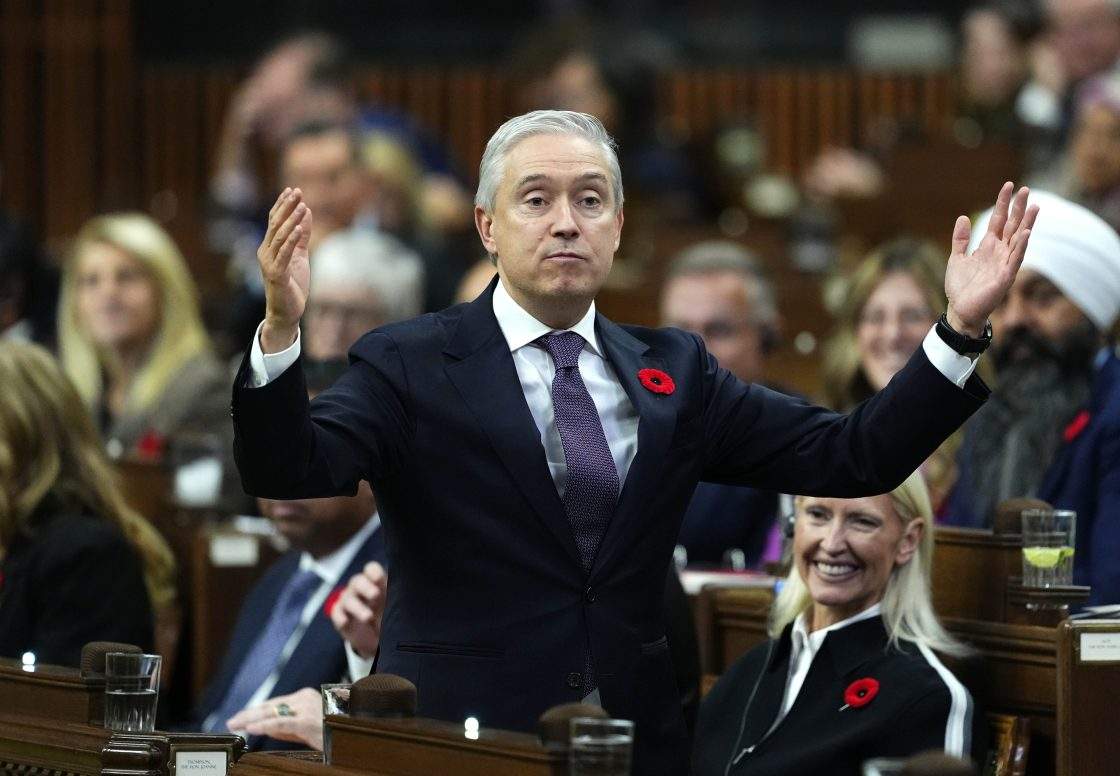
When Finance Minister François-Philippe Champagne teased the cover of the federal fiscal plan ahead of its November 5, 2026 release, he didn't pick a cozy domestic catchphrase. He went straight for the jugular: Masters of Our Destiny—and in French, Maîtres chez nous. If you know anything about Canadian political history, those three French words aren't casual branding. They're the rallying cry of Quebec's Quiet Revolution in the 1960s, repurposed here for an entire country staring down aggressive U.S. tariffs, fractured supply chains, and geopolitical instability.
The Budget 2026 title and theme didn't just signal a change in tone. It signaled that Prime Minister Mark Carney's government is treating economic independence and national defense as the exact same file.
Why the Budget 2026 Title and Theme Hit a Nerve
Champagne's office didn't mince words when explaining why they chose Masters of Our Destiny. Their pre-budget note pointed out that trade relationships are being redefined and old alliances are actively being tested. For decades, Canadian economic policy ran on a comfortable, unspoken assumption: the United States would always buy our exports, guarantee our security, and keep the border predictable.
That assumption is dead.
With U.S. trade tensions hammering Canadian manufacturing and export sectors, and global conflicts pushing oil prices and inflation around, Ottawa's messaging shifted from polite diplomacy to self-reliance. Calling the fiscal blueprint Masters of Our Destiny is Ottawa's way of admitting that relying on a single trading partner for roughly three-quarters of our exports is a massive strategic liability.
Honestly, the framing is smart politics, even if it's a sharp departure from how federal budgets normally talk. Instead of pitching line-item spending as isolated handouts, the Carney-Champagne team bundled energy, housing, taxes, and military procurement under one umbrella: Canadian sovereignty. When you frame a budget around national survival and independence, opposing it becomes a lot trickier for critics.
The Quiet Revolution Echo in Maîtres Chez Nous
Using Maîtres chez nous in the French title wasn't an accident. Jean Lesage's Quebec Liberals used that exact slogan in 1962 to take control of the province's hydroelectric resources and modernize its economy. By borrowing it in 2026, Champagne—a Quebec MP himself—was drawing a direct parallel between mid-century resource nationalism and modern supply-chain independence.
The message to voters is blunt. If Canada doesn't own its critical minerals, refine its own energy, build its own housing, and fund its own defense, somebody else will dictate the terms of our economy.
Where the Sovereignty Money Actually Goes
A catchy cover doesn't pay the bills, though. Once the full document dropped in the House of Commons on November 5, 2026—and subsequently cleared its parliamentary confidence vote later that month—we got to see whether the math actually matched the rhetoric.
It turns out, Ottawa is putting serious capital behind the slogan, backed by roughly $151 billion in net new spending and tax measures over five years. Much of that fiscal room came from higher-than-expected oil revenues triggered by Middle East conflict, which kept the 2026–27 deficit near $62 billion instead of blowing completely off the rails.
Here is how that sovereignty theme translates into actual dollars and policy shifts:
- A $25 Billion Sovereign Wealth Fund: For the first time, Canada is launching a national sovereign wealth fund, pegged at $25 billion, specifically designed to back domestic companies and major national infrastructure projects. Instead of watching promising Canadian tech and resource firms get bought out by foreign capital, Ottawa wants an equity stake in keeping them anchored here.
- Critical Minerals and Nuclear Power: You can't talk about energy independence without electricity and raw materials. The budget sets aside $2.3 billion to expand domestic critical mineral production and processing, alongside $518.5 million to strengthen Canadian nuclear supply chains and regulatory capacity.
- Capital Investment Tax Cuts: To spark what Champagne calls an "Investment Supercycle" targeting $400 billion in capital investments over six years, the government moved to cut the marginal effective tax rate on new business investment from 13% down to 6.4%. They also introduced the Canada Growth Incentive, offering capital gains exemptions on qualifying shares in Canadian-controlled private corporations.
- Defense and Domestic Procurement: Ottawa is tying military spending directly to domestic factories. Rather than buying off-the-shelf gear from foreign contractors by default, Budget 2026 prioritizes Canadian suppliers, dual-use technology, and sovereign intelligence capabilities to meet NATO targets while keeping industrial jobs inside the country.
- Export Financing Consolidation: The government proposed merging Export Development Canada (EDC) and the Business Development Bank of Canada (BDC). The goal is simple: create one powerhouse institution to help Canadian businesses scale up and find non-U.S. buyers.
What Most Coverage Misses About Economic Sovereignty
Most news reports stop at the defense and trade numbers. That's a mistake, because Budget 2026 defines sovereignty way more broadly than tanks and tariffs.
In their eight-page cover letter introducing the budget, Carney and Champagne argued that sovereignty also lives in everyday household pressure points. Think about how vulnerable a country becomes when its citizens are drowning in debt and basic living costs. To cushion the blow of trade disruptions and energy-driven inflation, Ottawa rolled out $22 billion in affordability measures.
That includes a one-time 50% top-up to the Groceries and Essentials Benefit scheduled for early 2027, an expanded Build Canada Workers Benefit for lower-income earners, and a refundable Canada Caregiver Credit worth up to $1,260 a year. On the housing front, Ottawa committed $44.7 billion over 11 years—including $11.2 billion specifically aimed at ending chronic homelessness within a decade—while tweaking mortgage insurance rules to spur "missing middle" construction.
There's also a quiet push to break up domestic bottlenecks. Budget 2026 advances a Whole-of-Government Competition Plan targeting telecom pricing, banking fees, and non-compete clauses in employment contracts. If workers can't switch jobs because of restrictive contracts, and businesses get gouged by domestic monopolies, Canada can't compete globally.
The Cultural Side of Being Masters of Our Destiny
You might not expect arts funding to show up in a hard-nosed sovereignty budget, yet it's right there in black and white. Champagne's pre-budget statement specifically mentioned defending "what makes us Canadians".
In practice, that translated into $5 billion in new cultural spending, $300 million over two years for CBC/Radio-Canada, a new Canada Creative Credit, and permanent free admission to national museums for children and youth alongside a renewed Canada Strong Pass. Critics on the political right immediately dismissed this as classic Liberal spending dressed up in patriotic wrapping. Supporters argue that in an era dominated by U.S. tech algorithms and foreign media platforms, cultural sovereignty is just as real as border security.
The Catch Critics Are Right to Point Out
Sovereignty sounds great on a podium. Executing it with borrowed money is another story entirely.
Conservative Leader Pierre Poilievre wasted zero time branding the document "Carney's Costly Credit Card budget," warning that piling up debt will keep upward pressure on interest rates and inflation. And you don't have to be a partisan conservative to see the fiscal tightrope Ottawa is walking.
Look at the debt-servicing numbers buried in the fiscal tables. Paying interest on the federal debt is projected to cost $60.2 billion in 2026–27, climbing all the way to $85.5 billion by 2030–31. That is massive money leaving the treasury just to pay bondholders, leaving far less flexibility if oil prices crash or a recession hits.
Even non-partisan policy analysts have raised yellow flags. Experts at the Centre for International Governance Innovation (CIGI) noted that while strengthening domestic resilience makes sense in a hostile trade environment, generous corporate tax write-offs don't automatically guarantee new productivity. Companies often take tax breaks for investments they were going to make anyway. Meanwhile, Ottawa is relying on slowing direct program spending growth from 8% down to 2% and balancing its operating budget by 2027–28—a disciplined target that historically proves way easier to promise on paper than to enforce in Parliament.
How to Position Yourself for Budget 2026 Changes
Whether you think Masters of Our Destiny is a bold generational reset or an expensive gamble, the legislation is moving forward. If you live, work, or run a business in Canada, stop treating federal budgets like spectator sports and look at the specific levers you can pull right now:
- Audit your business capital plans before buying equipment. With the marginal effective tax rate on new business investment dropping sharply and the Canada Growth Incentive kicking in for qualifying shares issued on or after November 5, 2026, talk to your corporate accountant before locking in year-end financing or equity rounds.
- Watch the EDC–BDC consolidation if you export. If your company relies heavily on U.S. buyers, map out alternative markets in Europe or the Indo-Pacific now so you're ready when the merged federal financing agency opens new trade-diversification credit lines.
- Check your eligibility for the early 2027 benefit top-ups. Low- and moderate-income households don't need to apply separately for the 50% Groceries and Essentials Benefit supplement, provided your 2025 tax return is filed and up to date with the Canada Revenue Agency. File any overdue returns immediately so automated payments don't stall.
- Review retirement and employment paperwork. Keep an eye on the upcoming "RRSP for life" rules—which aim to merge RRSPs and RRIFs so you aren't forced into rigid conversions—and check whether provincial harmonization on non-compete restrictions changes your leverage during job negotiations.
Ottawa has made its bet that Canada can buy, build, and tax-incentivize its way into true economic independence. The cover title promises we're masters of our own destiny, but over the next four years, bond markets, trade negotiators, and Canadian productivity numbers will decide who is actually in charge.