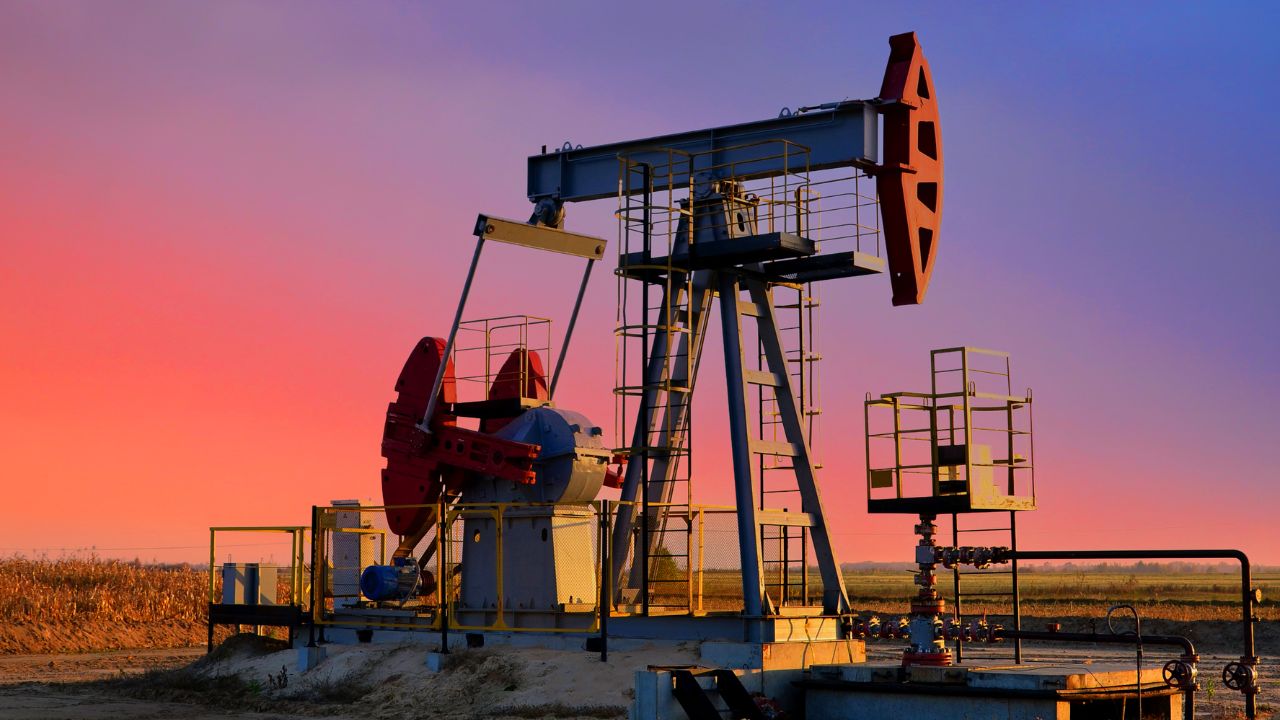
The financial press is currently lighting its collective hair on fire because Procter & Gamble (P&G) admitted a projected $1 billion hit to their bottom line following the escalation of conflict in the Middle East and the subsequent surge in oil prices. The "experts" have reached a lazy, unanimous verdict: P&G failed because they didn't hedge their energy exposure.
They are wrong.
What the spreadsheet-jockeys call a "failure to hedge" is actually a sophisticated bet on the fundamental strength of a global brand. Most people looking at a balance sheet can't see the difference between a gamble and a calculated risk. I’ve watched CFOs at Fortune 500 firms burn through millions in premiums trying to predict the price of Brent Crude, only to realize they’ve turned a consumer goods powerhouse into a mediocre hedge fund.
P&G isn’t in the business of speculating on oil futures. They are in the business of selling Tide, Gillette, and Pampers. By refusing to lock themselves into complex derivatives, they are playing a game much deeper than the current news cycle suggests.
The Hedging Trap and the Illusion of Safety
Hedging is often nothing more than a high-priced insurance policy that protects the ego of the executive team rather than the pockets of the shareholders. When a company like P&G "fails" to hedge, they aren't being negligent; they are staying lean.
Consider the mechanics. To hedge a billion-dollar exposure to oil-derived plastics and logistics costs, P&G would have to pay massive premiums to Wall Street banks. If oil prices had dropped or stayed flat, that money would be gone forever—a silent leak in the hull that nobody reports on because it’s "safe."
The math of energy derivatives is brutal. You are essentially betting against the house (the banks) who have better data, more specialized algorithms, and a direct interest in your fear. When you hedge, you trade the possibility of a large, visible loss for the certainty of a smaller, invisible loss.
I’ve seen companies get so tangled in their hedging "tapestries"—to use a word I despise—that they lose track of their actual margins. They become obsessed with the price of oil at $85 a barrel while ignoring the fact that their competitors are out-innovating them in the actual product aisle. P&G’s "hit" is a transparent reflection of market reality. It is honest accounting.
The Pricing Power Flex
The real reason P&G doesn't care about a $1 billion fluctuation is that they have something better than a futures contract: Pricing Power.
When the cost of raw materials goes up for P&G, it goes up for every generic brand and smaller competitor on the planet. The difference? P&G owns the shelf space. They own the brand loyalty. If the cost of a bottle of Dawn goes up by 15 cents because of oil prices, P&G moves the price.
The "hit" reported in the headlines is a temporary lag between the spike in input costs and the inevitable price adjustment at the retail level. By taking the hit now, they are effectively starving out smaller competitors who don't have the cash reserves to absorb the shock.
- Small Players: Lack the liquidity to survive a $1 billion swing. They go bankrupt or sell.
- Private Labels: Often operate on razor-thin margins. They are forced to raise prices immediately, losing their only advantage: being the "cheap" alternative.
- P&G: Absorbs the blow, maintains market share, and then raises prices once the competition is weakened.
This isn't a failure of risk management. It’s predatory stability.
Why You Want Your CFO to be "Lazy"
There is a pervasive myth that a "robust" (another word to strike from your vocabulary) finance department should be constantly tweaking levers to "offset" volatility. This is busywork.
In a world of $8 trillion in global trade, trying to neutralize every geopolitical tremor is a fool's errand. If the conflict in Iran worsens, oil isn't the only thing that changes. Shipping lanes shift. Currency values fluctuate. Consumer sentiment craters.
If you try to hedge oil, do you also hedge the Euro? The Yen? The price of pulp? The cost of maritime insurance?
Soon, you aren't a consumer goods company anymore. You are a massive, slow-moving derivative shop that happens to sell soap on the side. When P&G accepts the volatility of the oil market, they are focusing their intellectual capital on what actually drives long-term value: supply chain efficiency and product R&D.
The Opportunity Cost of Being "Safe"
Let’s look at the numbers. A $1 billion hit sounds massive. For you, it is. For P&G, a company with annual revenues north of $80 billion and a market cap hovering around $350 billion, it’s a flesh wound.
What would it have cost them to "properly" hedge that exposure over the last five years?
Between bank fees, the "spread," and the cost of being wrong when oil prices stayed low, they might have easily spent $2 billion to "save" this $1 billion.
Most analysts only look at the cost of the disaster. They never look at the cost of the prevention. It’s the equivalent of paying $5,000 a year for car insurance on a vehicle worth $10,000. It makes the owner feel "responsible," but the math is objectively stupid.
The Geopolitical Reality Check
The media loves the "Iran war" narrative because it’s dramatic. It suggests that P&G was caught off guard by a "Black Swan" event.
But geopolitical instability is the baseline, not the exception. Since 2000, we have seen the Great Financial Crisis, the Arab Spring, COVID-19, the Russia-Ukraine war, and now the escalating tensions in the Middle East.
If you are a global corporation and you haven't built your business model to survive $100 oil, you shouldn't exist. P&G exists because their margins are thick enough and their brands are essential enough to withstand the chaos.
Stop Asking if They Hedged
The question "Why didn't they hedge?" is the wrong question. It’s a question asked by people who want the world to be predictable and tidy.
The right question is: "Does P&G have enough brand equity to pass these costs onto the consumer without losing market share?"
History says yes. In every inflationary cycle or energy crisis of the last fifty years, P&G has emerged with higher nominal revenue and a tighter grip on the household. They don't need Wall Street to protect them from oil prices because they have you—the consumer—to pay for it.
Every time you buy a pack of Tide because you don't trust the store brand to get the stains out of your shirt, you are P&G’s "hedge."
The Institutionalized Cowardice of Modern Finance
The criticism aimed at P&G reveals a deeper sickness in modern business: the desire to smooth out every curve at any cost. We have become obsessed with "quarterly earnings guidance" to the point where we prefer a guaranteed mediocre result over a volatile excellent one.
P&G’s willingness to take a public beating on their energy exposure is a sign of a management team that actually trusts their business. They aren't hiding behind financial engineering. They are standing in the middle of the market, naked to the elements, and daring the competition to do the same.
Most of those competitors will catch pneumonia. P&G will just buy a more expensive coat and send you the bill.
If you’re a shareholder, you shouldn’t be asking for a CFO who knows how to trade oil futures. You should be asking for a CEO who knows how to make a toothbrush so good that people will pay an extra dollar for it even when the world is on fire.
Volatility is not a bug. It is the filter that removes the weak.
Stop looking at the $1 billion loss as a mistake. It is the entrance fee to a market where P&G owns the rules. While the rest of the industry scrambles to update their spreadsheets and call their brokers, P&G is busy making sure that when the smoke clears, they’re the only ones left on the shelf.
The market doesn't reward those who hide from risk. It rewards those who are big enough to eat it.