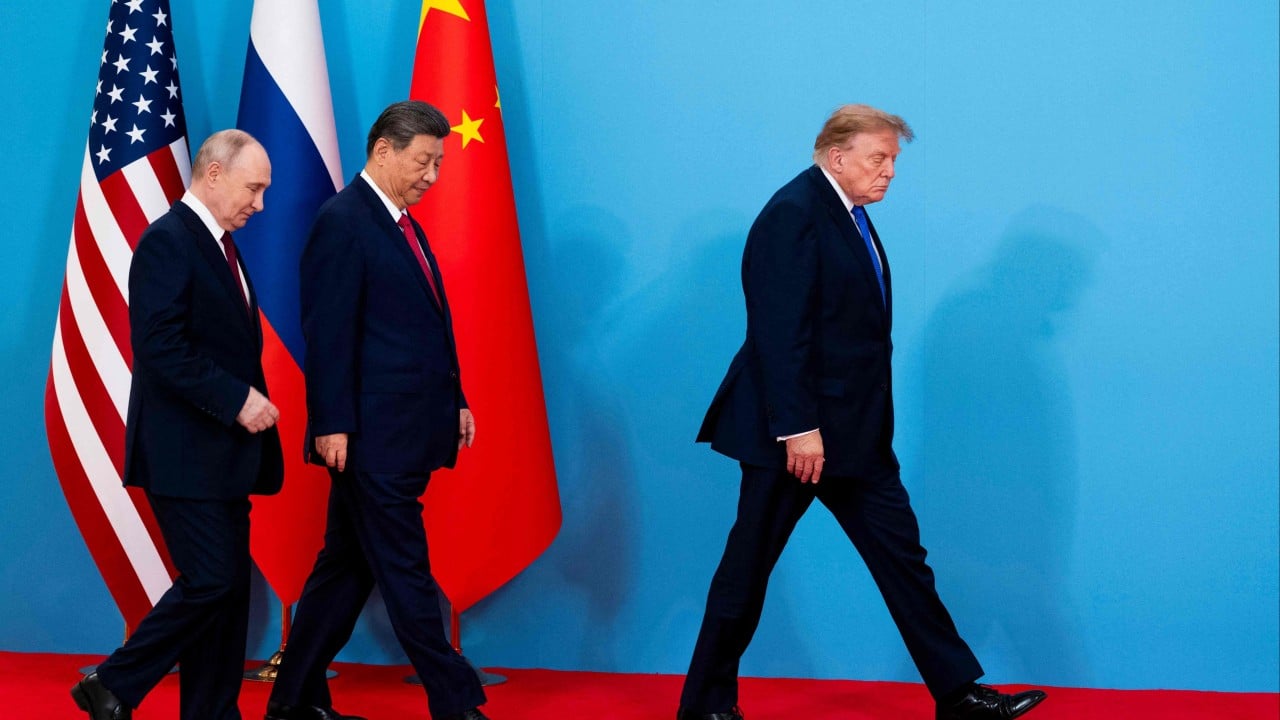
Diplomats rarely bring up 16th-century warlords by accident. When a Pakistani minister stands before the Shanghai Cooperation Organisation (SCO) Civilisational Forum and frames regional diplomacy around two bitter rivals—Mughal Emperor Humayun and Afghan conqueror Sher Shah Suri—sharing the legacy of a single stone fortress, that's not just a cute history lesson. It's calculated soft power.
Most coverage of SCO gatherings gets bogged down in trade corridors, security pacts, and stiff diplomatic communiqués. You read the headlines and forget them ten minutes later. Yet invoking Humayun and Sher Shah at an international forum cuts right to the heart of how South and Central Asian states use shared heritage to navigate modern geopolitics.
And honestly? The history behind that "one fort" metaphor is far messier, smarter, and more relevant to today's Eurasian politics than a podium soundbite lets on.
What Actually Happened Between Humayun and Sher Shah Suri
To understand why a Pakistani official would pull these two figures into an SCO speech, you have to look at the fifteen-year power struggle that reshaped the northern Indian subcontinent in the mid-1500s.
Humayun inherited the fledgling Mughal Empire from his father, Babur, in 1530. Babur had swept down from Central Asia—modern-day Uzbekistan and Afghanistan—to establish Mughal rule. Humayun, however, struggled to hold the territory together. Across the eastern provinces rose Farid Khan, a brilliant administrator and military commander of Pashtun (Afghan) descent better known to history as Sher Shah Suri.
Sher Shah didn't just defeat Humayun. He humiliated him.
At the Battle of Chausa in 1539 and the Battle of Kannauj in 1540, Sher Shah shattered the Mughal army and drove Humayun out of his own empire. Humayun spent the next decade and a half in exile, wandering through Sindh, Rajasthan, and eventually seeking refuge in Safavid Persia under Shah Tahmasp I.
While Humayun was exiled in Central and West Asia, Sher Shah built an administrative machine in just five years (1540–1545) that outlived his dynasty. He standardized currency by introducing the silver rupiya—the direct ancestor of the modern rupee used across Pakistan, India, and neighboring states. He rebuilt and expanded the Grand Trunk Road stretching from Bengal to Peshawar. And to lock down his northwestern frontier against Humayun's inevitable return, he ordered the construction of a massive military garrison near Jhelum in present-day Punjab, Pakistan.
He named it Rohtas Fort.
The Irony of Rohtas Fort
Here's where the "two rulers, one fort" angle gets genuinely fascinating. Sher Shah poured immense resources into Rohtas Fort between 1541 and 1548 specifically to keep Humayun out and to suppress the local Gakhar tribes who remained loyal to the Mughals. Its walls stretch roughly four kilometers, reinforced by 68 semi-circular bastions and massive sandstone gates built to withstand siege warfare.
Yet Sher Shah never saw it finished. He died in a gunpowder explosion during the siege of Kalinjar in 1545.
Ten years later, in 1555, Humayun marched back from Persia and Central Asia, defeated Sher Shah's weakened successors, and reclaimed his throne. When Humayun arrived at Rohtas Fort—the very fortress engineered to destroy him—the garrison commander fled without firing a shot. Humayun walked straight through its gates.
Instead of tearing down his enemy's monument, Humayun and his Mughal successors preserved it, adapted it, and absorbed Sher Shah's administrative systems into the empire. The fort stands today as a UNESCO World Heritage Site in Pakistan's Jhelum district, embodying two competing dynasties fused into one physical landmark.
Why the SCO Civilisational Forum Is the Exact Stage for This Story
If you've followed the Shanghai Cooperation Organisation over the past decade, you know it started out primarily focused on counterterrorism, border stability, and energy cooperation across Eurasia. Founded in 2001 by China, Russia, Kazakhstan, Kyrgyzstan, Tajikistan, and Uzbekistan, the bloc expanded to include India and Pakistan as full members in 2017, followed by Iran in 2023 and Belarus in 2024.
With expansion came a problem. You can't run a massive Eurasian bloc solely on security briefings when its members carry deep historical rivalries and competing national narratives.
That's why the SCO has leaned heavily into cultural diplomacy, heritage forums, and "civilisational dialogue." When a Pakistani minister brings up Humayun and Sher Shah at the SCO Civilisational Forum, three distinct diplomatic messages land at once.
1. Reclaiming Central and South Asian Connectivity
Look at the geography of the Humayun-Sher Shah story. Babur and Humayun represent the Timurid-Central Asian lineage connecting Fergana, Samarkand, Kabul, and Lahore. Sher Shah represents the Pashtun-Indo-Gangetic administrative backbone linking Peshawar, Punjab, Delhi, and Bengal.
Inside an organization dominated by Central Asian republics, Russia, China, Iran, India, and Pakistan, invoking both rulers reminds the room that Pakistan isn't an outsider on the edge of Eurasia. Its territory—specifically the Indus basin and Punjab—was the historical hinge where Central Asian, Persian, and South Asian empires collided and merged.
2. Rivalry Without Erasure
Diplomatic speeches love tidy stories about peace and harmony, which usually sound fake because everyone in the room knows the actual history is bloody. The Humayun-Sher Shah dynamic works better precisely because it doesn't pretend they were friends.
They fought brutal wars. One drove the other into exile. Yet the victor didn't burn down the administrative reforms, trade roads, or fortifications built by his rival. Humayun kept Sher Shah's revenue framework, kept the currency system, and kept Rohtas Fort standing.
In a diplomatic forum where member states frequently clash over borders, trade routes, and political influence, pointing to a shared monument built by one rival and preserved by another sends a clear subtext. Political regimes change, borders shift, and rivalries flare up, but the underlying infrastructure and cultural heritage belong to the region as a whole.
3. Cultural Ownership of Heritage Sites
Heritage politics in South Asia is fiercely contested. Every major historical figure from the 16th century gets claimed, reinterpreted, or politicized across modern borders. By spotlighting Rohtas Fort and the dual legacy of Humayun and Sher Shah on an international stage like the SCO, Islamabad asserts active custodianship over major Mughal and Suri landmarks located within Pakistani territory.
It's smart cultural branding. Instead of letting the narrative around Mughal and pre-Mughal architecture remain centered exclusively on Agra or Delhi, Pakistan puts its own UNESCO-listed monuments front and center in front of Eurasian partners.
What Most Commentators Miss About Sher Shah's Legacy
Whenever politicians or commentators mention Sher Shah Suri alongside the Mughals, they usually treat him as a brief interruption—a fifteen-year footnote between Babur/Humayun and Akbar the Great.
That reading gets the history completely backward.
If you strip away the royal titles, Akbar's famous administrative and land-revenue reforms were built directly on Sher Shah's blueprints. Sher Shah was the ruler who systematically measured agricultural land, assessed crop yields fairly, abolished arbitrary local tolls, and held local officials directly accountable for crime along trade routes.
Historians like Satish Chandra and John F. Richards have long pointed out that Sher Shah's five-year reign accomplished more structural state-building than Humayun managed in decades. Even Todar Mal, the legendary finance minister who modernized Akbar's tax system, originally gained his administrative training in Sher Shah's bureaucracy.
When Humayun returned in 1555, he didn't reset the clock to 1530. He inherited a state that was vastly better organized, better connected by road, and better fortified than the one he had lost.
That's why the "two rulers, one fort" framing hits harder when you actually know the archives. Rohtas Fort isn't just a pile of stones that changed hands. It represents the physical fusion of Afghan military engineering and Mughal imperial continuity.
How Heritage Diplomacy Actually Works Inside the SCO
You might wonder whether speeches at a "Civilisational Forum" change anything on the ground, or if they're just diplomatic window dressing while real decisions happen behind closed doors.
In practice, cultural initiatives inside the SCO serve specific institutional goals:
- Tourism and Visa Facilitation: SCO member states regularly designate an annual "SCO Tourism and Cultural Capital" (such as Varanasi, Almaty, or Qingdao) to funnel joint cultural festivals, academic exchanges, and travel corridors toward specific cities.
- Archaeological and Conservation Partnerships: Joint conservation projects allow countries like Pakistan, Uzbekistan, and Iran to share restoration expertise for Timurid, Persianate, and Mughal monuments without triggering the political friction that accompanies military or border talks.
- Narrative Counterweight: Both Beijing and Moscow use civilizational dialogue frameworks within the SCO to promote a multipolar worldview—arguing that Eurasian civilizations possess deep, self-sustaining traditions that don't require Western political models. South Asian members plug their own historical icons into that exact framework.
Still, there's an obvious limit to heritage diplomacy. No amount of eloquent storytelling about Rohtas Fort will resolve bilateral trade freezes, water disputes, or security deadlocks between neighboring SCO members. Cultural framing opens a door and lowers the temperature in the room, nothing more. If governments don't follow up with functional transit agreements, eased visa rules, and cross-border conservation funding, the speech stays trapped inside the conference hall.
How to Verify and Explore This History Yourself
If you're tracking South Asian geopolitics, researching SCO cultural diplomacy, or simply want to separate political rhetoric from historical reality, don't rely solely on press releases from diplomatic summits.
Start by examining primary architectural and historical records directly. Review the UNESCO World Heritage dossier on Rohtas Fort to see how conservationists document the blend of Pashtun, Persian, and local Punjabi architectural styles inside the complex—specifically contrasting the massive defensive bastions built under Sher Shah with the later royal additions and gateways.
For the political history behind the speeches, read Abbas Khan Sarwani's Tarikh-i-Sher Shahi (commissioned during Akbar's reign to document Sher Shah's administration) alongside Gulbadan Begum's Humayun-Nama, written by Humayun's own sister. Reading those two accounts side by side strips away centuries of modern nationalism and shows you how closely intertwined the two courts really were.
Next time you see a minister invoke historical rivals at an international summit, look past the poetic phrasing and check the map. Follow the trade roads, the garrisons, and the administrative systems those rulers left behind—because in Eurasian diplomacy, ancient geography still dictates modern strategy.