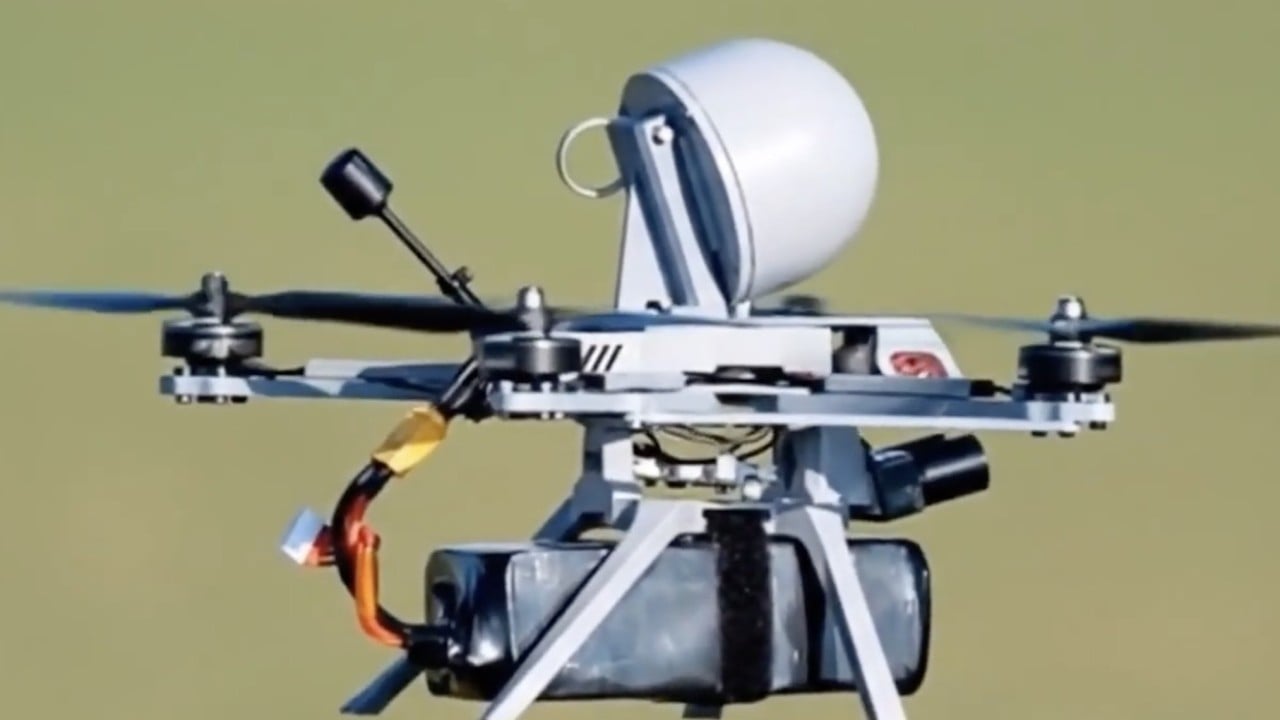
Pakistan’s acquisition of Turkish combat drones has exposed a glaring vulnerability in South Asian air defense and forced New Delhi to accelerate its domestic unmanned aerial vehicle production. Rather than relying on slow, expensive foreign arms imports, India is now pouring capital into local startups, state-owned aerospace firms, and counter-drone networks to close an asymmetric warfare gap that could dictate the outcome of future border skirmishes.
For decades, military planners in New Delhi operated under a comfortable assumption. Conventional superiority meant heavier tanks, faster fighter jets, and larger naval fleets. That calculus broke down the moment Islamabad began inducting Turkish-made systems like the Bayraktar TB2 and the Akinci high-altitude, long-endurance drone. These platforms do not win wars on their own, nor do they replace fourth-generation fighter aircraft. What they do is alter the economics of attrition. When a neighbor can deploy relatively inexpensive, battle-tested unmanned systems capable of lingering over contested territory for twenty-four hours while carrying precision-guided munitions, traditional defense budgets suddenly look bloated and brittle.
The Turkish Factor and Islamabad’s Asymmetric Playbook
To understand why New Delhi hit the panic button on domestic drone manufacturing, you have to look at what Turkey actually sold Pakistan. Ankara’s defense industry spent the last decade perfecting unmanned warfare in real-world theaters, from Syria and Libya to Nagorno-Karabakh. The resulting hardware—specifically the Bayraktar TB2 produced by Baykar—proved lethal against conventional Soviet-era air defense systems that bear a striking resemblance to large portions of India’s existing surface-to-air missile inventory.
Pakistan did not stop at the medium-altitude TB2. Islamabad moved quickly to acquire the Bayraktar Akinci, a twin-turboprop heavy drone capable of carrying air-to-air missiles, standoff cruise missiles, and advanced electronic warfare pods. By integrating Turkish unmanned platforms with its existing Chinese-supplied Wing Loong II and CH-4 fleets, Pakistan created a multi-tiered reconnaissance and strike network along the Line of Control and the Working Boundary.
This matters because of cost and deniability. Sending a manned fighter jet across a contested border risks pilot capture, severe diplomatic escalation, and the loss of a multi-million-dollar asset. Sending an unmanned aerial vehicle costs a fraction of that amount and keeps human operators safely inside bunkers hundreds of kilometers away. For a cash-strapped economy like Pakistan’s, Turkish drones offered the ultimate asymmetric equalizer—high-end strike capability without the crushing maintenance overhead of Western fighter squadrons.
Inside India’s Procurement Bottleneck
India saw this threat coming years ago, yet its response was paralyzed by its own notoriously sluggish defense bureaucracy. For years, New Delhi leaned on Israeli Heron drones for surveillance along the borders with both Pakistan and China. While the Heron proved reliable for intelligence gathering, it lacked strike capabilities until recent upgrade programs began converting them into armed variants.
When India finally decided it needed heavy, armed unmanned systems, it turned to Washington for the MQ-9B SeaGuardian and SkyGuardian drones made by General Atomics. The deal, valued at roughly four billion dollars for thirty-one airframes, dragged through years of price negotiations, congressional reviews, and bureaucratic red tape. Each MQ-9B costs upwards of one hundred million dollars once sensors, weapons, and ground control stations are factored in.
You cannot fight a war of attrition with hundred-million-dollar drones. If an adversary can shoot down a prized foreign asset using a relatively cheap surface-to-air missile, the math fails immediately. Senior officers within the Indian Air Force and the Indian Army recognized this trap. Buying boutique unmanned platforms from abroad would bankrupt the capital acquisition budget long before it secured the Himalayan frontier or the deserts of Rajasthan. The only viable escape route was building an indigenous drone ecosystem capable of mass production at a fraction of Western prices.
How New Delhi Rewired Its Defense Industry
The shift from import dependency to domestic manufacturing required dismantling a decades-old monopoly. Historically, India’s Defence Research and Development Organisation (DRDO) and Hindustan Aeronautics Limited (HAL) controlled military aviation. Their track record on unmanned systems was grim. Programs like the Rustom-II (later renamed Tapas-BH-201) suffered endless delays, missed weight targets, and failed to meet the endurance requirements set by the armed forces. Eventually, the military effectively downgraded the Tapas program, refusing to accept it as a primary medium-altitude, long-endurance platform.
Recognizing that state-run labs could not move fast enough to counter the Turkish-Pakistani drone nexus, the Ministry of Defence changed the rules. Under the iDEX (Innovations for Defence Excellence) initiative and revised defense acquisition procedures, New Delhi opened the floodgates to private startups and mid-sized engineering firms.
The strategy split into three distinct tracks:
- Tactical and Loitering Munitions: Instead of waiting ten years for a domestic equivalent to the American Predator, the Indian Army began ordering thousands of smaller, expendable drones and loitering munitions from private firms like NewSpace Research & Technologies, IdeaForge, and Solar Industries. Systems like the Nagastra-1, an indigenous loitering munition capable of precision strikes with a GPS-denied navigation mode, moved from prototype to active induction in record time.
- High-Altitude Pseudo-Satellites and Swarm Tech: Indian startups began focusing on drone swarms—networks of dozens of autonomous unmanned vehicles communicating with each other to overwhelm enemy radar. The Indian Air Force’s Mehar Baba swarm drone competition pushed local engineers to solve complex artificial intelligence and mesh-networking problems without foreign assistance.
- Heavy Unmanned Combat Aerial Vehicles (UCAVs): While private firms handled tactical systems, state agencies pivoted toward next-generation stealth platforms. The DRDO’s Ghatak stealth flying-wing UCAV program—tested via the Autonomous Flying Wing Technology Demonstrator—aims to deliver a jet-powered, radar-evading strike drone capable of penetrating contested airspace where propeller-driven Turkish drones would be shot down immediately.
The Supply Chain Reality Nobody Wants to Admit
For all the triumphant press releases coming out of New Delhi, India’s domestic drone push faces a massive, uncomfortable contradiction. Many of the "indigenous" drones rolling off Indian assembly lines still rely heavily on foreign components—and a disturbing percentage of those parts originate in China.
A modern military drone requires specialized brush-less motors, lithium-polymer batteries, flight controllers, thermal imaging sensors, and encrypted radio links. China dominates the global supply chain for commercial and dual-use drone components, controlling nearly eighty percent of the market. When Indian startups scaled up production to meet emergency military orders following the Galwan Valley clash with China and Pakistan’s Turkish drone inductions, many quietly sourced motors, airframes, and electronics from Shenzhen through third-party shell companies.
The Indian government eventually stepped in, banning Chinese-made components in military drones after intelligence agencies flagged severe cybersecurity risks. Backdoors in flight controllers or telemetry modules could allow an adversary to hijack, jam, or track Indian drones in real time.
That ban forced a painful reset. Domestic manufacturers had to scramble to build local supply chains for precision magnets, optics, and semiconductors from scratch. Costs spiked. Delivery timelines slipped. Building an airframe out of carbon fiber in Bengaluru is relatively easy; manufacturing military-grade electro-optical gimbals and jam-resistant data links without foreign help is brutally hard. Until India solves its domestic propulsion and sensor bottlenecks, the label "Made in India" on many unmanned systems remains partially aspirational.
Counter-Drone Warfare Is the Real Battleground
While defense analysts obsess over who has the bigger strike drone, military commanders on the ground know a dirty secret: propeller-driven drones like the Bayraktar TB2 are remarkably easy to shoot down if you have the right sensors and electronic warfare gear.
The TB2 flies slow. It has a massive radar cross-section compared to a stealth aircraft, and it relies on continuous satellite or line-of-sight radio links to communicate with its ground control station. In Ukraine, Turkish drones achieved spectacular early success against disorganized Russian columns, only to be largely neutralized once Moscow integrated its electronic warfare networks and layered air defenses.
India took notes. Alongside its offensive drone manufacturing sprint, New Delhi has poured immense resources into counter-unmanned aircraft systems (C-UAS). Pakistan’s border forces have spent the last several years using commercial quadcopters and modified agricultural drones to drop narcotics, weapons, and explosives into Indian Punjab and Jammu. That daily harassment served as a live-fire testing ground for Indian radar and jamming technology.
Firms like Bharat Electronics Limited (BEL) and private players like Zen Technologies have rolled out integrated anti-drone grids along the western border. These systems combine:
- Micro-Doppler Radars: Tuned specifically to detect the tiny radar signature of spinning plastic rotor blades, separating low-flying drones from birds.
- Radio Frequency (RF) Analyzers: Passive sensors that sniff out the control signals between a drone and its pilot, pinpointing the operator's exact coordinates on the ground.
- Soft-Kill Jammers and Spoofers: Electronic warfare emitters that sever the drone’s GPS and command links, forcing it to crash or return to its launch point.
- Hard-Kill Directed Energy and Kinetic Interceptors: High-energy lasers designed to burn through a drone’s airframe mid-flight, paired with radar-guided anti-aircraft guns firing programmable airburst munitions.
If India’s domestic counter-drone network works as advertised, Pakistan’s Turkish fleet loses its element of surprise. An Akinci or TB2 operating near the border becomes a slow-moving target for networked surface-to-air missiles and electronic warfare batteries.
The Export Ambition Behind the Arms Race
New Delhi’s urgency is not purely defensive. Indian policymakers watched Turkey transform its geopolitical standing through drone diplomacy. By selling the Bayraktar TB2 to countries across Africa, Central Asia, and Eastern Europe, Ankara gained diplomatic leverage, intelligence access, and billions in foreign currency—all while bypassing traditional Western arms export restrictions.
India wants a piece of that market. For years, New Delhi struggled to sell major weapons systems abroad because its fighter jets and tanks were either too expensive, unproven in combat, or tied up in foreign intellectual property restrictions. Unmanned systems offer a clean slate.
By subsidizing domestic drone startups through massive initial orders from the Indian military, New Delhi is helping local firms achieve the economies of scale needed to compete globally. Indian drones are already being pitched to friendly nations in Southeast Asia, the Middle East, and Africa as reliable, non-Chinese alternatives that come without the political strings attached to American hardware.
Every rupee spent hardening India’s domestic drone supply chain serves a dual purpose. It secures the western border against Pakistani reconnaissance and strike platforms while building an export-ready aerospace sector capable of challenging Turkish and Chinese dominance in the developing world.
Where the Asymmetric Balance Actually Stands
Pakistan’s decision to buy Turkish drones did not hand Islamabad a decisive military advantage, nor did it render India’s conventional forces obsolete. What it did was expose the danger of institutional complacency in New Delhi. Relying on multi-billion-dollar foreign imports while state-run labs missed deadline after deadline was a recipe for strategic vulnerability.
Today, the dynamic along the border has fundamentally changed. The skies over South Asia are no longer the exclusive domain of manned fighter squadrons flying high-speed sorties. They are crowded with autonomous swarms, loitering munitions, electronic jammers, and long-endurance surveillance platforms built in domestic factories that barely existed five years ago.
Pakistan bought a shortcut to modern unmanned warfare off the shelf from Ankara. India was forced to take the harder, slower, and infinitely more expensive route of building an entire industrial ecosystem from the ground up. If New Delhi’s private startups and state engineers can finally break their dependence on foreign sensors and propulsion systems, Islamabad’s Turkish drone gamble will be remembered as the catalyst that turned India into a self-reliant unmanned warfare powerhouse.


