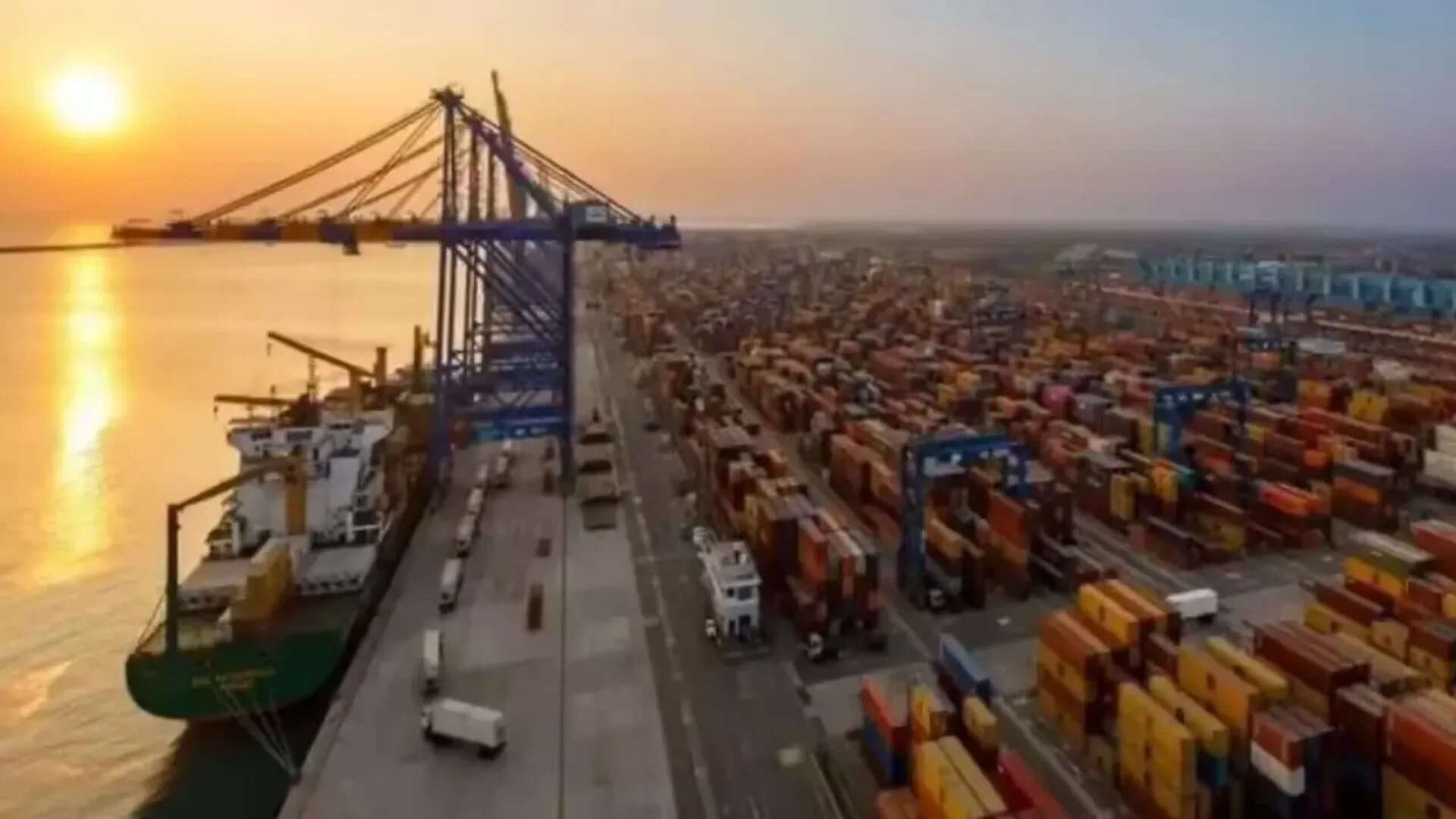
The maritime industry loves a ribbon-cutting ceremony. It loves press releases about "corridors" and "hubs" even more. The recent announcement that Saudi Arabia is launching a new direct shipping link connecting Jeddah Islamic Port to major Indian hubs like Mundra and Nhava Sheva is being treated by mainstream trade analysts as a masterstroke. They call it a tectonic shift in trade flows. They say it will slash transit times and tie two economic giants together in a neat, permanent knot.
They are looking at the wrong map.
The mainstream press is suffering from geographic blindness. They see a straight line drawn on a PowerPoint slide and assume efficiency follows. Having spent fifteen years auditing container logistics and untangling bottlenecked supply chains from Rotterdam to Singapore, I can tell you that maritime networks do not care about political goodwill. They care about asset utilization, empty container repositioning, and port dwell times.
This new link is not a breakthrough. It is a costly hedge against regional volatility that ignores the brutal operational realities of modern ocean freight. If you are building an international supply chain strategy around this route, you are subsidizing a geopolitical press release.
The Myth of the Straight Line
The conventional wisdom argues that a direct link between Jeddah and India’s west coast inherently optimizes trade. The logic seems simple: fewer stops equal faster transit.
It is a amateur mistake.
In liner shipping, direct service is often an operational luxury that masks massive inefficiencies. The underlying assumption is that there is a balanced, symmetrical flow of high-value cargo moving both ways between the Red Sea and the Indian subcontinent. There isn't.
Saudi Arabia primarily exports petrochemicals, plastics, and mineral products to India. India exports textiles, machinery, and agricultural goods to the Kingdom. On paper, that looks like trade. On a balance sheet, the container requirements are completely mismatched. Petrochemicals often require specialized ISO tanks or heavy-duty containers that must be returned empty, while agricultural products require refrigerated units (reefers) or food-grade dry vans.
When you establish a dedicated, direct loop between these two regions, you are not just moving freight. You are moving empty steel. A ship carrying 10,000 twenty-foot equivalent units (TEUs) of loaded cargo from Mundra to Jeddah cannot simply turn around and fill those exact same boxes with Saudi polymers. The carrier ends up burning fuel to transport empty air back across the Arabian Sea.
Who pays for that deadweight? The shipper. The "optimized" route secretly bakes the cost of empty container repositioning into the freight rates.
Jeddahs Real Bottleneck Is Not Distance
The press releases trumpet reduced transit times, claiming the direct link shaves days off the journey compared to transshipment via Jebel Ali or Salalah. This completely misunderstands why cargo gets delayed.
Ocean transit time—the time a vessel spends moving through open water—is rarely the variable that breaks a supply chain. The real killer is port dwell time and customs friction.
Jeddah Islamic Port has historically struggled with structural congestion and bureaucratic bottlenecks. While the Saudi Ports Authority (Mawani) has poured billions into infrastructure upgrades, the port still operates under intense regulatory scrutiny due to its geographic position. Customs clearance protocols in the Kingdom are notoriously rigorous, involving multi-layered inspection processes that can leave containers sitting on the tarmac for days.
Contrast this with Jebel Ali in Dubai. Dubai did not become the logistics capital of the region because it has nicer docks. It won because it perfected the regulatory vacuum. Its free zones allow cargo to be stripped, consolidated, and re-exported with virtually zero friction.
By bypassing established transshipment hubs like Jebel Ali or even Oman’s Salalah to run a direct service into Jeddah, carriers are trading a highly efficient, frictionless transshipment model for a direct drop into a regulatory chokepoint. You might save forty-eight hours on the water, only to lose seventy-two hours waiting for a customs stamp in western Saudi Arabia.
The IMEC Ghost in the Machine
To understand why this link is being forced into existence now, you have to look past the shipping lines and look at the India-Middle East-Europe Economic Corridor (IMEC). This multi-modal rail and shipping framework was announced with massive fanfare as a Western-backed alternative to China’s Belt and Road Initiative.
The Jeddah–India link is a desperate attempt to manifest IMEC into reality.
But IMEC is fundamentally flawed because it relies on the multi-modal mirage. The grand plan envisions containers moving by ship from India to the UAE, transferring to a rail network across the Saudi desert to Jordan and Israel, and then loading back onto ships to Europe.
Anyone who has ever managed a yard knows that every time you touch a container, you lose money.
- The First Touch: Lifting a box off a ship onto a port chassis. Cost: $150–$300 terminal handling charge.
- The Second Touch: Moving that box from the port terminal to a rail yard and loading it onto a flatcar. Cost: Additional drayage and rail terminal fees.
- The Border Touch: Shifting cross-border rail gauges or enduring customs checks at geopolitical frontiers.
- The Final Touch: Reversing the entire process at the Mediterranean coast.
A pure ocean voyage from India, through the Suez Canal, straight to Rotterdam involves two port touches: origin and destination. The IMEC route, which this new Jeddah link aims to feed, introduces four to six touches.
No amount of transit-time savings can offset the compounding costs of terminal handling charges, equipment detention, and intermodal transfer fees. The Jeddah–India link is the first leg of a journey designed by diplomats, not logistics directors. It is built for a trade corridor that makes sense on a map but loses money on every single mile.
The Vulnerability Nobody Wants to Discuss
The current narrative suggests that a direct link secures trade against global disruptions. The exact opposite is true. This route concentrates risk.
By tying supply chains tightly to a specific, direct corridor between western Saudi Arabia and western India, cargo owners lose the agility that a hub-and-spoke transshipment model provides. If the Red Sea experiences heightened security risks or localized port strikes, a vessel locked into a dedicated Jeddah-India loop has nowhere to go. It cannot easily divert to alternative Gulf ports without abandoning its entire schedule.
When you use a major transshipment hub like Salalah or Colombo, your cargo enters a massive, fluid network. If one route blocks up, a savvy logistics provider can reroute the box onto a dozen different feeder vessels heading to alternative gateways. A dedicated direct link is a rigid pipe. When a rigid pipe gets clogged, the system bursts.
How to Actually Leverage This Disruption
If you are a logistics director, procurement officer, or supply chain strategist, you should not be signing long-term volume commitments for this new direct service. Instead, you should exploit the market distortions it creates.
- Arbitrage the Empty Equipment: Because carriers will struggle to balance container flows on this route, they will face a desperate shortage of specific equipment in India and a surplus in Saudi Arabia (or vice versa, depending on seasonal agricultural shifts). Monitor the equipment imbalances. When carriers are desperate to move empty boxes back to India, negotiate rock-bottom rates for westbound repositioning cargo.
- Stick to Transshipment for Time-Critical Freight: Do not abandon your routing through Jebel Ali or Port of Hamad just because a salesman promises a faster transit time to Jeddah. The established transshipment networks have the volume and the bureaucratic muscle to absorb delays. A dedicated service into a single port is highly vulnerable to local labor disputes and customs slowdowns.
- Audit Your Total Cost of Moving Goods: Stop measuring supply chain success by port-to-port speed. Calculate the true landing cost, including terminal handling fees, customs brokerage surcharges at Jeddah, and the hidden cost of capital tied up while a container sits in a terminal yard.
The Saudi-India shipping link is a political triumph and a commercial question mark. It satisfies a state-driven desire for infrastructure dominance, but it ignores the fluid, mercenary nature of global freight markets. Oceans are not highways; you cannot simply pave a new lane and expect traffic to move efficiently.
Stop buying into the romance of new trade routes. The smartest supply chain minds do not look for the newest path. They look for the path with the fewest touches. Everything else is just expensive noise.