Paul Chan wants you to sleepwalk through the geopolitical earthquake. When Hong Kong’s Financial Secretary recently dismissed shifting United States trade policy as a mostly psychological phenomenon, he read directly from the institutional script designed to soothe anxious markets and keep capital flight from turning into a stampede.
It is a comforting bedtime story. It is also entirely detached from how modern supply chains and financial plumbing actually operate.
I have spent the better part of two decades watching bureaucrats wave away structural decay as mere sentiment. I have seen mid-sized enterprises blow millions restructuring their corporate entities because they believed trade friction was just political theater that would vanish after the next election cycle. They trusted the official line. They went bankrupt while waiting for a return to normalcy that was never scheduled to arrive.
The lazy consensus says that because Hong Kong has survived previous tariff adjustments, currency peg pressures, and legislative shifts, this next wave of American protectionism will roll off its back like light rain. The consensus assumes that trade flows are purely liquid, finding the path of least resistance no matter how many regulatory boulders you drop into the channel.
That assumption ignores the weaponization of compliance.
The Anatomy of a Structural Shift
Let us clear up the core misconception right away. When modern states alter trade policy, they rarely do so with a blunt instrument of immediate embargo. They do it through friction multiplication.
Hong Kong's value proposition was never just about low taxes or a deep harbor. It was about frictionless transit—the absolute certainty that an invoice, a container, and a wire transfer could move between Western markets and mainland production hubs without a customs officer treating the paperwork like a hostile intelligence document.
When American trade policy reclassifies origin rules, scrutinizes dual-use technology, or strips out special customs treatments, it does not send a psychological shockwave. It introduces structural cost.
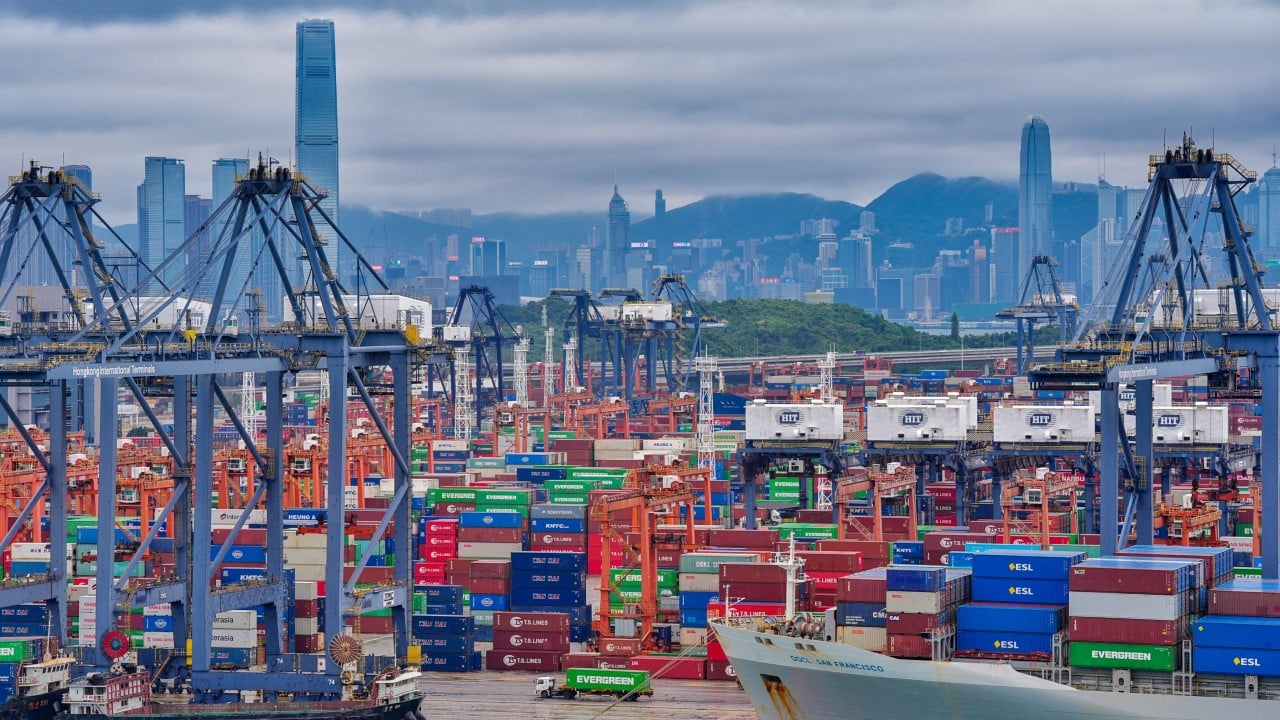
Let us define what that actually means on the ground. Compliance overhead is not a mental state. When a compliance department in Frankfurt or Chicago has to spend an extra forty hours vetting a transshipment through Kwai Chung container terminal to ensure it does not violate export controls, that is not a crisis of confidence. That is hard labor, billable hours, and legal liability.
Multiplied across thousands of shipments, those hours transform into a massive capital tax. Companies do not abandon Hong Kong because they are scared; they abandon it because the transaction costs outweigh the margin.
Dismantling the Psychological Fallacy
To claim that trade policy impacts are psychological is to fundamentally misunderstand how risk models operate inside multinational corporations. Risk committees do not trade in vibes. They trade in expected loss calculations.
Imagine a scenario where a global logistics firm is evaluating whether to maintain its regional treasury center in Central or relocate it to Singapore. The board room does not sit around hyperventilating about headlines in Washington. They look at three hard variables:
- Legal severability from mainland regulatory changes.
- Insurance premiums for cargo routed through disputed territories.
- The probability of secondary sanctions freezing clearing accounts.
If the probability of a freeze ticks up from two percent to seven percent, the actuarial math shifts immediately. The firm moves its desks, not because officials made them panic, but because their actuaries refused to underwrite the exposure.
Chan’s dismissal of these shifts relies on the historical anomaly of Hong Kong's resilience during the 1990s and 2000s. Back then, globalization was a rising tide lifting every wharf. The geopolitical architecture treated Hong Kong as a neutral Switzerland of trade.
That architecture is gone. The new global economy is fractured into security-first economic blocs. Neutrality is no longer an asset class; it is a liability.
The Real Cost of Looking Away
The danger of buying into the psychological narrative is that it breeds strategic paralysis. Business leaders who believe trade friction is just noise fail to re-engineer their supply chains until it is too late. They treat structural rewiring as an administrative nuisance rather than an existential pivot.
I have watched old-guard trading houses lose half their enterprise value in eighteen months because they waited for diplomatic detente while their Western banking partners quietly tightened credit lines. The banks were not panicking either. They were just managing their risk-weighted assets according to new regulatory mandates issued in Washington and Brussels.
You cannot talk your way out of a balance sheet adjustment. You cannot soothe a risk-weighted asset requirement with a press release about local resilience.
If you are running operations through Hong Kong right now, stop listening to officials whose primary job is to manage market psychology. Look at your bills of lading. Look at your insurance renewals. Look at the time it takes to clear compliance hurdles for any product with a microchip or an advanced software component inside it.
The friction is real. The cost is compounding. And the window to adapt without taking a permanent haircut is closing faster than the bureaucrats care to admit.
Do not wait for the panic. The smart money already left the building through the service elevator.