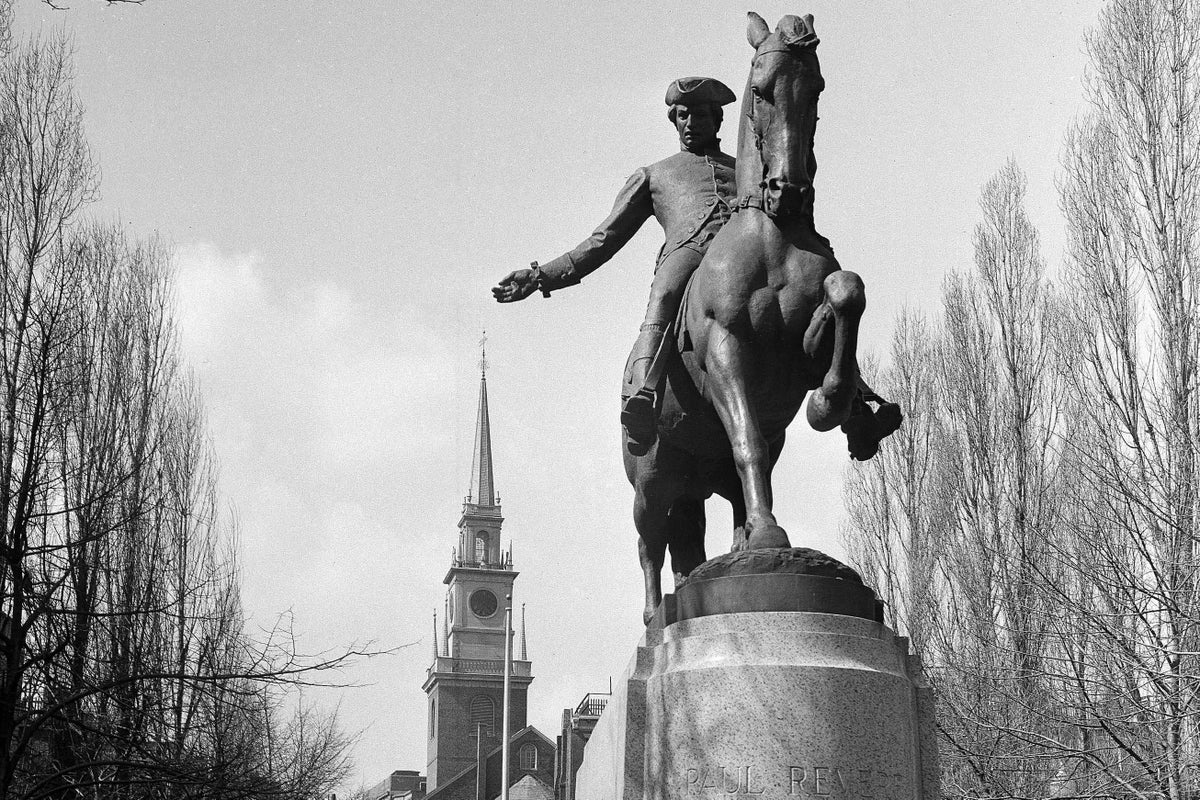
History isn't just a collection of dusty books or statues in a park. Every April, the streets of Boston and its surrounding suburbs turn into a living stage where the American Revolution breathes again. You've likely heard the story of Paul Revere. He’s the silversmith who rode through the night to warn that the British were coming. But seeing it happen in 2026 feels different. It’s a strange, beautiful mix of 18th-century grit and modern-day logistics.
The reenactment of Paul Revere’s midnight ride is a staple of Patriots’ Day. While the core message of "The Regulars are coming out" remains the same, the execution has changed. We aren't in 1775 anymore. Today, Revere’s horse shares the road with Ford F-150s and electric scooters. To make this work safely, the National Lancers—the cavalry troop that keeps this tradition alive—get a full police escort. It’s a surreal sight. You have a man in a tricorn hat galloping down a paved road while blue and red lights flash behind him to keep traffic at bay. Meanwhile, you can read related stories here: The Diplomatic Delusion Why Pakistan and Irans Dialogue is a Geopolitical Dead End.
The Reality of the Midnight Ride
Most people get the history wrong. Henry Wadsworth Longfellow’s famous poem made Revere a lone hero, but he wasn't alone. He was part of a sophisticated intelligence network. On that night in April 1775, William Dawes also rode a different route to Lexington. Later, they were joined by Samuel Prescott.
The modern reenactment honors this by having riders take different paths. It’s not just a show for tourists. It’s a logistical feat. The horses have to navigate asphalt, which is notoriously slippery for animals bred for trails. They wear special shoes with tungsten studs to grip the road. If they didn't, a sharp turn in Somerville could end in a disaster that the original Revere never had to worry about. To understand the complete picture, we recommend the excellent article by The New York Times.
I’ve watched these rides in various spots along the route. There’s a specific energy when the horse’s hooves hit the pavement. It’s loud. It echoes off the brick buildings in the North End. You realize how quiet the world must have been back then. Today, the police sirens almost drown out the shouting, but the intent is clear. We’re remembering a moment when a few people decided to risk everything for an idea.
Why the Police Escort is Necessary
You might think a police escort ruins the "vibe" of a historical reenactment. I disagree. It highlights the friction between our past and our present. Modern Boston is a maze of one-way streets, construction zones, and distracted drivers. Putting a horse into that mix without protection is asking for trouble.
The Massachusetts State Police and local departments from Boston to Concord coordinate every year. They block intersections. They clear the way through busy squares. This isn't just about safety; it’s about respect for the ceremony. The escort allows the rider to maintain a pace that mimics the urgency of 1775. Without it, Revere would be stuck at a red light on Route 2A, checking his watch while the "British" already made it to Lexington.
The National Lancers and the Human Element
The people behind the ride are the National Lancers. They’re a volunteer cavalry militia that dates back to 1836. These aren't paid actors. They’re riders who spend months training their horses for the noise and chaos of a city parade.
Each year, the Lancers select riders to portray Revere and Dawes. It’s a massive honor. They start at the Old North Church, where the lanterns were hung—one if by land, two if by sea. From there, it’s a grueling trek. They stop at town greens, shout their warnings, and keep moving.
Breaking Down the Route
- The North End: The ride begins near the Paul Revere House. It’s cramped, dark, and smells like Italian food. The start is always the most theatrical.
- Charlestown: This is where Revere actually began his mounted journey after being rowed across the harbor.
- Medford and Arlington: The suburbs offer more space, but the traffic increases. This is where the police escort really earns its keep.
- Lexington Green: The destination. This is where the riders meet the local militia reenactors, usually in the cold, pre-dawn hours.
Facing the Historical Myths
We need to stop pretending Revere screamed "The British are coming!" at the top of his lungs. That would have been a great way to get arrested immediately. Massachusetts was crawling with British patrols. He was discreet. He knocked on specific doors. He spoke to people he knew were on the side of the rebellion.
The modern reenactment leans into the drama, which is fine. It’s a celebration. But as you watch the rider gallop past a Dunkin’, it’s worth remembering the actual stakes. Revere wasn't a professional soldier. He was a craftsman with a family. He did it because he believed in the cause. That’s the part that stays relevant, even when the scenery changes to include glass skyscrapers and high-speed internet.
The Logistics of Living History
Maintaining this tradition isn't cheap or easy. The National Lancers rely on donations and volunteer time. The horses require specialized care. The uniforms are hand-stitched to be historically accurate, yet they have to be durable enough for a cross-county ride.
We often take these events for granted. We assume they’ll just happen every year because they always have. But it takes a massive amount of inter-agency cooperation. Think about the paperwork involved in galloping a horse through six different jurisdictions at night. It’s a miracle of bureaucracy that serves a higher purpose.
What to Expect if You Attend
If you’re planning to catch the ride next year, don't just stand at the start. The real magic happens in the smaller towns.
- Check the schedule: The riders are usually on a tight timeline, but traffic can cause delays.
- Find a Town Green: Spots like the Medford or Arlington town centers offer a better view and usually have smaller crowds than the North End.
- Listen for the hooves: You’ll hear them before you see them. It’s a rhythmic, heavy sound that cuts through the hum of the city.
- Dress for the weather: April in New England is unpredictable. It could be 60 degrees or it could be snowing. Revere didn't quit because of a drizzle, and neither should you.
The mix of 1775 and 2026 is what makes this event unique. It reminds us that our cities have layers. Underneath the asphalt and the fiber-optic cables is the same soil where people once fought for the right to govern themselves. The police cars and the Studded horse shoes are just tools we use to keep that memory from fading.
Go see it for yourself. Stand on a corner in Arlington at midnight. Watch the flashing lights approach and see the silhouette of a man on horseback emerge from the darkness. It’s the closest thing to a time machine we have. Don't worry about the sirens. Just focus on the message that has survived for over two and a half centuries. History is still moving. It’s still loud. And it still matters.