The Pentagon wants you to look at a neat little ledger. According to their official briefs handed to Congress, the military campaign against Iran sits at a tidy forty-three point six billion dollars. Media outlets repeat this figure like a comforting mantra, treating it as the definitive accounting of Washington’s latest Middle Eastern entangling alliance.
It is a complete fiction.
Focusing purely on the Department of Defense incremental ledger misses the real structural leakage entirely. I have watched defense budgets for two decades, and whenever Washington puts a clean, modest price tag on an active intervention, you are looking at the appetizer while the main course is being hidden behind classified accounting rows and deferred liabilities. The lazy consensus in mainstream reporting treats this war as an expensive ordnance delivery problem. That is wrong. The forty-three billion dollar figure is not a measure of what the conflict costs; it is a measure of what the bureaucracy is willing to admit on a Tuesday morning.
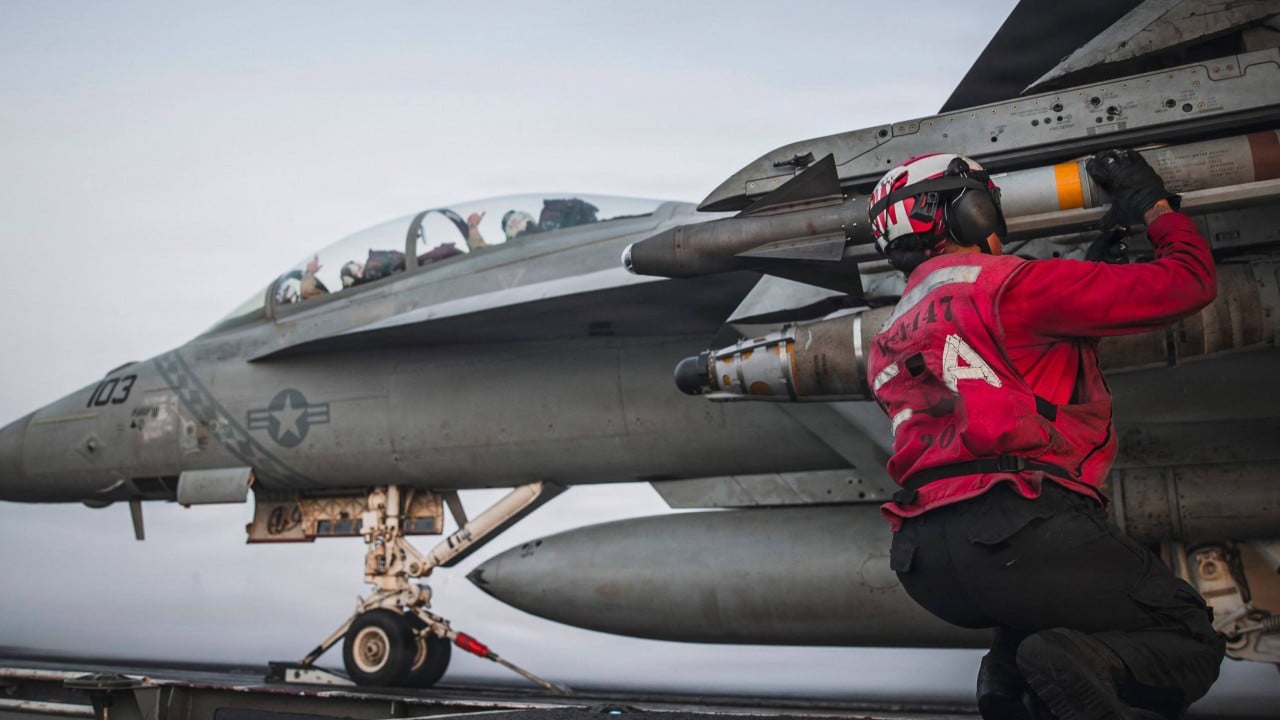
Let us look at the actual mechanics of modern attrition warfare. More than sixty percent of that official tally is tied directly to munitions replacement—burning through Patriot and THAAD interceptors, cruise missiles, and precision guidance packages at a rate that outpaces domestic industrial capacity. When a defense secretary stands up and notes that missile stockpiles are thinning out, they are missing the strategic trap. The real cost is not the sticker price of the hardware leaving the deck of a carrier group in the Arabian Sea. The real cost is the asymmetric economic erosion happening away from the battlefield.
Imagine a scenario where a military power launches a regional naval blockade and air campaign, assuming the adversary will fold under financial pressure. Instead, the cost equation inverts. While the Pentagon counts the price of replacement Tomahawks, American consumers have already quietly absorbed over one hundred billion dollars in extra fuel and energy costs at the pump. Brown University energy trackers and macroeconomic analyses by firms like Moody's show that the broader economic bleed dwarfs the official military expenditure. When you stack up base damage across the region, long-term veteran care liabilities, and the compounding interest on debt used to finance these supplemental appropriations, the true baseline is triple what the Pentagon is whispering to Capitol Hill.
We need to define terms precisely. When defense officials talk about "operational costs," they are referring strictly to immediate deployment, fuel, flight hours, and tactical maintenance. They intentionally exclude the structural degradation of regional deterrence and the replacement backlog for munitions that take years to manufacture. By isolating the war into a neat little box of direct military disbursements, policymakers shield themselves from accountability.
The political class treats these supplementary requests as routine line items. Senators line up to complain about the top-line numbers, debating whether forty-three billion or forty-seven billion is too steep, while completely ignoring the structural drain on American industrial readiness. We are depleting strategic depth to fight a conflict with shifting objectives and no clear termination vector.
There is a dark irony to this approach. The administration pitches these interventions as short, sharp exercises in hegemony protection, yet they trigger long-tail economic shocks that hit domestic households directly through inflation and energy volatility. Every time a defense contractor secures a new production contract to backfill depleted interceptor inventories, taxpayers are funding an inflationary loop that guarantees higher public debt and weaker long-term growth.
Stop asking how much the weapons cost. Start asking what happens when the industrial base runs dry while domestic infrastructure rots. The forty-three billion dollar figure is a distraction designed to keep you arguing over pennies while the vault is emptied.