Most royal watchers treat King Charles's private life like a scripted soap opera, but the real moments usually happen near a stable. When Charles remembered Molly—the beloved horse tied to one of the most turbulent chapters of his public life—he wasn't just indulging in nostalgia. He was pointing straight back to 1994, the year Jonathan Dimbleby's television documentary changed how the British public viewed the monarchy forever.
Let's be honest. Everyone remembers the headline confession from that 1994 broadcast. People still replay the clip where the then-Prince of Wales admitted his marriage to Princess Diana had broken down irretrievably before he resumed his relationship with Camilla Parker Bowles. What gets lost in the noise is the setting, the subtle royal signaling, and how horses like Molly have always served as Charles's anchor when the palace walls start closing in.
Why Molly Matters to the Royal Story
If you've followed the Windsor family for more than five minutes, you know horses aren't just a hobby for them. They're a lifeline. For Queen Elizabeth II, the turf was the one place where she wasn't the head of state—she was just a breeder who knew bloodlines better than most professionals. Charles inherited that exact same instinct, even if his path ran through polo fields and hunt country rather than flat racing at Epsom.
Molly wasn't just another animal in a royal paddock. In royal circles, naming a horse in public reflections carries weight. It signals affection, continuity, and a link to a specific era before everything turned into modern PR management. When Charles reflects on Molly with that classic "gone but not forgotten" sentiment, he's acknowledging an era when he felt intensely misunderstood by the press and the public.
Think about the emotional reality of royal life in the early 1990s. You couldn't vent to a neighbor. You couldn't trust half the courtiers leaking to Fleet Street. An animal doesn't sell stories to the tabloids. That's why Charles, just like his mother and his daughter-in-law Anne, consistently leaned on equestrian life to stay sane during the War of the Waleses.
The Equestrian Escape Hatch
Anyone who has spent time around serious horse people knows the barn has its own rules. Mud doesn't care about your title. A thousand-pound animal doesn't read newspaper polls, and it certainly doesn't care about constitutional crises.
Charles used riding and polo throughout the 1980s and early 1990s as his primary release valve. Even after retiring from competitive polo in 2005 following decades of injuries—including a broken arm in 1990 that famously complicated his marriage—his attachment to individual horses never faded. Remembering Molly isn't a throwaway line. It's a glimpse into how the King catalogs his own memory: not by red-carpet state banquets, but by the animals and landscapes that carried him through personal storms.
What Actually Happened in That Infamous 1994 Interview
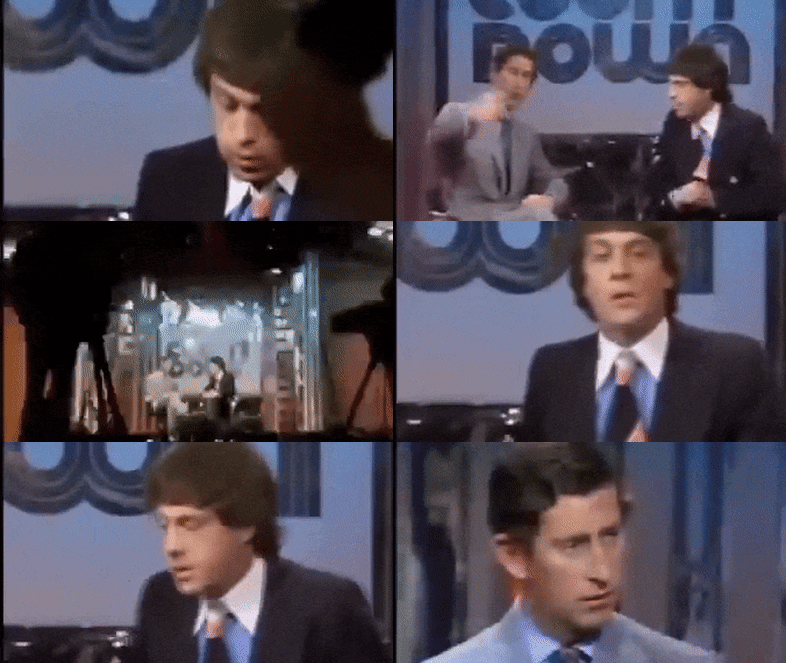
You can't separate the memory of that era from the June 29, 1994 broadcast of Charles: The Private Man, the Public Role. If you're younger, it's hard to overstate how shocking that night was in Britain. Over 13 million viewers tuned in to ITV to watch Jonathan Dimbleby question the heir to the throne for more than two hours.
Here's what most retrospectives get wrong about why Charles agreed to do it. People assume he was arrogant or blind to the fallout. In reality, his team was panicking. Andrew Morton's book Diana: Her True Story had come out in 1992, painting Charles as cold, unfaithful, and indifferent. By 1994, Charles felt his side of the story had been completely erased, and his advisers convinced him that radical honesty would win back public sympathy.
It backfired. Spectacularly.
Dimbleby asked the question directly: had he tried to be faithful and honorable to his wife when he made the vow of marriage? Charles paused, looked slightly uncomfortable, and said, "Yes, absolutely." Then Dimbleby pressed further: "And you were?" Charles replied, "Yes... until it became irretrievably broken down, us both having tried."
That single exchange blew up the front pages the next morning. Instead of rehabilitating his image, the interview made him look defensive and emotionally distant. Worse yet, it overshadowed the entire reason Dimbleby had spent eighteen months filming him—to showcase Charles's charity work, the Prince's Trust, and his early warnings about environmental conservation.
The Dress That Stole the Headlines
You also can't talk about that night without mentioning what happened across London at the Serpentine Gallery. While Charles was confessing adultery on national television, Princess Diana stepped out of a car wearing a short, off-the-shoulder black silk dress designed by Christina Stambolian.
The British press instantly dubbed it the "revenge dress." By morning, nobody was talking about Charles's charitable foundations or his thoughtful reflections on modern architecture. Every front page carried Diana's smile alongside Charles's awkward television admission. It was a masterclass in visual counter-programming, and it taught the palace a brutal lesson about modern media: controlled sit-down interviews rarely beat a single iconic photograph.
How the Royal Playbook Changed After 1994
If you look at how King Charles operates today compared to 1994, the contrast is night and day. That infamous interview became the ultimate cautionary tale inside Buckingham Palace. Whenever a royal thinks about doing a tell-all sit-down—whether it was Prince Andrew's disastrous Newsnight interview in 2019 or Prince Harry and Meghan Markle's sit-down with Oprah Winfrey in 2021—veteran courtiers point straight back to 1994.
Here's why televised confessions almost always fail for the monarchy:
- Mystery is the whole point. Walter Bagehot famously wrote in the 19th century that you must not let daylight in upon magic. Once a royal sits under studio lights explaining their marital math, the mystique evaporates.
- Soundbites destroy nuance. Charles spoke for over two hours in 1994, yet thirty years later, 99% of the public only remembers a ten-second clip.
- The public hates self-pity from privilege. Explaining why life is hard when you live in Highgrove House and own horses rarely lands well with people worried about paying their mortgage.
Charles learned that lesson the hard way. Over the next three decades, he stopped trying to argue his case through confessional interviews. Instead, he let consistency do the heavy lifting. He leaned into his conservation work, kept his head down, and eventually saw public opinion soften—both toward him and toward Queen Camilla.
Why Personal Tributes Work Better Than Interviews
Compare the disaster of 1994 with the quiet power of a simple remembrance like "gone but not forgotten." When Charles speaks warmly about Molly or shares a genuine, unadorned memory from his past, nobody accuses him of spinning the press. It feels human because it isn't trying to win an argument.
I've watched political and royal communications evolve for years, and the biggest mistake public figures make is over-explaining themselves. People forgive flaws much faster than they forgive a rehearsed excuse. A brief, heartfelt nod to a horse that meant something to him during a chaotic decade communicates warmth in four words—something a two-hour documentary never managed to pull off.
The Real Takeaway From Charles's 1990s Turning Point
Looking back at Molly and the 1994 broadcast gives you a much clearer picture of the man currently sitting on the British throne. He isn't a slick media operator, and he never has been. He's a traditionalist who got caught in the crossfire of tabloid culture in the 1990s, made a massive strategic blunder trying to explain himself, and retreated back to the things he actually trusts—nature, heritage, and animals.
If you're trying to understand modern royal history without getting lost in gossip, stop focusing solely on the scandals and pay attention to what royals return to when the cameras turn off. Go watch the original 1994 Dimbleby footage alongside recent coverage of King Charles at Royal Ascot or Highgrove, and you'll see the exact same man—just one who finally figured out that silence and genuine affection beat a television confession every single time.