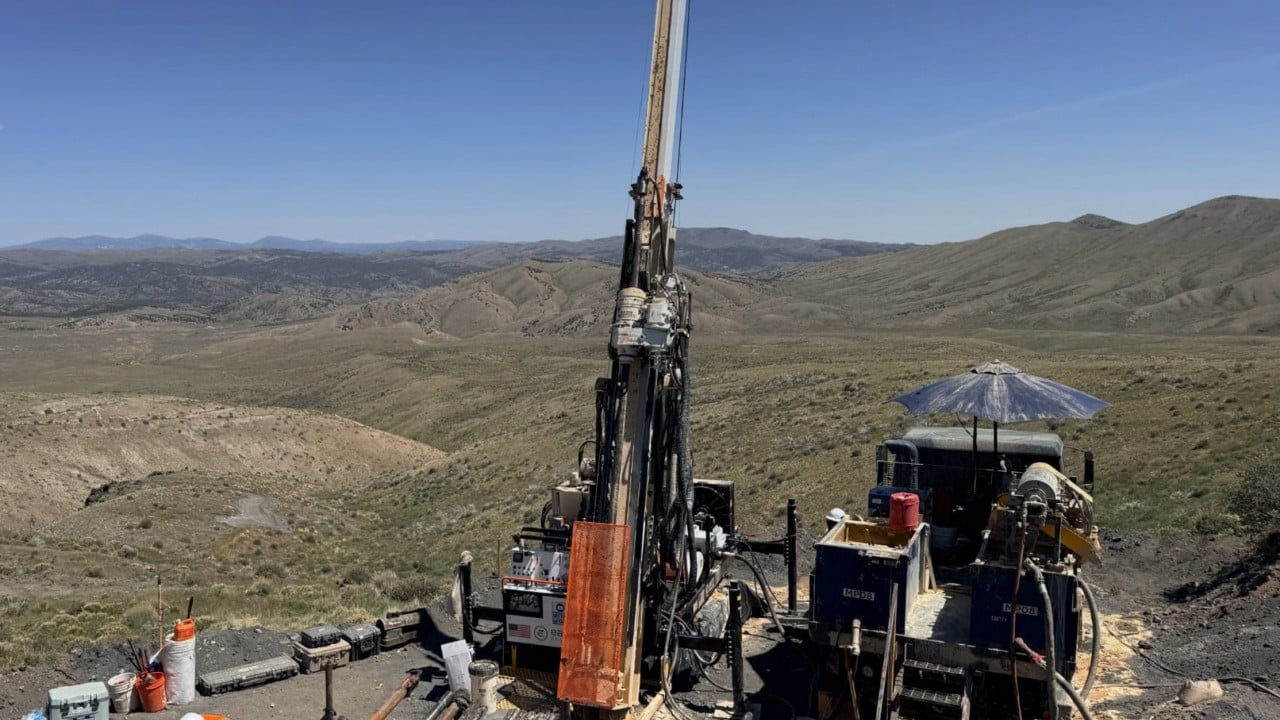
Stop looking at mine approvals if you want to understand the actual state of the US-China mineral rivalry. Most media outlets obsess over how many holes we’re digging in the ground or how much government cash is being thrown at potential projects. Honestly, that’s missing the entire point of the battle. You don’t win this war just by pulling rock out of the earth. You win by controlling what happens to that rock once it’s out.
The real fight isn't about mining. It's about midstream dominance.
The Midstream Reality
China didn't become the global authority on critical minerals because they got lucky with their geology. They dominated by investing heavily in the boring stuff—refining, chemical processing, and component manufacturing. While the US spent years debating energy policy, China built the massive infrastructure needed to turn raw ore into magnets, battery anodes, and semiconductor-grade materials.
If you dig up a ton of lithium but have to ship it to a Chinese refinery to make it usable, you haven't secured your supply chain. You’ve just created a more complex logistics chain that China can shut down whenever it wants. This is exactly what the International Energy Agency flagged in mid-2026: supply chain concentration has moved from a "theoretical risk" to an immediate economic security challenge. When you look at the price divergence in global markets, you can see the impact. Gallium and heavy rare earth prices outside of China are currently running nearly five times higher than domestic Chinese prices. That’s not a market fluctuation. That’s a tax on dependency.
Why Money Isn't The Only Solution
Washington is currently trying to close the gap with big checks. We’ve seen federal support payments hitting over $110 million for specific rare earth players in recent months. It sounds great in a press release, but money alone can't replicate decades of industrial knowledge.
Building a refinery isn't just about pouring concrete. You need a workforce that understands the complex chemical processes involved. You need environmental permitting that doesn't take a decade. You need a stable supply of reagents—like the sulphuric acid that became a massive bottleneck in 2026 due to regional conflict and export shifts. When acid costs start outstripping energy costs in your production budget, you know you’re dealing with a supply chain that’s fragile at its core.
The Danger of Ignoring the Downstream
Here is the math that should worry every stakeholder in the auto, high-tech, and defense industries. The IEA estimates that if full export controls—like those China has teased on battery materials and rare earths—are implemented by late 2026, over $6.5 trillion worth of annual downstream production outside of China could be at risk.
If you’re a US manufacturer, your "resilient" supply chain is currently a paper tiger if it relies on Chinese refining capacity. The goal for any serious industry player shouldn't be "getting more mining permits." The goal should be vertical integration.
- Audit your inputs: Stop asking where your ore comes from and start asking where it is processed. If the processing happens in a single jurisdiction with a history of export restrictions, you have a single point of failure.
- Prioritize midstream partnerships: Look for companies that are keeping the "value-add" steps—like magnet production or metal refining—domestically. It costs more upfront, but it’s the only way to avoid the price volatility that’s already spiking for tungsten, copper, and tin.
- Watch the stockpiles: Strategic stockpiles are the new "just-in-time" inventory. If your business relies on critical minerals, ensure you have a buffer that can handle at least six months of supply chain shocks.
The era of cheap, globally sourced minerals is effectively over. Prices for base metals surged by a third between early 2025 and mid-2026. We’re entering a period where security of supply is going to be far more expensive than efficiency. Those who realize this first and pivot their capital toward building domestic refining capacity—not just digging holes—will be the ones left standing when the next round of export restrictions hits. Don't bet on the government to solve this for you. Map your own dependencies today.
The $10 Billion Hunt for the Rocks That Power the World
This video provides a detailed look at the financial and logistical hurdles involved in trying to build out a non-Chinese critical minerals supply chain from scratch.