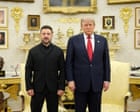
Diplomatic handshakes in the United Arab Emirates make for great television, yet they hide a brutal reality on the ground. While US officials push hard for a "final end" to the Russia-Ukraine war during the November 2026 Abu Dhabi talks, neither Moscow nor Kyiv has actually budged on their core red lines.
Let's cut through the diplomatic spin. If you only read the press releases coming out of Al Shati Palace, you might think a lasting peace treaty is just a few signatures away. It isn't. The November 10–11 trilateral meetings marked the first direct three-way sit-down between Washington, Moscow, and Kyiv since February, following earlier rounds in January and February 2026. Yet even as envoys talked about building a peace framework for "decades, if not centuries," Russian forces launched 162 drones and a ballistic missile at Ukraine overnight, while Russian air defenses intercepted 155 Ukrainian drones over eight regions and Crimea. If you liked this post, you should check out: this related article.
Why Washington Is Rushing for a Deal Right Now
Politics drives timelines. Always has, always will.
The White House's sudden urgency to lock down a settlement before the end of 2026 isn't happening in a vacuum. Following the November US midterm elections, Democrats are set to take control of Congress in January 2027, a shift that could complicate the Trump administration's negotiating posture and bring renewed demands for aggressive Ukrainian military aid. American negotiators—led by special envoys Steve Witkoff and Jared Kushner, alongside NATO commander US Gen. Alexus Grynkewich—know their window for unilateral diplomatic maneuvering is narrowing fast. For another look on this development, check out the latest update from Reuters.
To get Moscow and Kyiv to the table, US officials have floated a sweeping "long-term security architecture" designed to reshape relations between Russia and Europe. Based on briefings from administration officials and diplomatic reporting, the American pitch relies on three major levers:
- Article 5-style security guarantees for Ukraine: Washington has floated binding US security commitments that mimic NATO's mutual defense clause without granting Kyiv formal alliance membership.
- Sanctions relief and economic incentives: US negotiators have signaled a willingness to lift sanctions against Russia and revive the suspended NATO-Russia Council, while earlier backchannel discussions by Witkoff even touched on joint energy ventures like a Sakhalin oil project and reviving Druzhba pipeline deliveries to Europe.
- Territorial compromises: Behind closed doors, American envoys have explored whether Ukraine would trade land concessions in the east for hard Western security backing.
Sounds neat on paper. In practice, every single one of those pillars faces massive resistance from the people who actually have to live with the consequences.
The Donbas Trap and the Illusion of Security Guarantees
If you want to understand why these talks keep stalling, look at a map of eastern Ukraine.
During the November Abu Dhabi sessions, Russian representatives led by Vladimir Medinsky and military intelligence officials stuck to the exact same maximalist demand they pushed back in January and February. Moscow wants Ukrainian troops to completely withdraw from the roughly 20% of the Donetsk province—the remainder of the Donbas region—that Kyiv still controls, alongside recognition of Russia's claims over Kherson, Zaporizhzhia, and Crimea.
Ukrainian President Volodymyr Zelenskyy has flatly rejected giving up unoccupied territory. You can't blame him. Handing over fortified cities in Donetsk without a fight doesn't buy peace; it hands the Russian military a clean staging ground for the next offensive three years down the road.
And what about those "NATO-like" security guarantees US officials keep hyping? Defense analysts and European diplomats have poked massive holes in the concept. Even NATO's actual Article 5 doesn't automatically force member states to send troops into combat—it only requires them to take whatever action they deem necessary. In an era of hybrid warfare, cyberattacks, and deniable drone strikes, a vague bilateral promise from Washington is a tough sell for a country that already got burned by the 1994 Budapest Memorandum. Russia has also repeatedly rejected any deployment of European or Western peacekeeping troops on Ukrainian soil once a ceasefire takes hold, putting Moscow on a direct collision course with NATO Secretary General Mark Rutte's vision of allied troops on the ground, jets in the air, and ships in the Black Sea.
Europe Refuses to Sit at the Kids Table
For months, European leaders watched from the sidelines as Washington ran bilateral and trilateral channels with Moscow. That patience has officially run out.
Italian Prime Minister Giorgia Meloni publicly criticized the "disorderly" string of separate meetings and phone calls, warning that fragmented diplomacy weakens Europe's collective voice. German Chancellor Friedrich Merz didn't sugarcoat his skepticism either, telling German television ahead of the Abu Dhabi meetings that he didn't have overly high expectations for a breakthrough.
European capitals have a simple, undeniable point. You cannot negotiate a new European security architecture, lift EU-aligned sanctions, or decide the fate of Ukrainian sovereignty without Europeans in the room.
Separate sideline meetings between US, Ukrainian, and European officials during the Abu Dhabi summit produced a joint statement insisting that any future deal must protect Ukraine's sovereignty, territorial integrity, and independent decision-making. US Secretary of State Marco Rubio subsequently acknowledged during a stop in Paris that Washington intends to bring European representatives directly into the negotiating format. By November 25, Zelenskyy confirmed that Kyiv had worked hard to secure Europe's seat at the table and is now waiting on Washington to set a date for the next round—which is expected to expand into a four-party quadrilateral format.
What Actually Worked in Abu Dhabi
Not everything in the UAE was empty diplomatic posturing. When negotiations narrow down to specific, verifiable humanitarian mechanics instead of grand geopolitical bargains, real movement happens.
The most concrete achievement from the November 10–11 sessions wasn't a ceasefire. It was a large-scale prisoner-of-war exchange. Ukrainian and Russian intelligence agencies—with Kyiv's delegation headed by Foreign Intelligence Service chief Rustem Umerov—hashed out an agreement in principle to swap between 1,200 and 1,300 prisoners from each side. By November 19, Kremlin spokesperson Dmitry Peskov confirmed that intelligence teams were actively verifying prisoner lists, setting the stage for hundreds of captured soldiers to return home by early December.
That contrast tells you everything you need to know about where this conflict stands. Prisoner swaps work because both sides gain an immediate, tangible benefit without compromising their strategic survival. Grand peace treaties fail when one side demands total capitulation at the negotiating table that it hasn't been able to win on the battlefield.
How to Track What Happens Next Without Falling for Hype
If you're following the diplomatic maneuvering over the coming weeks, ignore the optimistic adjectives from anonymous administration officials and watch three concrete indicators instead:
- The quadrilateral meeting date: Watch whether Washington actually locks in a December schedule that includes European envoys alongside Ukraine, Russia, and the US. If Moscow stalls or blocks European participation again, the peace track is dead in the water.
- Energy infrastructure strikes: US mediators have pushed both sides to halt attacks on energy grids and food supply chains. A sustained pause in long-range drone and missile strikes against power plants would be the first genuine sign of de-escalation—far more meaningful than any press conference in Abu Dhabi.
- Execution of the December POW swap: Track whether the 1,200-for-1,200 prisoner exchange goes off smoothly in early December. If Moscow and Kyiv can't even execute an agreed humanitarian swap without last-minute sabotage, they have zero chance of enforcing a complex ceasefire along a thousand-kilometer front line.
Keep your eyes on the front lines and the power grids, not the palace photo ops. Until Moscow drops its demand for unoccupied Ukrainian cities or Kyiv runs out of ways to defend them, the Abu Dhabi talks remain a high-stakes holding pattern rather than the end of the war.