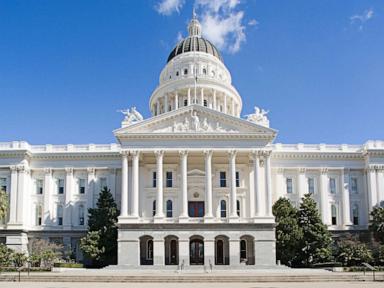
Every election cycle follows the exact same script. Polls close, Florida and the East Coast dump their results within hours, and then the entire nation pivots to stare at California. Days turn into weeks. Competitive congressional races sit in limbo, holding the balance of power in Washington hostage. The internet fills with conspiracy theories, and talking heads express performative outrage over why the Golden State cannot seem to count pieces of paper in a timely manner.
It looks bad on television. It looks even worse on a live tracker that stays frozen for half of November or June. But the prevailing national narrative about California's slow vote count is completely wrong.
The delay is not a sign of bureaucratic incompetence, malfunctioning machines, or sinister backroom manipulation. It is the deliberate result of state laws designed to prioritize voter access and security over the media's desire for immediate gratification. California chose a system that makes voting as easy as possible and verifying those votes as strict as possible. When you run an election for more than 23 million registered voters with those rules, speed goes out the window.
Understanding the mechanics behind the sluggish tally reveals why the count takes so long, why recent laws are trying to change it, and why an immediate result is practically impossible under current rules.
The Mailbox Is the New Polling Place
You cannot talk about California elections without talking about mail-in voting. Since the pandemic, the state permanently shifted to an all-mail system. Every single active registered voter automatically gets a ballot sent to their home.
In the 2024 elections, nearly 90% of all votes cast in California were mail-in ballots. This changes the entire timeline of an election. When people vote in person on an electronic scanner, their votes register instantly. When millions of people mail a piece of paper, the post office becomes the bottleneck.
California law states that as long as your ballot is postmarked by Election Day, it is legally valid if it arrives at the county election office up to seven days later. Think about what that actually means for the timeline. If an election happens on a Tuesday, valid ballots are still legally trickling into county offices until the following Tuesday. Election officials cannot count ballots they have not received yet, and they cannot know the total universe of cast votes until that seven-day grace period expires.
Critics often argue this timeline simply rewards procrastination, but data from the Federal Election Assistance Commission shows that the postmark grace period cut the state's ballot rejection rate for lateness in half. It protects voters from postal delays. The trade-off is a built-in, mandatory one-week delay before the true counting can even peak.
Even if the state eliminated the postmark rule, the workload would barely budge. During the 2024 election week, the California Secretary of State reported that while there were roughly 244,000 unprocessed late-arriving postmarked ballots, there were over 4.1 million unprocessed ballots that had already arrived on or before Election Day. The sheer volume is the real hurdle.
The Painstaking Envelope Gauntlet
When a mail-in ballot arrives at a county election warehouse, it does not just get ripped open and fed into a scanner. That would be insecure. Instead, each individual ballot must go through a strict, multi-step verification process before the envelope is ever opened.
First comes signature verification. Every single ballot envelope features the voter's signature. A human worker or an automated system must cross-check that signature against the one on file from the voter’s DMV records or original registration form. If the signature matches, the ballot moves to the next phase.
What happens when a signature does not match, or if a voter forgets to sign the envelope entirely? In many states, that ballot simply goes into the trash. In California, the law requires election workers to protect the franchise. They must contact the voter and give them an opportunity to "cure" the signature defect.
Voters have a massive window to fix these issues. State law allows voters to submit an affidavit to correct a signature up until two days before the county certifies its final results. Because California gives counties up to a month to finalize everything, election workers spend weeks playing phone tag and sending mailers to voters to rescue mismatched ballots. It is great for voter rights, but it is an absolute nightmare for speed.
Once a signature is verified, the ballot must be physically extracted. Workers slice the envelopes, remove the ballots, flatten them out to remove creases from folding, and check them for physical damage or stray marks that might confuse a digital scanner. Only after this manual, labor-intensive preparation can the ballots finally be stacked and fed into the tabulating machines.
Provisional Ballots and Same Day Registration
California allows conditional voter registration, commonly known as same-day registration. If you wake up on Election Day, realize you are not registered, or moved to a new address, you can walk into a voting center and cast a ballot.
These votes are cast provisionally. They do not go into the standard counting machines on election night. Instead, they are placed in a separate pile so election clerks can research the voter's eligibility.
Clerks have to verify that the person is eligible to vote, registered in the correct precinct, and, crucially, did not already mail in a ballot or vote somewhere else. This requires cross-referencing databases across 58 different counties. Only after confirming the voter has not double-voted can the provisional ballot be approved and counted. Because Los Angeles County alone routinely processes hundreds of thousands of these ballots, the manual verification process drags out for weeks after the polls close.
Why Florida Can Do It Faster
The standard weapon used to beat California over the head regarding election speed is Florida. Florida puts up numbers on election night with brutal efficiency. Why can't California just copy them?
The two states operate on entirely opposite philosophical foundations. Florida built its system around strict deadlines and early processing. Mail-in ballots in Florida must be in the hands of election officials by 7:00 PM on Election Day—no postmark grace periods allowed. If your ballot arrives at 7:01 PM, it is garbage.
Florida also requires voters to request a mail-in ballot; they do not send them to everyone automatically. This keeps the total volume of paper ballots significantly lower. Furthermore, Florida allows counties to process and tally mail ballots weeks before Election Day, meaning they can hit "publish" the second polls close.
California also allows early processing—workers can verify signatures and prepare ballots before Election Day—but the sheer avalanche of paper received at the last minute completely overwhelms the system. Millions of Californians sit on their mail ballots until the very last minute. In primary elections, voters often wait to see late polling drops or candidate dropouts before dropping their envelope in a mailbox or a drop box on Election Day.
When millions of ballots land simultaneously on Tuesday night, the early processing advantage evaporates. The system experiences an infrastructure logjam.
The Cost of Razor-Thin Margins
If a candidate wins an election with 65% of the vote, the slow count does not dominate national headlines. Outlets can use statistical modeling to call the race early based on partial returns. The real friction occurs in California's highly competitive, swing congressional districts.
Because California uses a "jungle primary" system—where the top two vote-getters advance to the general election regardless of political party—and features deeply divided suburban districts, races are frequently decided by a few hundred votes.
When a race is separated by less than a percentage point, media networks cannot project a winner. They need to see almost every single ballot counted. A slow count in a blowout race goes unnoticed; a slow count in a race that decides control of the U.S. House of Representatives is scrutinized under a microscope. The drama is magnified by the math, not just the clock.
Changing the Rules of the Game
The immense scrutiny has forced California lawmakers to look for ways to accelerate the process without stripping away voter access. The pressure is mounting as officials warn that long delays create an information vacuum where election misinformation can easily take root.
Recent legislative efforts are beginning to alter the timeline. Assembly Bill 5 dramatically shortened the official canvas timeline for non-problematic ballots, pushing counties to finish counting standard ballots within 13 days of the election rather than the traditional 30 days.
However, election officials have pointed out that this law cannot override the time required for complicated tasks. It does not speed up signature curing or provisional ballot research, which means the closest races will still take weeks to resolve.
A more promising fix addresses the Election Day ballot dump. Assembly Bill 626 allowed counties to offer a "sign, scan, and go" option. If a voter brings their mail-in ballot directly to a physical voting center on Election Day, workers can verify their identity and let the voter feed the ballot into the electronic scanner themselves.
Traditional Mail Dropoff:
[Drop Box] -> [Transport to Warehouse] -> [Signature Check] -> [Manual Opening] -> [Flattening] -> [Scanner Tally] (Takes days)

Sign, Scan, and Go:
[Voter Center] -> [Instant Identity Check] -> [Voter Scans Ballot] -> [Instant Digital Tally] (Takes minutes)
In counties like Placer and Yolo that pioneered this system, officials reported it sliced three to four days off their post-election processing workload. Thirty-one of California's 58 counties rolled this feature out, targeting the exact behavior that causes the bottleneck: voters holding onto ballots until the last second.
The False Choice of Speed Versus Security
The fundamental mistake critics make is assuming a slow count means a flawed count. In reality, the reverse is true. California's lengthy timeline is the tax paid for a system that maximizes security checks while simultaneously lowering the barrier to entry for the voter.
Every single envelope signature is checked. Every provisional voter is vetted. Every damaged ballot is manually reviewed by a bipartisan panel. To top it off, state law mandates a post-election audit where counties must hand-count 1% of all paper ballots to verify that the automated machines tabulated them correctly.
You can have instantaneous results, or you can have a system that gives every citizen a week to mail a ballot, weeks to correct a signature error, and checks every record to ensure no one voted twice. You cannot have both.
If you want to help speed up the process as a voter, the solution is simple. Stop holding onto your ballot until Tuesday night. Fill it out, sign the envelope, and get it into a drop box or the mail a week before Election Day. If you prefer waiting until the last minute, use a polling site that offers direct scanning. The machinery of democracy can only move as fast as the paperwork we feed into it.


