Most headlines about space warfare make it sound like a sci-fi movie with laser beams zapping satellites out of the sky. That's not what's actually happening.
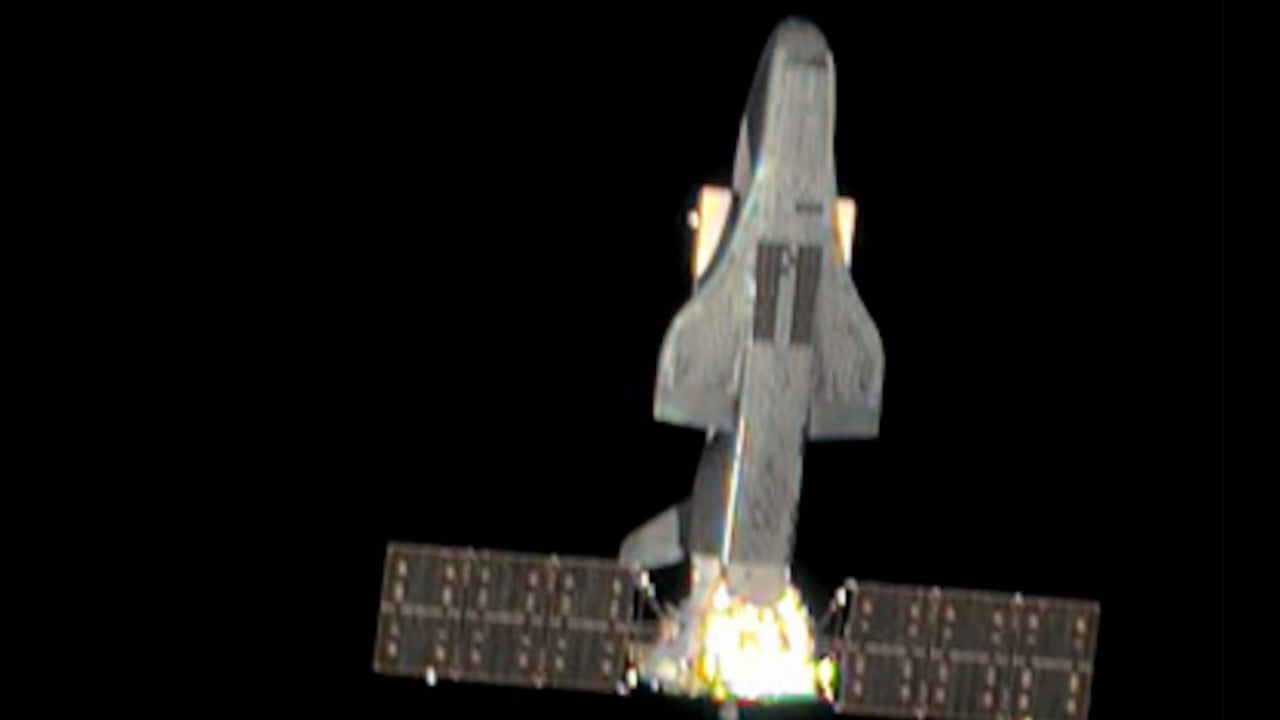
When the U.S. Defense Intelligence Agency (DIA) released its updated Challenges to Security in Space report in late October 2026, the headlines immediately zeroed in on two flashy terms—China's reusable spaceplane and directed-energy weapons. Yes, Pentagon analysts warned that Beijing could deploy orbital directed-energy systems by the end of this decade. And yes, China's experimental Shenlong spaceplane is currently flying its fourth mission after launching in February 2026.
If you only read the surface-level news, you'd think China is building a Death Star. I've spent years tracking orbital mechanics and defense policy, and the real threat is way quieter, way more practical, and frankly much harder to stop than a giant space cannon.
Why China's Spaceplane Actually Matters
People love comparing China's Shenlong spaceplane to the U.S. Space Force's X-37B. On paper, they look like twins. Both are uncrewed, reusable winged spacecraft that ride rockets into orbit and land on runways like conventional airplanes.
Here's what most coverage misses. A normal satellite is predictable. Once it's in orbit, physics locks it onto a track. Ground radars and telescopes can calculate exactly where that satellite will be three days from now, three weeks from now, or three years from now. You can hide sensitive military hardware on the ground simply by checking a schedule and throwing a tarp over it before the satellite passes overhead.
A maneuverable spaceplane breaks that rule.
During its third mission, which launched in December 2023 and stayed in orbit for 268 days, the Chinese spaceplane released an unknown sub-satellite, moved away, and later rendezvoused with it again. That isn't just a neat trick. Proving you can drop off hardware, change orbital planes, and pick things back up changes how orbital logistics work.
- Unpredictable overflights mean adversaries can't easily time their ground concealment around known satellite passes.
- On-orbit payload swapping allows a single vehicle to test sensors, release small inspection satellites, or carry experimental directed-energy gear without launching a brand-new rocket every time.
- Rapid atmospheric reentry lets the vehicle bring captured hardware or high-resolution physical data straight back to Earth intact.
Even the DIA's 2026 report included a rare commercial satellite image from Vantor showing Shenlong in orbit. Intelligence agencies don't declassify or highlight imagery like that by accident. They're signaling that they're watching closely—and that Shenlong has moved well past the basic flight-testing phase.
The Reality of Space-Based Energy Weapons
Mention "energy weapons" in space and people picture something exploding into a million pieces. That's actually the exact opposite of what military planners want.
In 2007, China tested a ground-based anti-satellite missile by blowing up one of its own defunct weather satellites. It worked, and it created a massive cloud of space junk that still threatens every spacecraft in low Earth orbit today, including China's own Tiangong space station. Blowing things up in orbit is messy. Debris doesn't pick sides.
Directed-energy weapons—specifically high-powered lasers and high-power microwaves—solve that problem.
Blinding vs. Destroying
You don't need to vaporize a billion-dollar reconnaissance satellite to make it useless. You just need to ruin its eyes.
Optical imaging satellites rely on ultra-sensitive sensors to take sharp photos from hundreds of miles up. Point a moderately powerful laser at that lens, and you temporarily "dazzle" or blind the sensor. Turn the power up a notch, and you permanently burn out the pixels. The satellite stays intact in its orbit. Zero debris gets created. No explosion triggers an automatic international crisis. Yet the military commander relying on those satellite photos suddenly goes blind during a critical operation.
According to U.S. Space Force assessments, the People's Liberation Army already operates multiple ground-based laser systems capable of dazzling or damaging satellite sensors. Moving those systems onto satellites or a spaceplane by 2030—which the DIA explicitly flagged as a growing risk—removes geography from the equation. A ground laser can only hit a satellite when it flies directly over Chinese territory. An orbital laser can line up a shot anywhere around the globe.
High-Power Microwaves and Jamming
Lasers get the press, but radio-frequency and microwave weapons are the workhorses of modern counterspace. Instead of targeting optical lenses, high-power microwaves fry unshielded internal electronics. Meanwhile, electronic warfare jammers drown out GPS and military satellite communications.
If you've ever had your phone lose GPS signal near a major military installation or airport, you've experienced a tiny fraction of what electronic counterspace looks like. Scale that up to military frequencies, and drones lose their links, precision-guided munitions miss their targets, and naval fleets struggle to coordinate.
How Orbital Stalking Works in Practice
To understand where spaceplanes and energy weapons intersect, look at what China is already doing with standard satellites.
Back in 2022, China's Shijian-21 (SJ-21) satellite grabbed a dead BeiDou navigation satellite and physically towed it out of geostationary orbit into a higher "graveyard" orbit. Officially, that's space debris cleanup. Technically, any spacecraft with a robotic arm or grappling mechanism that can tow a dead satellite can also grab an active U.S. communications satellite and yank it out of position.
In March 2026, a Chinese firm launched Xiyuan-0, a commercial servicing satellite equipped with a flexible robotic arm meant for refueling and debris removal. Again, dual-use technology. There's no clear dividing line between a space tow truck and an orbital weapon.
Now combine that close-proximity maneuvering with a spaceplane. A reusable vehicle like Shenlong can approach a target satellite, inspect it up close, test low-power directed-energy sensors against it, and slip away without leaving a smoking gun. Proving attribution in orbit is notoriously hard. If a satellite suddenly suffers a fried circuit board or a blinded camera 500 miles above the Pacific Ocean, how do you prove to the United Nations that it wasn't just a solar flare or a stray micrometeorite?
What Everyone Gets Wrong About the Space Arms Race
If you listen to political rhetoric from both Washington and Beijing, it sounds like one side is pure and the other is the sole aggressor. Neither narrative holds up under scrutiny.
Misconception 1 Only China is militarizing orbit
In September 2026, the U.S. Space Force publicly acknowledged for the first time that it has offensive and defensive "space control" weapons deployed in orbit. Washington had kept those programs quiet for decades while criticizing Beijing and Moscow. Meanwhile, Russia has deployed ground-based Peresvet laser systems to mask its mobile missile units and is reportedly developing a nuclear-armed anti-satellite capability. Every major spacefaring power is building counterspace tools.
Misconception 2 The Outer Space Treaty bans these weapons
People constantly cite the 1967 Outer Space Treaty as if it makes space a weapon-free zone. It doesn't. Article IV of the treaty only bans nuclear weapons and other weapons of mass destruction from being placed in orbit. Conventional lasers, microwave emitters, robotic grappling arms, and kinetic interceptors sit in a massive legal gray area. Beijing and Moscow have pushed for a new treaty at the UN to ban space weapons, while Washington has rejected those drafts because they don't cover ground-based anti-satellite missiles and lack real verification mechanisms.
Misconception 3 Space war is about astronauts fighting
There are no space marines. Space warfare is entirely about blindfolding militaries on Earth. Modern warfare—whether in the Taiwan Strait, Eastern Europe, or the Middle East—runs on space infrastructure. Remove GPS timing, satellite imagery, and beyond-line-of-sight communications, and a 21st-century military instantly reverts to 1970s capabilities.
How to Read Future Space Defense News Without Falling for Hype
Defense reports and intelligence warnings drop every few months, and they're usually written in dense bureaucratic language that gets sensationalized by the time it hits your feed. Whenever you see a new headline about Chinese spaceplanes, Russian inspector satellites, or U.S. Space Force budgets, run it through three quick filters before jumping to conclusions.
- Check the orbit. Low Earth Orbit (LEO, roughly 100 to 1,200 miles up) is crowded and relatively easy to reach. Geostationary Orbit (GEO, about 22,236 miles up) is where high-value missile-warning and communications satellites live. Capabilities demonstrated in LEO are much harder to pull off in GEO.
- Look for reversible vs. permanent effects. The Pentagon categorizes counterspace threats on a spectrum. Jamming and laser dazzling are reversible—once the interference stops, the satellite usually works again. Kinetic missiles, high-power structural lasers, and robotic tampering cause permanent damage. Knowing which end of the spectrum a new weapon sits on tells you how escalatory it really is.
- Follow the dual-use trail. Don't just watch military launches. Keep an eye on commercial Chinese startups testing on-orbit refueling, robotic arms, and mega-constellations. Under China's civil-military fusion strategy, almost every breakthrough in commercial space logistics doubles as a capability the People's Liberation Army can tap into during a crisis.
The real contest above our heads isn't a flashy battle for territory. It's a quiet, technical race to control who gets to see, communicate, and navigate when things go wrong on the ground.