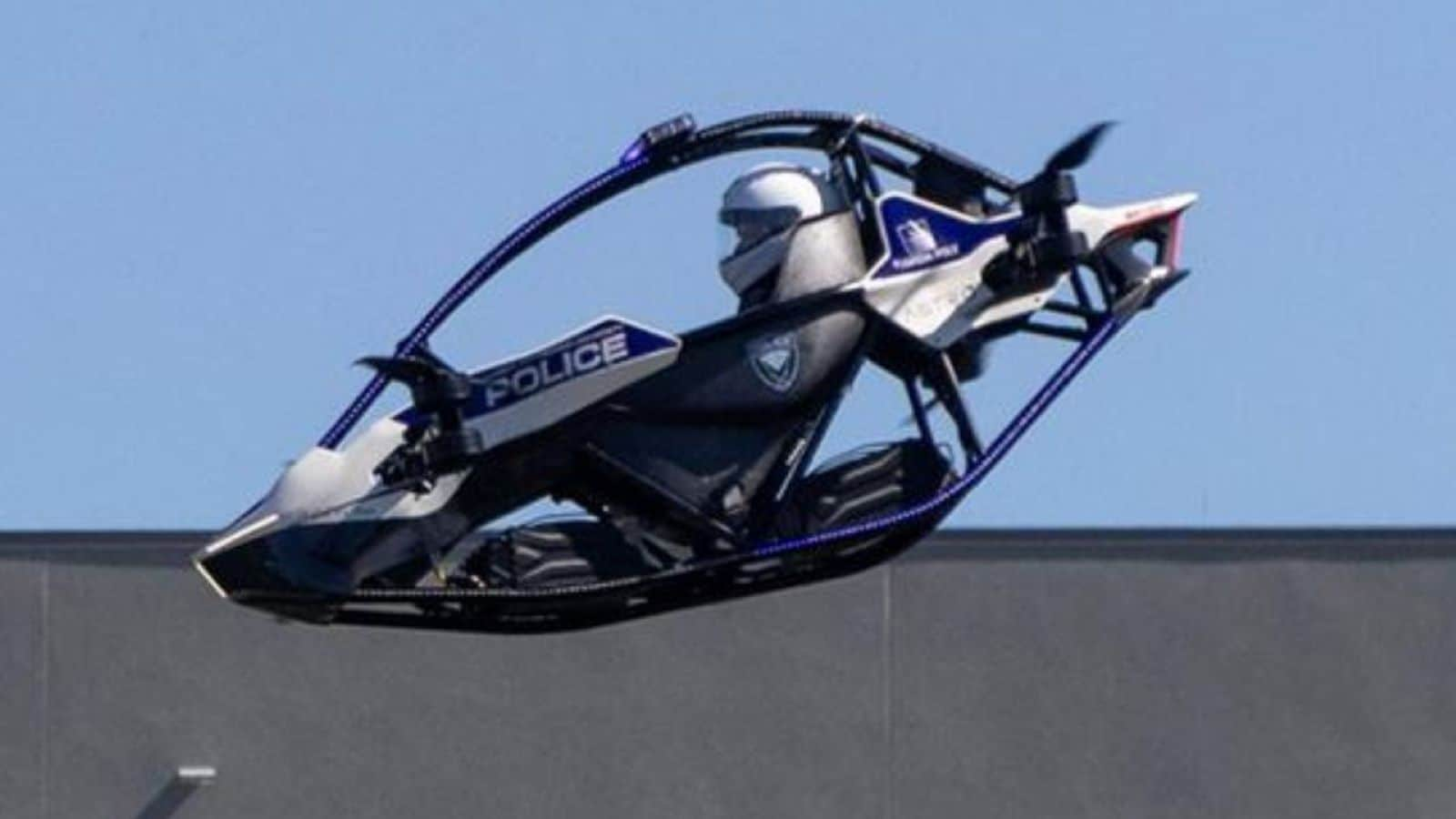
Most headlines make it sound like campus cops in Florida are suddenly patrolling dorms in Star Wars speeders. They aren't. When news broke about a Florida university police flying electric aircraft, the internet immediately jumped to wild conclusions about sci-fi enforcement and wasted tuition dollars.
Let's clear the air right away. The aircraft at the center of this story isn't a traditional helicopter, and it isn't carrying armed officers over tailgates just yet. It's an electric vertical takeoff and landing (eVTOL) ultralight—specifically the Jetson ONE, a single-seat personal aerial vehicle brought to the University of Central Florida (UCF) in Orlando for specialized testing, training, and emergency response research.
If you actually look at what's happening on the ground (and fifty feet above it), the reality is far more practical than the clickbait suggests. It's about response times, airspace integration, and testing whether lightweight electric aviation can actually survive the brutal realities of public safety work.
Why a Florida University Police Department Wants an Electric Aircraft
Campus policing isn't just writing parking tickets and breaking up loud parties. Large state universities operate like small cities, complete with massive stadiums, sprawling research parks, dense pedestrian zones, and major roadways running right through the middle of them.
Take UCF, for example. It's one of the largest universities in the United States by enrollment, with a main campus spanning over 1,400 acres in East Orlando. During a home football game or a major campus emergency, ground traffic locks up completely. Patrol cars get stuck behind thousands of pedestrians and gridlocked intersections.
Traditional police helicopters solve the traffic problem, sure. Agencies like the Orange County Sheriff's Office operate turbine helicopters that can reach anywhere in the region within minutes.
Here's the catch. Full-sized police helicopters cost millions of dollars to buy, burn massive amounts of aviation fuel, require dedicated hangars, and demand full-time commercial pilots and mechanics. Most university police departments simply don't have the budget for an aviation unit.
That's the exact gap electric ultralights are trying to fill. An eVTOL like the Jetson ONE costs roughly what a fully outfitted police cruiser does—around $98,000 to $128,000 depending on the production run. It runs on lithium-ion batteries, charges from standard high-output electrical infrastructure, and fits inside the bed of a pickup truck or a small trailer.
Separating the Hype From What the Aircraft Actually Does
When videos of the aircraft flying over campus facilities hit social media, people immediately assumed officers were going to start chasing suspects from the sky. That's a complete misunderstanding of both the hardware and Federal Aviation Administration (FAA) regulations.
The Jetson ONE falls under FAA Part 103 rules for ultralight vehicles. That regulatory classification comes with strict physical limits that dictate everything the machine can and cannot do.
- Weight limit: Under Part 103, a powered ultralight must weigh less than 254 pounds empty, excluding safety devices like ballistic parachutes. The Jetson ONE hits right around 190 pounds thanks to its aluminum spaceframe and carbon-fiber body.
- Speed cap: Federal rules restrict ultralights to a maximum level-flight speed of 55 knots, which translates to roughly 63 mph. Software locks the aircraft at that ceiling.
- Flight time: Battery density remains the biggest bottleneck in electric aviation. You're looking at roughly 20 minutes of flight time per charge, depending on pilot weight and wind conditions.
- Single occupant: Part 103 aircraft are strictly single-seat machines. You can't use them for medical evacuations or transporting prisoners.
Twenty minutes of flight time sounds limiting, and honestly, it is. You aren't conducting four-hour perimeter patrols on a single battery pack.
Instead, public safety researchers are looking at rapid point-to-point deployment. Imagine a medical emergency, an active threat, or a lost person in the wooded wetlands bordering a campus. A ground unit might take fifteen minutes to navigate through traffic and thick terrain. A lightweight eVTOL can lift off from a precinct parking lot and put a trained responder on scene in ninety seconds.
How the Jetson ONE Actually Flies
If you've ever flown a consumer camera drone, you already understand the basic flight logic of this machine. Unlike a traditional helicopter—which requires constant, exhausting coordination between cyclic stick, collective pitch, and anti-torque pedals—modern multi-rotor eVTOLs rely heavily on flight computers.
The aircraft uses eight electric motors arranged in a coaxial quadcopter configuration. Four arms extend from the chassis, with two propellers stacked vertically on each arm. That coaxial setup provides redundancy; if one motor fails, the flight controller automatically adjusts the remaining seven to keep the airframe stable and bring it down safely.
Inside the cockpit, the pilot uses a simple joystick on the right to control pitch and roll, and a throttle lever on the left to control altitude. Take your hands off the controls, and the onboard LiDAR sensors and flight computer hold the aircraft in a stationary hover automatically.
That ease of use is the main selling point for law enforcement agencies. Training a traditional helicopter pilot takes years and tens of thousands of dollars. With computer-stabilized flight controls, an officer can learn basic hover and transit maneuvers in a matter of hours.
Still, easy controls don't make flying risk-free. Low-altitude flight is notoriously unforgiving because you have very little time to react if something goes wrong. The aircraft includes a rapid-deployment ballistic parachute designed to open at low altitudes, along with a crumple-zone chassis modeled after race car safety cells. Even with those features, flying fifty feet above power lines, trees, and campus buildings leaves zero margin for sloppy maintenance or bad weather.
The Real Obstacles Nobody Mentions in Press Releases
Tech demos always look clean on a sunny afternoon with calm winds. Real police work happens at 2 AM during a Florida summer thunderstorm.
If university police departments actually want to integrate electric aircraft into daily operations, they have to solve several massive headaches first.
Weather and Wind Limits
Central Florida is the lightning capital of the United States. Afternoon convective storms roll through almost daily from May through September, bringing sudden 30-knot wind gusts and torrential rain. An ultralight weighing under 200 pounds gets tossed around easily in turbulent air. Unlike heavy turbine helicopters that can punch through moderate weather, a lightweight eVTOL has to stay grounded whenever wind speeds spike.
Battery Swaps and Turnaround Time
Twenty minutes in the air means you need a fast way to get back up. Charging a depleted high-capacity lithium battery takes time, and fast-charging generates heat that degrades battery cells faster. For emergency response to work, departments need hot-swappable battery packs kept on trickle chargers at staging points, plus strict thermal monitoring so a damaged pack doesn't catch fire inside a police station.
Airspace Rules Over Congested Areas
This is the biggest legal hurdle. Under standard FAA Part 103 rules, ultralight vehicles are prohibited from flying over congested areas of cities, towns, or settlements, or over any open-air assembly of persons.
Read that again. A standard Part 103 ultralight legally cannot fly over a crowded college campus or a packed football stadium unless the agency obtains specific FAA waivers, Certificates of Authorization (COA), or operates under public aircraft exemptions. Testing an aircraft over a cleared, controlled research field is completely different from flying over 50,000 tailgating fans.
Noise and Public Perception
Electric motors are way quieter than turbine engines, sure. They aren't silent. Eight high-RPM propellers spinning simultaneously produce a loud, distinct buzzing hum that carries across open spaces. Campus communities already scrutinize police militarization and surveillance tools heavily. Introducing manned flying vehicles over student housing requires transparent policies on when the aircraft launches, whether it carries recording equipment, and who authorizes flights.
Drones vs Manned eVTOLs in Law Enforcement
A fair question pops up whenever people see a Florida university police flying electric aircraft demonstration: why put a human inside the machine at all?
Police departments across Florida already operate massive uncrewed aerial system (UAS) programs. Agencies use tethered drones for stadium security, thermal drones for search and rescue, and Drone as First Responder (DFR) programs where an unmanned quadcopter launches from a rooftop box before patrol cars even pull out of the lot.
Unmanned drones cost a fraction of a manned eVTOL, stay in the air longer, carry better stabilized zoom cameras, and never put an officer's life at risk if a rotor fails.
So why bother with a manned aircraft? Because a camera in the sky can't administer CPR, deploy an automated external defibrillator (AED), unlock a barricaded door, or physically intervene when seconds matter. A drone gives you eyes on a scene; a manned micro-aircraft puts a trained human hands-on at the location.
Right now, unmanned drones win on almost every routine surveillance metric. Manned eVTOLs only make sense for specialized rapid-insertion scenarios where terrain, water, or severe gridlock completely blocks ground vehicles.
How to Evaluate Public Safety Aviation Claims Going Forward
Whenever another police department or tech company releases flashy flight footage, use a quick checklist before buying into the hype:
- Check the FAA classification. Ask whether the aircraft is flying under Part 103 ultralight rules, experimental airworthiness certificates, or full Part 135/public safety exemptions. That single detail tells you where it's legally allowed to fly.
- Look at payload capacity. Most single-seat eVTOLs max out around a 210-pound pilot weight. Once you add a ballistic vest, duty belt, radio gear, and medical kit, an officer easily pushes past that limit.
- Verify funding sources. Many university aviation trials are funded through federal research grants, Department of Defense partnerships, or manufacturer loan programs rather than student tuition or municipal tax hikes.
- Separate research from deployment. Universities exist to test emerging tech under controlled conditions. Seeing an aircraft lift off at a campus research facility means engineers and safety officials are gathering data—not that beat cops are trading in their cruisers next week.
If you're following electric aviation in public safety, watch the FAA's evolving Powered-Lift and MOSAIC (Modernization of Special Airworthiness Certificates) rulemakings over the next year. Those regulatory updates—not viral flight videos—will ultimately decide whether electric aircraft become standard police equipment or stay confined to research runways.



