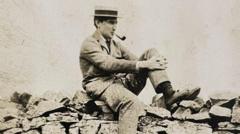
We all think we know George Mallory. He's the guy who gave the most famous, swaggering answer in exploration history when asked why he wanted to climb Mount Everest: "Because it's there." It sounds fearless. It sounds like a man completely detached from the fragile realities of normal life, driven by pure ego and alpine obsession.
But you don't know the real story until you read what he was writing by candlelight in the freezing dark of Camp I, just days before he and Andrew "Sandy" Irvine vanished into the clouds near the summit in June 1924.
The University of Cambridge's Magdalene College digitized Mallory’s personal letters, making his final written words open to anyone with an internet connection. They don't show a fearless superhero. They show a deeply exhausted, coughing, terrified father and husband who knew exactly what kind of hell he was stepping into.
Honestly, the reality is way more tragic than the legend.
The Myth of Absolute Certainty
When you look at the old black-and-white photos of the 1924 British Mount Everest Expedition, the men look like stoic statues. They wore tweed jackets, wrapped themselves in wool, and looked ready to conquer the planet.
Mallory’s letters shatter that image. In his final letter to his wife, Ruth, dated May 27, 1924, he didn't boast about imminent victory. He gave a brutal, realistic assessment of their odds.
"It is 50 to 1 against us but we'll have a whack yet & do ourselves proud."
That isn't a man blinded by overconfidence. That's a guy gamble-paying with his life while knowing the house always wins.
People who dream about Everest today often think of it as a logistical challenge you can buy your way out of. In 1924, it was uncharted terror. Mallory wasn't riding a wave of momentum; he was fighting his own failing body. He wrote about a nagging cough "fit to tear one's guts" that kept him awake for nights on end.
Imagine shivering at over 20,000 feet, your lungs burning, hacking up blood, knowing you still have thousands of vertical feet left to climb without modern lightweight gear. That's what the letters reveal. Not a glorious march, but a desperate slog.
The Secret Terror Behind the Final Push
If you think Mallory was just a reckless thrill-seeker, you're missing his vulnerability. The letters describe a terrifying near-death experience that happened just days before his final disappearance. He fell straight through a snow bridge into a hidden crevasse.
"In I went with the snow tumbling all around me," Mallory wrote to Ruth. He fell about ten feet before getting jammed. He was left "half-blind & breathless" over what he described as a "very unpleasant black hole." He survived only because his ice ax miraculously caught across the lips of the chasm.
That kind of incident rattles a person. It didn't stop him, but it stripped away any illusion of safety.
The correspondence also shows the heavy emotional toll back home. Ruth's letters to George reveal a woman drowning in anxiety while trying to manage a household with three small children on an overdrawn bank account. In one heartbreaking note from March 1924, she apologized for being cross before he left, admitting she was just miserable because she got so little of his time.
Mallory knew this. He carried that guilt up the mountain. The letters found right in his jacket pocket when Conrad Anker discovered his frozen body in 1999 weren't tactical notes—they were personal messages from his brother, sister, and a family friend. He kept his family against his chest until the very end.
Rethinking the Obsession
What can we actually learn from this today?
If you want to understand extreme human achievement, stop looking for flawless heroes. The most incredible feats are usually accomplished by flawed, terrified people who choose to keep moving anyway. Mallory wasn't elite because he lacked fear. He was elite because he felt the weight of his family, the terror of the black holes beneath the snow, and the physical agony of his failing lungs, and he still chose to "have a whack yet."
If you want to read the raw transcripts yourself, go to the Magdalene College digital archive. Read them not as historical artifacts, but as text messages from a guy who knew he was running out of time.
The next time you face something that feels impossible, don't wait until you feel fearless. You won't. Just accept the 50-to-1 odds, pack your gear, and do yourself proud.


:max_bytes(150000):strip_icc():focal(714x222:716x224)/kristi-noem-husband-bryon-family-020326-e0975a57bf21435bb81b696d70a16147.jpg)