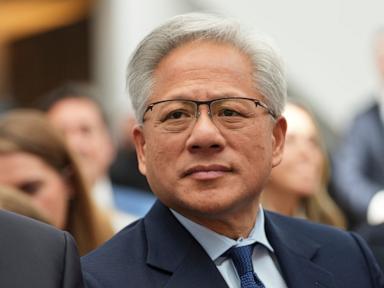
You don't become the CEO of a multi-trillion-dollar semiconductor giant without making a few enemies in Washington and Beijing. Right now, Jensen Huang is caught squarely in the middle of the most intense geopolitical tech fight in modern history, and the headlines surrounding Nvidia's alleged ties to Chinese military-linked AI firms have people throwing around the word "espionage" like confetti.
Let's clear the air immediately. Is Jensen Huang secretly running a spy ring for Beijing? No. Not even close. The real story behind the Nvidia US-China spy scandal is actually much messier, way more interesting, and rooted in the brutal mechanics of global supply chains, export loopholes, and corporate survival.
When you look past the sensationalist clickbait, what you find isn't a Hollywood thriller. It's a high-stakes game of regulatory whack-a-mole where the U.S. government draws a line in the sand, and Nvidia's engineers immediately figure out how to build a chip that sits just one millimeter on the legal side of it.
How Nvidia Landed in the Crosshairs of Washington
To understand why lawmakers are grilling Nvidia, you have to look at what happened with DeepSeek and the broader Chinese AI ecosystem. When Chinese startups began releasing frontier-level AI models trained on massive clusters of Nvidia hardware—despite strict U.S. export bans—alarms went off across Capitol Hill and the Department of Commerce.
Lawmakers started asking a very uncomfortable question. How are restricted Chinese entities getting their hands on thousands of restricted H100 and H800 chips?
It didn't take long for investigators to trace the breadcrumbs. The reality of the hardware market is that once a graphics processing unit leaves a factory, tracking where it ends up is notoriously difficult. Shell companies in Singapore, Malaysia, and the Middle East were buying up server racks packed with Nvidia GPUs and quietly routing them across the border into mainland China.
Then came the allegations of direct technical collaboration. Reports surfaced suggesting that Nvidia engineers had worked closely with Chinese AI labs, including DeepSeek, to optimize software and hardware performance before those firms hit the U.S. radar as national security threats. To hawkish politicians in Washington, helping a Chinese company squeeze every ounce of compute out of restricted hardware looks an awful lot like aiding an adversary.
Honestly, it's easy to see why politicians panicked. If your entire national security strategy relies on starving a rival superpower of AI compute, finding out that an American company is helping them optimize their clusters feels like a betrayal.
The Myth of the "Spy" Narrative
Calling this a "spy scandal" makes for great cable news chyrons, though it completely misses how Silicon Valley operates. Jensen Huang isn't loyal to Beijing, and he isn't plotting against Washington. He's loyal to Nvidia's shareholders and the relentless expansion of the CUDA ecosystem.
For decades, Nvidia's superpower hasn't just been its silicon. It's been the software layer—CUDA—that locks developers into Nvidia hardware. If Chinese developers can't buy Nvidia chips, they don't just pack up and go home. They turn to domestic alternatives like Huawei's Ascend chips.
Huang has been remarkably vocal about this exact risk. He has repeatedly warned U.S. officials that cutting Nvidia out of the Chinese market won't stop China's AI progress; it will just hand a massive, lucrative market directly to Huawei on a silver platter.
From Nvidia's perspective, working with AI labs to optimize code is standard business practice. Their developer relations teams do it globally every single day. They want models running faster on their chips because faster performance proves their hardware is indispensable. When you apply standard Silicon Valley customer support to a geopolitical rival during a tech cold war, suddenly routine engineering support starts looking like intelligence leakage to outside observers.
How the Export Control Loopholes Actually Work
If you've ever dealt with enterprise hardware procurement, you know how porous global distribution channels really are. Nvidia doesn't just sell individual chips directly to end-users out of the back of a van. They sell to massive Original Equipment Manufacturers (OEMs) like Dell, Supermicro, Lenovo, and Asus, alongside cloud providers and regional distributors.
Here is how the gray market operates in practice:
- The Third-Party Intermediary: A newly formed tech company in Southeast Asia places a massive order for AI servers, claiming they are building a local regional data center.
- The Paper Trail: All the compliance paperwork looks spotless on the surface. The buyer passes standard Know Your Customer (KYC) checks because they have no prior history of sanctions violations.
- The Diversion: Once the servers clear customs in the destination country, they are quietly loaded onto cargo ships or trucks and smuggled into mainland China, where brokers sell them at a 30% to 50% markup.
- The Cloud Backdoor: Even without smuggling physical silicon, Chinese firms simply rent compute clusters hosted in data centers outside China, training their models remotely without ever importing a single banned chip.
The U.S. Bureau of Industry and Security (BIS) has tried to plug these holes with increasingly complex rules, capping total processing performance and interconnect speeds. Every time BIS updates the rules, Nvidia releases a slightly detuned version of its flagship chip—like the A800, H800, and later the H20—specifically engineered to fall just beneath the legal threshold.
To critics in Congress, designing custom chips to bypass the spirit of U.S. sanctions is practically subversion. To corporate lawyers, it's strict legal compliance. Both things can be true at the same time.
Why Jensen Huang Walks an Impossible Tightrope
Imagine trying to run a company where your biggest growth engine is simultaneously your government's top geopolitical target. That's Huang's daily reality.
If he pushes back too hard against Washington, he risks triggering devastating congressional investigations, losing lucrative U.S. defense and Department of Energy contracts, or facing even harsher export restrictions that wipe out billions in quarterly revenue overnight. Yet if he completely abandons China, he permanently forfeits one of the largest pools of AI engineering talent and enterprise customers on Earth.
The Huawei Factor
You can't talk about Nvidia's China strategy without talking about Huawei. While American politicians debate export thresholds, Huawei has been aggressively building out its Ascend 910B and 910C AI processors. They aren't quite as fast as Nvidia's top-tier Blackwell architecture, and their software stack still lags behind CUDA, yet they are improving rapidly.
Every restriction Washington places on Nvidia acts as a massive government subsidy for Huawei's R&D department. Chinese tech giants like Tencent, Alibaba, and ByteDance would much rather buy Nvidia hardware because their entire infrastructure is already built around it. Force them off Nvidia, and they have no choice but to pour billions of dollars into making Huawei's ecosystem viable. Once that ecosystem matures, Nvidia never gets those customers back.
The Taiwan Reality
There's also a deeply personal and structural layer to this story that gets overlooked. Jensen Huang was born in Taiwan, and Nvidia relies almost entirely on Taiwan Semiconductor Manufacturing Company (TSMC) to fabricate its advanced chips.
Any escalation in tensions between the U.S. and China puts Taiwan—and by extension, Nvidia's entire supply chain—directly in the line of fire. Huang isn't just worried about quarterly sales numbers in Shanghai. He's acutely aware that a major geopolitical miscalculation could sever his company from its primary foundry overnight. His constant diplomacy, flying between Washington, Taipei, and Beijing, isn't about taking sides; it's about keeping the global semiconductor supply chain from tearing itself apart.
What Investigators Are Actually Looking For
When federal agencies investigate potential export control violations involving Nvidia hardware, they aren't looking for secret microchips hidden in leather jackets. They're auditing compliance logs and supply chain telemetry.
Specifically, investigators focus on three main areas:
- Due Diligence Failures: Did Nvidia or its major server partners ignore obvious red flags when selling massive quantities of GPUs to obscure shell companies in neighboring countries? If a two-person startup in Malaysia orders $100 million worth of H100 servers, somebody should probably ask where they're plugging them in.
- Pre-Sanction Knowledge Transfer: Did Nvidia's engineering teams share proprietary optimization techniques or architectural insights with Chinese entities that could be leveraged for military or intelligence applications? Under U.S. law, sharing controlled technical data can be just as illegal as shipping physical hardware.
- Hardware Tracking Capabilities: Lawmakers have increasingly pressured chipmakers to build geographic verification or remote kill-switches directly into high-end AI accelerators. Nvidia has historically resisted aggressive hardware-level tracking, arguing it introduces catastrophic cybersecurity vulnerabilities that bad actors could exploit to brick legitimate data centers.
So far, Nvidia has maintained that it strictly obeys all U.S. export regulations and requires its partners to do the exact same thing. When violations are uncovered, the company points out that it actively assists authorities in tracking down illicit smuggling networks. Still, the sheer volume of banned chips turning up in Chinese universities and state-backed labs keeps the pressure dialed all the way up.
How to Read Semiconductor Geopolitics Without Falling for the Hype
If you're following this story as an investor, a tech worker, or just someone trying to understand where the AI race is headed, you have to learn how to filter out the political theater. Headlines love a villain, and painting a billionaire tech CEO as a double agent generates clicks.
When evaluating the next wave of headlines around Nvidia, export bans, or AI espionage, keep a few grounded realities in mind:
- Follow the SEC filings, not the cable news panels. If Nvidia faces material legal exposure or massive regulatory fines from the Department of Justice or Commerce Department, it has to be disclosed in their quarterly 10-Q filings. Check the risk factors and legal proceedings sections before reacting to rumor-mill articles.
- Watch the distributor data. Pay attention to revenue breakdowns by geographic billing location in Nvidia's earnings reports. Massive spikes in revenue billed to regions like Singapore often reflect multinational corporate headquarters purchasing hardware for global deployment, though regulators scrutinize those exact numbers for signs of gray-market diversion.
- Separate software support from espionage. Tech companies routinely embed engineers with major customers to debug code and optimize model training. When geopolitical winds shift, yesterday's normal customer support quickly gets reframed as today's national security scandal.
The tug-of-war over AI compute isn't going away anytime soon. Washington wants total technological containment, Beijing wants self-sufficiency at any cost, and Jensen Huang is stuck trying to sell silicon to a fractured world without getting crushed between two superpowers.