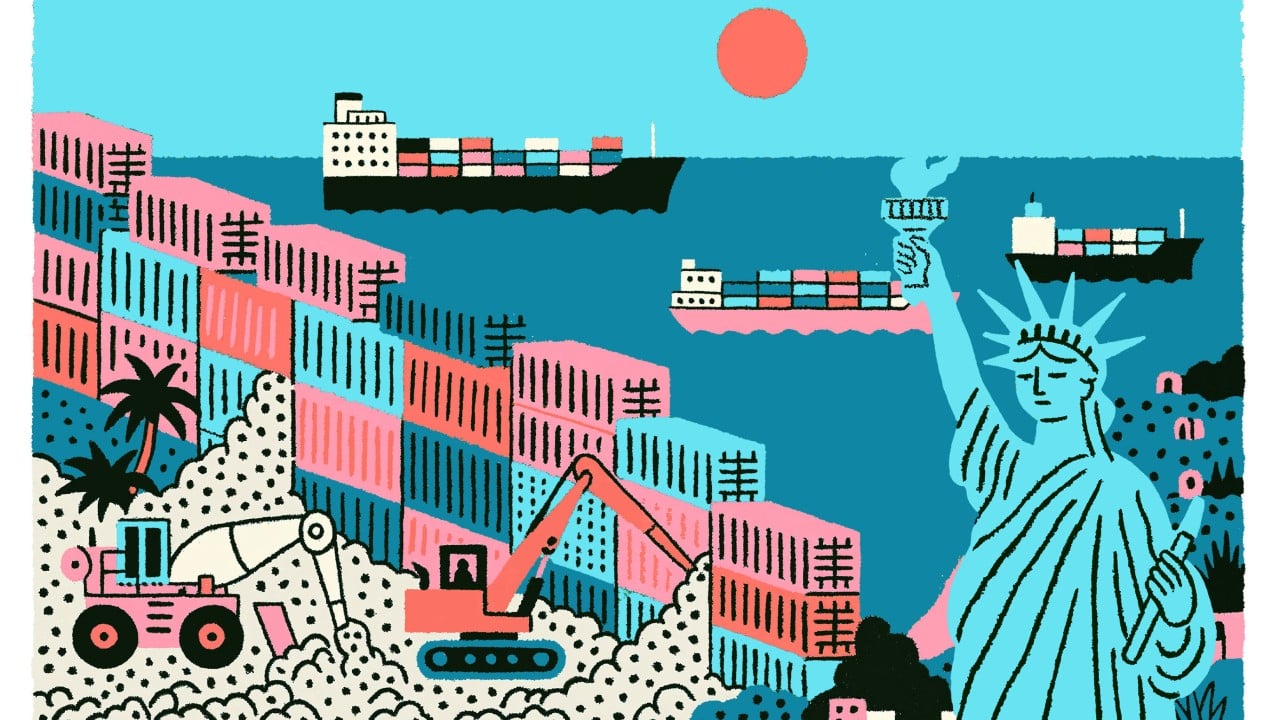
On April 2, 2025, the White House Rose Garden hosted a press conference that completely rewrote the rules of global commerce. President Donald Trump took the podium to announce a sweeping package of import duties, boldly branding the event "Liberation Day." The premise was deceptively simple. The US would charge the exact same tariffs on foreign goods that those countries levied on American products. Trump promised these trade walls would spark a manufacturing rebirth, pay down the national debt, and drop consumer prices through domestic competition.
Fast forward to mid-2026. The economic landscape tells a wildly different story. If you've been following the news, you probably think the US economy is either fully boxed in or completely transformed. Both views are wrong. The real situation is far messier, dictated by a chaotic legal tug-of-war, retaliatory trade strategies, and synthetic math that didn't match real-world barriers. If you found value in this article, you might want to look at: this related article.
The Synthetic Tariff Illusion
The core idea of "reciprocity" sounds fair on paper. If country A charges a 15% duty on American cars, the US should charge 15% on theirs. But that's not how the Liberation Day tariffs actually rolled out.
Instead of painstakingly mapping out individual foreign tariff schedules, the United States Trade Representative (USTR) took a massive shortcut. They converted each nation's bilateral goods trade balance into a "synthetic" tariff rate, establishing an across-the-board minimum baseline of 10%. For another angle on this event, check out the latest coverage from MarketWatch.
Because trade deficits measure buying habits rather than actual trade barriers, the resulting duties had no logical connection to foreign protectionism. For example, countries with large trade surpluses with the US faced massive penalties, regardless of how open their own markets were to American goods.
The immediate result was chaos. Within days of the announcement, a brutal back-and-forth escalation with Beijing drove the US tariff rate on Chinese goods to a staggering 125% for a month. During that initial peak, the combined weight of these new duties and existing sector-specific taxes pushed the average applied US tariff rate to 21.5%. Wall Street suffered its worst single-day drops since the 2020 pandemic.
The Supreme Court Shockwave
Just as supply chains were adjusting to this high-tariff environment, the entire strategy hit a wall in Washington. In February 2026, the Supreme Court delivered a stunning 6-3 ruling. The justices struck down the sweeping Liberation Day duties, ruling that the administration had overstepped its legal bounds by using the International Emergency Economic Powers Act (IEEPA) to implement broad, permanent trade taxes.
Suddenly, the government faced a logistical nightmare. The IEEPA refunds wiped out a massive chunk of federal tariff collections almost overnight.
But the trade walls didn't just vanish. Trump blasted the decision and immediately bypassed it. The administration quickly issued a new proclamation under Section 122 of the Trade Act of 1974, implementing global "balance-of-payments" tariffs to replace the struck-down laws. While the Court of International Trade ruled in May 2026 that these replacement taxes were also hitting outside the law, the administration appealed, and customs officials continue to collect the duties while the legal battle grinds on.
Tracking the Economic Promises vs Reality
To understand if the US is truly boxed in, look at the hard data collected over the last year. The administration made major promises about what these trade walls would achieve. A cold look at the numbers shows a stark disconnect.
Did Factories and Jobs Come Roaring Back
The short answer is no. According to data tracked by the Tax Foundation, manufacturing employment has not experienced a post-Liberation Day boom. Between April 2025 and February 2026, the US manufacturing sector actually lost 89,000 jobs. This decline matches pre-existing economic trends, proving that taxing foreign inputs like steel and aluminum often hurts domestic manufacturers more than it helps them. When your raw materials get 25% more expensive, you don't hire more workers; you trim costs to survive.
Did Tariffs Pay Off the National Debt
While the tariffs generated billions in raw customs revenue, they haven't made a dent in the federal debt. Before the Supreme Court ruling scrambled the books, the IEEPA duties brought in roughly $166 billion. Total customs duties accounted for about 4.9% of total tax receipts for calendar year 2025.
However, the net revenue is much lower than advertised. When tariffs raise the cost of doing business, corporate profits drop, and consumer spending slows down. This mechanically drags down the amount of revenue the government collects from regular income and payroll taxes.
Who is Actually Paying the Bill
A common misconception is that foreign countries pay these tariffs. They don't. US importers pay the tax when the goods land at the port. Importers then face a tough choice: absorb the cost and lose profit, or pass it along to you.
Federal Reserve Chair Jerome Powell explicitly noted that elevated inflation readings in the goods sector have been heavily driven by these ongoing trade penalties. The same paycheck covers less stuff because the tariff acts as a consumption tax on everyday goods.
How Businesses Can Navigate the Trade Walls
If you run a business relying on international supply chains, waiting around for the courts to settle this is a losing strategy. The tariff environment is highly unstable, but you can protect your margins using a few proven tactics.
First, audit your suppliers for USMCA compliance. While general global imports face heavy friction, goods from Canada and Mexico that qualify under the United States-Mexico-Canada Agreement preferences have remained largely insulated from the harshest penalties. Shifting production or assembly to North American neighbors is the fastest way to drop your tariff exposure.
Second, exploit geographic shifts. The USTR isn't applying pressure equally across the globe. Take Brazil, for example. Even with recent trade friction, roughly half of all Brazilian exports to the US remain exempt from duties due to specific sector carved-outs in aerospace and agriculture. If your supply chain is heavily anchored in China, look to South America or Southeast Asian nations that aren't facing targeted triple-digit synthetic rates.
Finally, file for product-specific exclusions immediately. The administration has occasionally softened its stance when domestic industries prove that a specific component cannot be sourced inside the US. Document your domestic sourcing attempts thoroughly; having a paper trail showing no American factory can make your component is your golden ticket to a tariff waiver.
The trade walls built on Liberation Day didn't liberate the economy, nor did they completely freeze it. Instead, they created a complex bureaucratic maze. The businesses winning right now aren't the ones hoping for a return to free trade—they're the ones actively remapping their supply chains around the new legal barriers.
To see a broader breakdown of how these international dynamics played out across global supply chains during the height of the policy shifts, check out this discussion on Trump's Liberation Day Tariffs. This video provides crucial context on how our global alliances and trade trust were tested during the initial rollout.