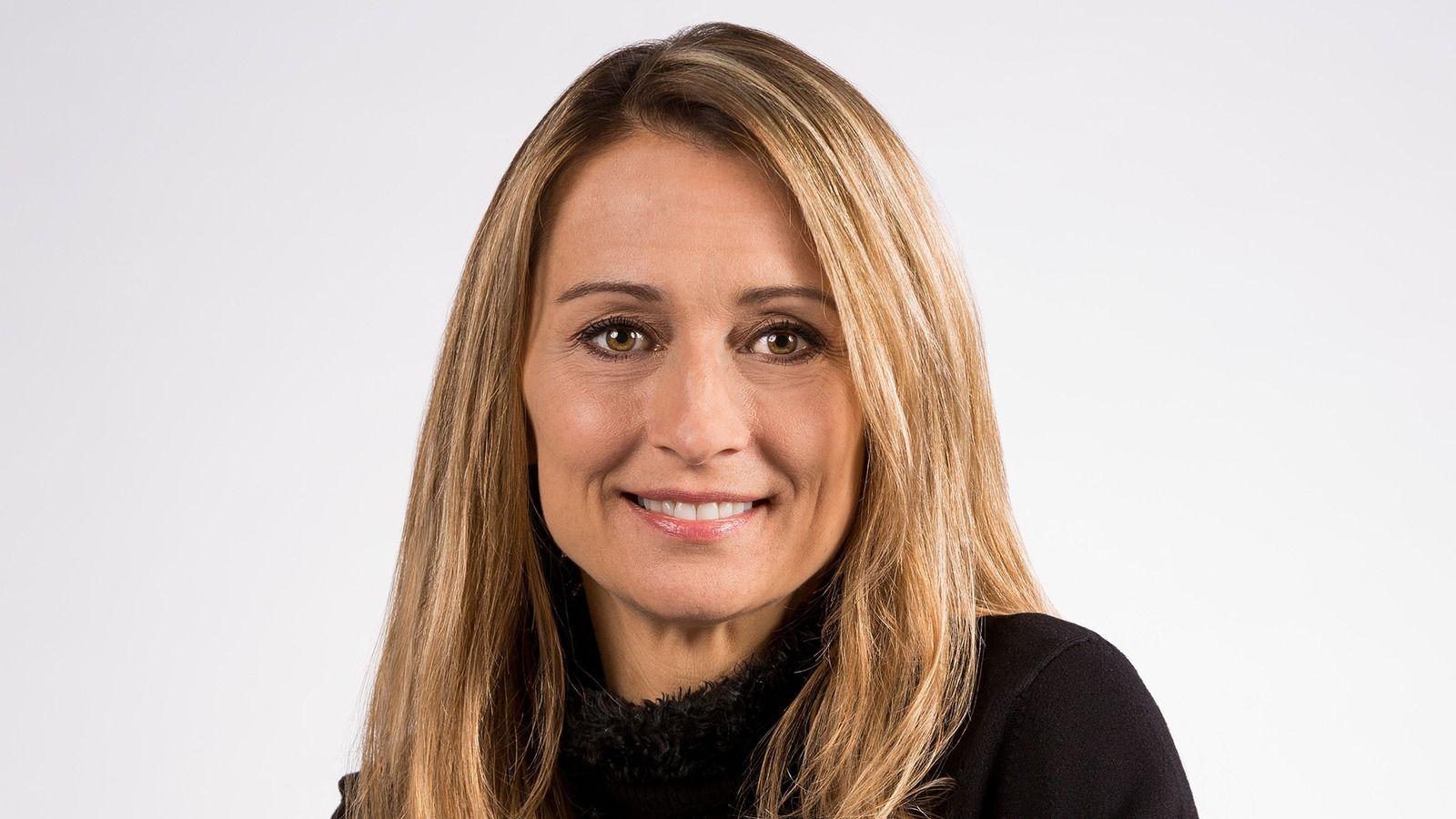
Most coverage paints Colette Kress as a temporary placeholder who merely kept the seat warm during Nvidia’s chaotic 11-day leadership crisis in November 2026. That narrative completely misses the point.
For more than thirteen years, Kress hasn't just counted Nvidia's money. She has served as the primary financial counterweight to co-founder Jensen Huang, steering a chipmaker from roughly $4.13 billion in annual revenue to over $215.9 billion in fiscal 2026. When Huang abruptly resigned on November 12, 2026, amid investigations into his personal relationships and national security scrutiny, the board didn't panic. They handed the keys to the one executive Wall Street already trusted to steady the ship. Even after the board reversed course and reinstated Huang on November 23, Kress's brief tenure exposed the exact tension defining Nvidia's future. For another look, consider: this related article.
Why the Placeholder Label Fails
People hear "interim CEO" and picture a caretaker afraid to touch the controls. Kress did the exact opposite.
Stepping into the top job while keeping her duties as executive vice president and chief financial officer, she had just five days before facing investors for Nvidia's third-quarter fiscal 2027 earnings call on November 17. Any hesitation could have triggered a historic market sell-off. Instead, she projected total calm, characterizing the transition as "business as usual" and raising Nvidia’s fiscal 2028 revenue growth forecast from 70 percent to roughly 75 percent. Related reporting on the subject has been provided by Forbes.
The very next day, she stood in front of employees at an all-hands meeting in Santa Clara. Rather than offering vague corporate platitudes, she pulled forward annual employee pay reviews from March to December 2026 and told staff plainly to move forward. You don't make operational calls like that if you're just waiting out the clock.
The Friction Behind the Circular AI Economy
To really understand Kress's influence, you have to look at what happened behind closed doors months before Huang stepped down.
Nvidia has effectively acted as the central bank of the artificial intelligence boom, pouring capital into startups, frontier labs, and cloud providers that turn around and buy Nvidia chips. By late 2026, PitchBook data showed Nvidia had participated in 27.2 percent of global venture capital deals by value, totaling $219.5 billion across 129 deals. Critics and regulators began calling this setup a "circular AI economy," questioning how much customer demand was genuinely organic versus subsidized by Nvidia's own balance sheet.
According to The Wall Street Journal, Kress wasn't cheering every deal from the sidelines. In an August 2026 meeting with senior finance leaders regarding billions of dollars in financial guarantees for cash-strapped chip buyers, Huang reportedly interrupted Kress, calling her a "deer in the headlights" and dismissing her as a "reporting CFO" rather than a strategic decision-maker.
Yet when Kress took the microphone as interim CEO in November, she signaled a subtle but unmistakable shift in tone. She told analysts that Nvidia would begin "rigorously evaluating future investments, commitments, and guarantees" while staying "disciplined and selective". Wall Street heard the message loud and clear. Kress was willing to tap the brakes on risky vendor financing even if the founder preferred full throttle.
Twenty-Five Years of Big Tech Conditioning
Kress didn't learn how to handle high-stakes corporate pressure at Nvidia. She spent a quarter-century building her playbook at three of the most demanding technology companies on earth.
- Texas Instruments (Eight years): Fresh out of school—with a finance degree from the University of Arizona and an MBA from Southern Methodist University's Cox School of Business—she cut her teeth in semiconductor finance. Understanding chip manufacturing cycles early meant she never treated silicon like standard software.
- Microsoft (1997–2010): Over thirteen years in Redmond, she rose through corporate planning to become CFO of the Server and Tools division in 2006. Managing infrastructure finance for enterprise servers gave her a front-row seat to the early cloud computing shift.
- Cisco (2010–2013): As senior vice president and CFO of Cisco's Business Technology and Operations Finance organization, she oversaw financial planning and business development across engineering and global operations.
When Nvidia recruited her in September 2013 after a two-year search, Kress later told Fortune it was actually the smallest company she had ever worked for. At the time, Nvidia was mostly known for PC gaming graphics cards. She brought big-cap discipline to a company on the verge of hypergrowth, digitizing manual back-office processes and building the financial reporting architecture required to support a multi-trillion-dollar enterprise.
The Numbers Behind Her Quiet Power
Because Huang always commanded the stage in his signature leather jacket, casual observers often underestimated Kress's standing inside Santa Clara. Look at the hard numbers and governance filings, though, and her weight becomes obvious.
In her first full fiscal year as CFO, Nvidia posted $4.13 billion in revenue. By the second quarter of fiscal 2027 alone, Nvidia generated $96.2 billion in a single three-month stretch—a 106 percent jump year-over-year, with $89 billion coming straight from data centers. She has co-hosted every quarterly earnings call over that entire thirteen-year run, becoming the primary translator between Nvidia's engineering ambitions and institutional portfolio managers.
Her personal stake reflects that longevity. Proxy filings from March 2026 showed Kress beneficially owned roughly 4.44 million Nvidia shares. That equity pushed her into the billionaire ranks in July 2025—a rare feat for a non-founder chief financial officer—and landed her at number 32 on Forbes's 2026 list of America's richest self-made women.
Interestingly, Nvidia’s proxy statements also reveal that executive officers serve at will without golden parachutes, severance packages, or change-in-control agreements. Kress stayed through the November turmoil without the contractual safety nets most Fortune 500 CFOs demand.
What Huang's Return Actually Means for Kress
Jensen Huang is back in the CEO chair, backed by a massive wave of Silicon Valley lobbying and a stock rally that added hundreds of billions in market value upon his reinstatement. Does that push Kress back into the shadows? Not a chance.
Huang returned to a fundamentally altered governance landscape. Nvidia now has its first-ever independent board chair in Harvey C. Jones, a newly formed National Security and Export Control Oversight Committee, an active search for a chief compliance officer, and ongoing inquiries from the SEC, Congress, and the California Attorney General.
In that environment, Kress's credibility with regulators and institutional investors isn't optional—it's Nvidia's shield. While Huang drives product roadmaps and political relationships, Kress owns the balance sheet, the customer financing scrutiny, and the financial disclosures that federal investigators are currently combing through.
If you're tracking Nvidia as an investor, analyst, or enterprise buyer, stop watching only the keynote stage. Pay close attention to Kress's quarterly commentary on vendor guarantees, venture commitments, and compliance spending. Those metrics will tell you far more about Nvidia's real risk profile than any product launch ever will.