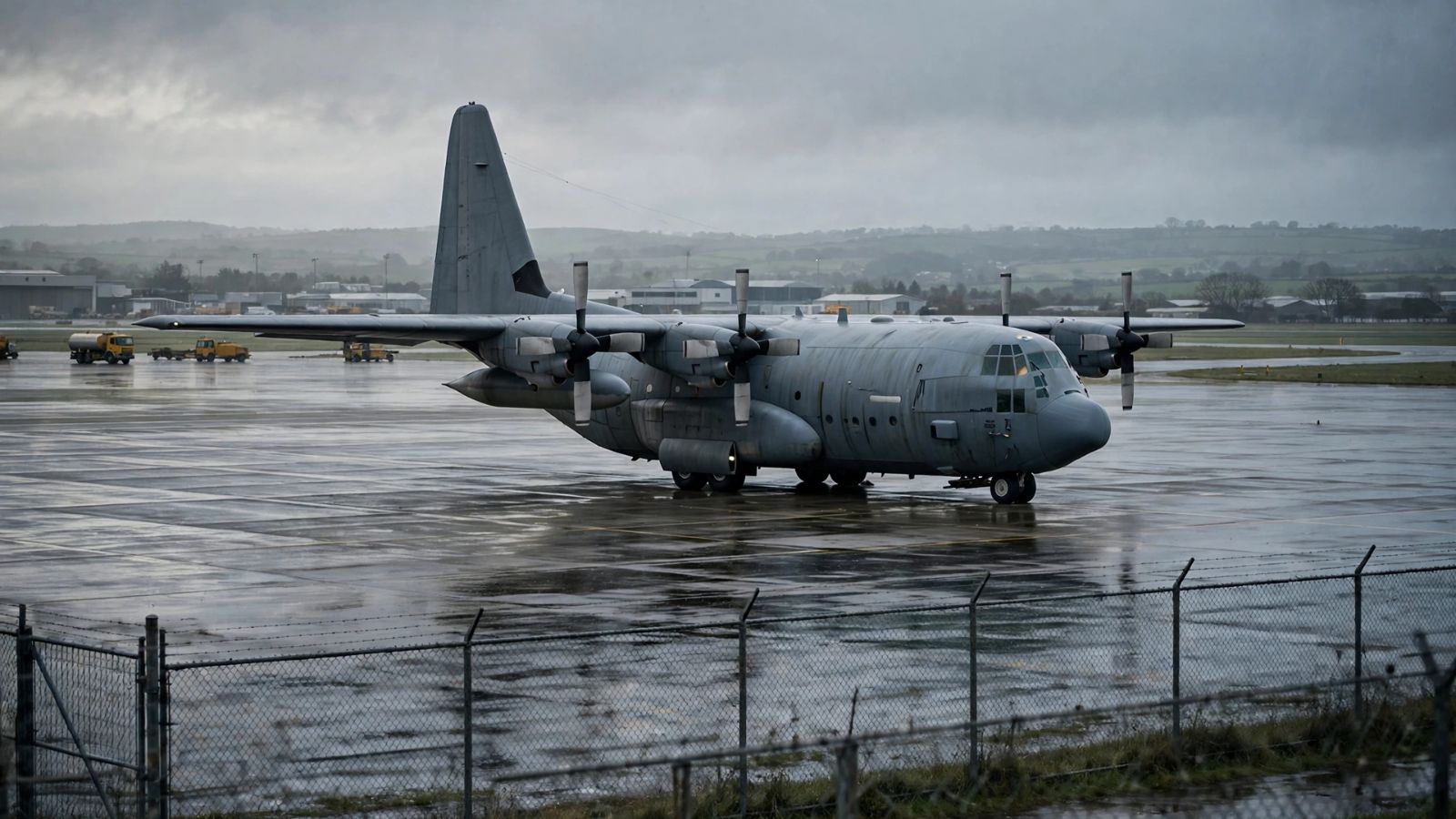
Most headlines make it sound like a lone saboteur casually strolled onto a runway yesterday and totaled a $60 million fighter jet. That's not quite how it happened.
When people search for news about an Irish man destroying a $60 million US military plane at Shannon Airport and getting indicted, they're usually looking at a viral resurfacing of a landmark 2003 incident involving anti-war activist Mary Kelly, or the closely related Pitstop Ploughshares trial—or occasionally conflating older Shannon Airport security breaches with modern indictments. Wait. Let's look at the actual historical record. In January 2003, just weeks before the US-led invasion of Iraq, a peace activist armed with a hatchet breached the perimeter fence at Shannon Airport in County Clare, Ireland, and attacked a parked US Navy C-40A Clipper transport aircraft.
The damage bill? Roughly $1.5 million to $2.5 million on a jet valued at around $60 million.
Why does this specific story keep circulating on social media and news aggregators decades later? Because the legal battle, the geopolitical tension around Irish neutrality, and the sheer audacity of walking up to a multi-million-dollar military aircraft with a hardware-store hatchet still shock people.
The Real Story Behind the Shannon Airport Aircraft Attack
Let's clear up the facts first. Online posts often muddle the gender, the exact date, or the total destruction of the airframe, turning a damaged transport plane into a smoldering pile of scrap metal.
The aircraft wasn't blown up. It was a US Navy Boeing C-40A Clipper, essentially a militarized version of the Boeing 737-700 used for high-priority cargo and passenger transport. On January 29, 2003, Mary Kelly, a nurse and anti-war activist, cut through the perimeter security at Shannon Airport before dawn. She approached the unguarded Navy jet and struck the nose cone and radar equipment repeatedly with a hatchet, grounding the aircraft completely.
Days later, on February 3, 2003, five members of the Catholic Worker movement—known as the Pitstop Ploughshares—breached the same airport hangar and used hammers and a pickaxe to inflict further damage on the exact same US Navy C-40A Clipper while it was undergoing repairs.
Both incidents led to high-profile criminal indictments in the Irish courts. Prosecutors charged the activists with criminal damage without lawful excuse, an offense carrying severe prison sentences under Irish law.
Why Was a US Navy Plane Parked in Neutral Ireland?
If you aren't familiar with Irish foreign policy, seeing American military hardware sitting on a civilian tarmac in County Clare feels bizarre. Ireland has maintained a policy of military neutrality since World War II. It isn't a member of NATO.
Yet since 2002, Shannon Airport has served as a critical refueling and transit hub for the United States military. Hundreds of thousands of armed US troops and tons of military equipment have passed through the civilian terminal on their way to the Middle East and Europe.
The Irish government permits these stopovers under specific conditions:
- The aircraft must be unarmed.
- They cannot carry arms, ammunition, or explosives.
- The flights must not form part of military exercises or active combat operations.
Critics, legal scholars, and anti-war protesters have argued for over two decades that facilitating troop transport for active wars violates the Hague Convention of 1907 regarding the rights and duties of neutral powers. The Irish state maintains that allowing refueling stops doesn't make Ireland a belligerent party. That exact legal friction formed the backbone of the defense when the Shannon Airport activists were indicted.
How the Legal Defense Played Out in Court
You'd think smashing a $60 million US military aircraft with a hatchet guarantees an open-and-shut conviction. In almost any other jurisdiction on earth, it would.
In Ireland, things got complicated fast.
When Mary Kelly went on trial at Ennis Circuit Court, her first trial ended in a hung jury. During her retrial in 2004, she argued she had a "lawful excuse" under the Criminal Damage Act 1991. Under Irish law, a person can legally damage property if they honestly believe they are acting to protect themselves or others from immediate harm—in this case, Iraqi civilians facing an impending invasion.
The judge ultimately instructed the jury that her belief wasn't legally sufficient to justify the attack, resulting in a conviction and a suspended two-year prison sentence.
The five Pitstop Ploughshares defendants had an even more dramatic outcome. After two aborted trials in Dublin—one collapsed over perceived bias from the trial judge—a third jury acquitted all five activists of criminal damage charges in July 2006. The jury accepted that the defendants acted out of a genuine belief that they were saving lives in Iraq by disabling the US Navy transport plane.
Why Shannon Airport Security Remained a Flashpoint
After the 2003 attacks, you might assume Shannon Airport turned into an impenetrable fortress. Security certainly tightened, with Irish Defence Forces troops patrolling the perimeter alongside Gardaí (Irish police).
It didn't stop the breaches.
Over the following twenty years, dozens of activists—including Irish citizens, American veterans like Ken Mayers and Tarak Kauff, and European lawmakers—managed to get onto the airfield or protest inside restricted zones. In 2019, two US veterans in their seventies walked onto the tarmac at Shannon to inspect a US military-contracted aircraft, leading to their arrest, passport confiscation, and a protracted indictment process in the Irish courts that dragged on for years.
Whenever a fresh indictment or court ruling happens at Shannon, older headlines about the $60 million US Navy plane inevitably resurface in algorithmic feeds, often stripped of their original dates and mixed up with newer arrests.
What This Means If You Follow Aviation Security or Geopolitics
Understanding the reality behind these viral military-plane headlines helps you spot recycled news before sharing it. When an outrage-bait post claims an Irish man just destroyed a $60 million American warplane, check three things immediately:
- Verify the aircraft model. Modern combat fighters like the F-35 cost upwards of $80 million to $100 million, whereas the 2003 Shannon incident involved a $60 million Boeing C-40A transport jet.
- Check the court timeline. Irish judicial proceedings involving airport trespass and criminal damage regularly take three to five years to reach a final verdict, meaning a "new" indictment or acquittal headline often refers to an incident from years earlier.
- Look at the underlying charge. Irish prosecutors distinguish sharply between simple trespass under the Air Navigation and Transport Act and indictable criminal damage, which goes before a jury in the Circuit Criminal Court.
If you want to verify any breaking claim about US military aircraft incidents in Ireland, go straight to primary court reporting from outlets like The Irish Times or RTÉ News rather than relying on viral social media summaries that blend twenty years of Shannon Airport protests into a single fictional event.