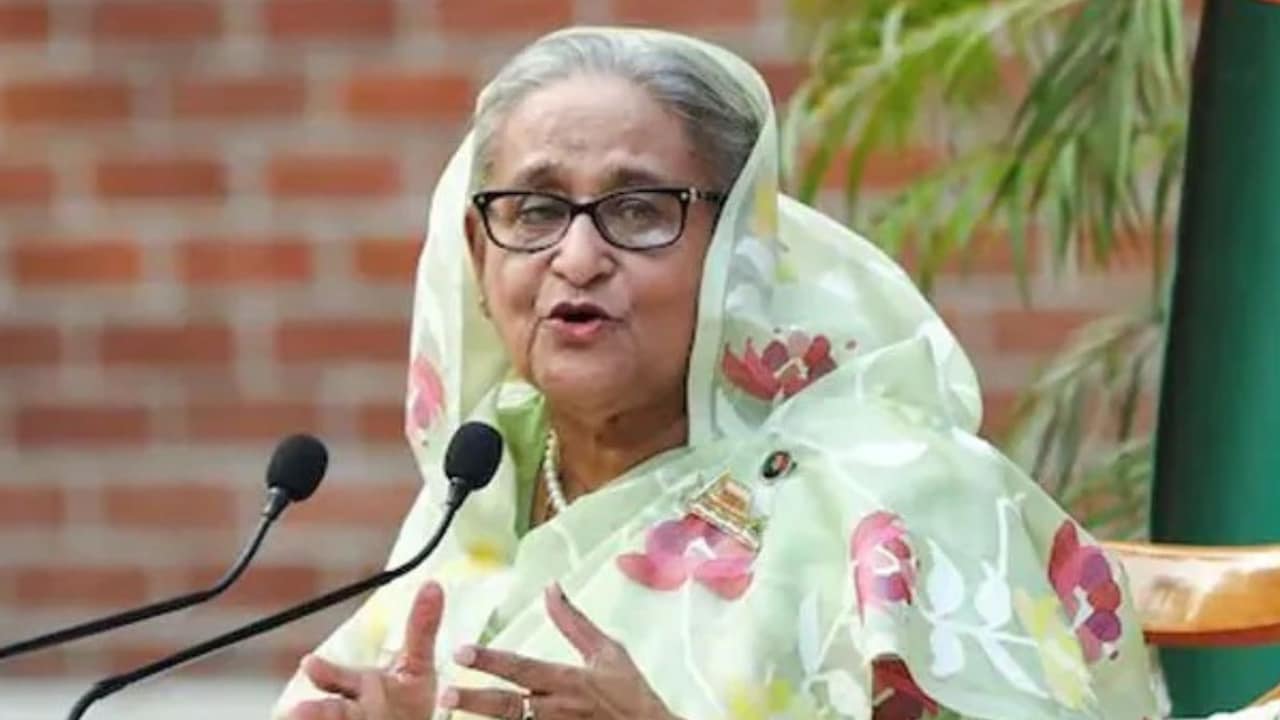
Reports claiming that ousted Bangladeshi Prime Minister Sheikh Hasina has requested a new passport to return home sound explosive on paper, yet the legal and diplomatic reality behind that headline tells a far messier story. If you only read social media summaries, you'd think she's packing her bags for Dhaka tomorrow morning. She isn't.
When news broke via Indian media reports—specifically citing sources close to her legal and diplomatic circles in New Delhi—that Sheikh Hasina sought travel documentation to facilitate a Bangladesh homecoming, two massive problems immediately collided. First, Bangladesh's interim government revoked her diplomatic passport in August 2024 right after she fled the country following the student-led uprising. Second, she faces dozens of active arrest warrants in Dhaka, including charges of crimes against humanity before the International Crimes Tribunal. Asking for a passport under those conditions isn't a casual travel errand. It's a calculated political move designed to test the boundaries of both New Delhi's hospitality and Dhaka's legal resolve.
Why Sheikh Hasina Needs a New Passport in the First Place
To understand why a passport request matters so much, you have to look at how she arrived in India on August 5, 2024. When protesters breached Ganabhaban in Dhaka, Hasina boarded a Bangladesh Air Force C-130J transport aircraft and landed at Hindon Air Base near Ghaziabad, India. At that exact moment, she was traveling on a red diplomatic passport issued to heads of government.
Less than three weeks later, on August 22, 2024, Bangladesh's Department of Immigration and Passports formally revoked that diplomatic passport. They didn't just cancel hers; they wiped out the diplomatic passports of her former ministers, advisors, and members of the dissolved parliament. Overnight, the former leader of 170 million people became a foreign national sitting in India without a valid travel document.
Indian authorities granted her temporary permission to stay on humanitarian and security grounds. That arrangement kept her safe in a secure facility in the National Capital Region, but it left her legally stranded. Without a valid passport, you can't cross international borders through normal commercial channels, you can't apply for long-term residency visas in third countries, and you certainly can't walk onto a flight bound for Hazrat Shahjalal International Airport.
What the Passport Request Actually Means for a Bangladesh Homecoming
Reports regarding Sheikh Hasina asking for a new passport point toward a specific bureaucratic mechanism. Under Bangladeshi law, any citizen whose diplomatic passport is canceled can theoretically apply for a standard green ordinary passport, provided they submit biometric data and pass police clearance.
Here's the catch. Police clearance in Bangladesh right now runs through the very administration that accuses her of ordering lethal crackdowns during the July 2024 protests. According to the United Nations Office of the High Commissioner for Human Rights, up to 1,400 people were killed during the unrest between July and August 2024. The interim government led by Chief Adviser Muhammad Yunus has made prosecuting those responsible its central mandate.
So why ask for a passport when everyone knows Dhaka won't hand over a clean travel document with a smile?
Because in international diplomacy, creating a paper trail changes the narrative. By formally seeking travel clearance or a standard passport, Hasina's camp can argue that she isn't hiding from the law—she's attempting to return to face her political reality, and the interim government is the one blocking her entry. It flips the script from "fugitive ex-leader" to "exiled politician denied her constitutional right of return."
Honestly, it's a classic South Asian political maneuver. Benazir Bhutto used variations of it in Pakistan. Nawaz Sharif played similar cards before returning to Lahore. You force the sitting government into a corner where either choice hurts them. If Dhaka denies her a passport, her Awami League supporters claim the interim government is afraid of her presence on Bangladeshi soil. If Dhaka issues an emergency travel pass—a one-way document strictly for repatriation—she gets arrested the second her feet hit the tarmac.
The Legal Wall Waiting in Dhaka
Even if a brand-new passport materialized on her desk today, a homecoming wouldn't look like a political rally. It would look like a high-security prisoner transfer.
Bangladesh's International Crimes Tribunal, originally set up by Hasina's own government in 2009 to prosecute 1971 war crimes, has been reconstituted by the interim administration. Chief Prosecutor Tajul Islam has already secured multiple arrest warrants against Hasina, alleging command responsibility for enforced disappearances, extrajudicial killings, and the July 2024 shootings.
Beyond the tribunal, local courts across Dhaka, Chattogram, and Bogura have registered more than a hundred separate criminal cases naming her as the primary accused. These aren't minor administrative infractions. They include murder charges tied to specific deaths during the quota reform protests.
In December 2024, Bangladesh's Ministry of Foreign Affairs sent a formal diplomatic note verbale to New Delhi requesting Hasina's extradition under the 2013 India-Bangladesh Extradition Treaty. That treaty contains a crucial exception under Article 6, which allows a requested state to refuse extradition if the offense is of a "political character." However, Article 6 also narrows that exception by excluding murder and certain violent crimes.
India has stalled on that extradition request without issuing a flat public refusal, keeping bilateral ties on a razor's edge. If Hasina suddenly acquires valid travel papers and attempts to fly back, India gets off the diplomatic hook entirely. New Delhi wouldn't have to extradite a longtime ally—she would be returning voluntarily.
How New Delhi Views the Passport Dilemma
India's Ministry of External Affairs walks a tightrope every single day Hasina remains on Indian soil. For fifteen years, from 2009 to 2024, Hasina was India's most reliable strategic partner in South Asia. She cracked down on anti-India insurgent groups operating out of Bangladesh's northeast, opened transit corridors to Tripura and Assam, and prioritized Indian infrastructure contracts.
Now, New Delhi has to deal with a post-Hasina Bangladesh that views India with deep suspicion precisely because India sheltered her. Trade at border land ports like Benapole and Petrapole has faced repeated disruptions. Visa issuance between the two neighbors dropped drastically after August 2024, hurting Indian hospitals in Kolkata and Chennai that rely heavily on Bangladeshi medical tourists.
From New Delhi's perspective, Sheikh Hasina asking for a new passport isn't just a Bangladeshi internal affair. India has to decide whether to facilitate any consular interaction between Hasina and the Bangladesh High Commission in New Delhi. Consular officers can't just waltz into a high-security Indian government safe house without Indian intelligence agencies clearing every step.
Indian officials know two things for sure:
- Hosting Hasina indefinitely strains ties with Dhaka and gives anti-India voices in Bangladesh endless ammunition.
- Pushing her out against her will or handing her over under the extradition treaty would destroy India's credibility among regional allies who rely on New Delhi as a guarantor of personal safety.
A self-initiated return—backed by her own demand for a passport—offers a theoretical exit ramp for India, even if Indian security officials privately doubt she would survive the political and physical risks of landing in Dhaka right now.
Common Misconceptions About Diplomatic vs. Ordinary Passports in Exile
A lot of commentators confuse passport revocation with stripping someone of citizenship. Those are two completely separate legal actions.
Revoking a diplomatic passport simply cancels a privilege tied to a public office you no longer hold. Under the Bangladesh Passport Order of 1973, diplomatic passports belong to the state, not the individual. When you stop being Prime Minister, you lose the right to carry that red booklet.
Your citizenship remains intact unless the government goes through an extraordinary legal process to revoke nationality, which almost never happens to native-born citizens and violates international norms against statelessness. Because Hasina remains a Bangladeshi citizen by birth, she retains the theoretical right to apply for an ordinary passport or an emergency travel certificate at any Bangladeshi diplomatic mission abroad, including the High Commission in New Delhi.
Where things get messy is the gap between legal theory and bureaucratic practice. In practice, passport applications from high-profile political exiles sit in indefinite administrative limbo. Officials at the High Commission won't stamp an approval without explicit clearance from the Ministry of Home Affairs in Dhaka. And the Ministry of Home Affairs isn't going to issue a standard multi-year passport that allows a wanted suspect to fly to London, Dubai, or Singapore instead of Dhaka.
If Dhaka ever responds positively to a passport request from Hasina, they won't hand her a 10-year e-passport. They will issue a single-journey Travel Permit valid strictly for direct travel from New Delhi to Dhaka.
What Happens Next in the Standoff Between Hasina and Dhaka
Watching this unfold requires paying attention to legal filings rather than viral social media rumors. Both sides are playing a long game centered around Bangladesh's upcoming political transition and the pace of tribunal trials in Dhaka.
If you want to track whether a real homecoming is actually moving forward rather than stalling in political theater, watch three concrete indicators over the coming weeks:
- Official statements from the Bangladesh High Commission in New Delhi. Unless the mission confirms receipt of a formal application and biometric submission, any talk of a new passport remains strictly preliminary maneuvering.
- Proceedings at the International Crimes Tribunal in Dhaka. The tribunal has set strict deadlines for law enforcement to execute outstanding arrest warrants. If prosecutors push for trials in absentia, it signals Dhaka has given up on securing her physical return anytime soon.
- Bilateral diplomatic meetings between Indian Foreign Secretary Vikram Misri and Dhaka's Foreign Affairs Adviser Touhid Hossain. Any shift in Hasina's travel status will show up first in the tone of joint readouts following high-level Delhi-Dhaka talks.
Until a single-journey travel permit is actually issued and a flight manifest is filed, Sheikh Hasina's passport request remains what it has always been—a high-stakes political chess move aimed at keeping her relevant inside Bangladesh while she waits out the storm in India.