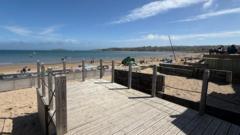
A wooden shack with a corrugated iron roof just hit the market in North Wales, and the price tag is a staggering £200,000. It doesn't have electricity. It lacks running water. You can't legally sleep in it overnight.
For that kind of cash, you could buy a proper three-bedroom family home in many parts of the surrounding county of Gwynedd, where the average house price hovers right around £198,500. Yet, this tiny 11-by-11.5-foot box on Porth Mawr beach in Abersoch is triggering a massive bidding war ahead of its July 1 deadline.
Internet commenters are naturally screaming that the world has gone mad. They are calling it a glorified shed and joking about whether Waitrose delivers to the sand dunes. But if you think this is just a story about wealthy people with too much money and nowhere to put their paddleboards, you are missing the bigger picture of how micro-prime real estate operates.
The Brutal Math Behind the Price Tag
To understand why a wooden box costs as much as a brick-and-mortar home, you have to look at extreme scarcity. Abersoch has evolved into a premier coastal playground, earning the nickname "Cheshire-by-the-sea" due to the influx of affluent second-home owners from northwest England.
This specific hut, listed by local estate agents Elvins, sits in an elite tier. It is one of only 17 structures positioned on a coveted stretch of the beach where owners are permitted to launch boats and bring dogs year-round. You aren't paying for the timber or the nails. You are paying for a highly restrictive, legally grandfathered piece of land that extends down to the high-water line.
The numbers look wild on paper, but history shows these shacks are surprisingly resilient assets.
- In 2017, a similar Abersoch bathing hut set a record by selling for £160,000.
- By 2022, asking prices on the same stretch of sand hit the £200,000 mark.
- In 2023, a double-fronted unit shattered expectations by listing for £250,000.
When an asset class has zero room to expand—local planning laws ensure no new huts will ever be built on this coastline—prices defy traditional property logic. It behaves less like real estate and more like a rare piece of art or a vintage sports car.
The Reality of Owning a High-End Hut
People imagine breezy summer days spent sipping white wine on the private wooden deck, looking out toward St Tudwals Islands. That is the dream sold in the glossy brochure. The reality of owning a premium piece of coastal sand is a bit more rugged.
Every winter, fierce gales and high tides hammer the Llŷn Peninsula. These tiny structures take the full force of the Atlantic elements. Just earlier this year, winter storms deposited thousands of tonnes of sand along the shoreline, completely burying several of the £200,000 huts up to their eaves.
Before you can even open the doors in the spring, you often have to spend days manually digging out your luxury shed with a spade. There is also the matter of ongoing costs. Even without a single utility connection, buyers still face an annual council tax bill that sits close to £800 a year just for the right to use the space.
The Local Flashpoint
While wealthy holidaymakers view these huts as ultimate status symbols, local politicians and residents see them as a stark symbol of a broken housing market. Mabon ap Gwynfor, a Member of the Senedd for Plaid Cymru, has publicly called the current price trends a shameful situation, pointing out that young people have virtually no chance of securing affordable housing in their own communities when a basic shed commands a quarter of a million pounds.
The hyper-inflation of the beachfront has spilled directly into the local village. Abersoch recently lost its primary school due to a severe shortage of permanent young families, as properties are consistently snapped up as seasonal holiday lets and second homes.
If you are seriously considering entering the niche world of luxury beach hut investments, you need to look past the social media outrage and evaluate the asset strictly on its unique constraints.
- Check the Tenure: Ensure the hut is freehold down to the high-water mark, as leasehold units with expiring beach rights carry massive hidden liabilities.
- Factor in Maintenance: Budget for annual structural repairs, painting, and potentially hiring local contractors to excavate sand after major winter weather events.
- Review Local Council Rules: Keep an eye on changing local tax rules, as councils in Wales are increasingly tightening rules on second homes and non-domestic properties.
The bidding window for the Porth Mawr hut closes sharply at 4pm on July 1, and history suggests it will meet, if not exceed, its ambitious six-figure target.