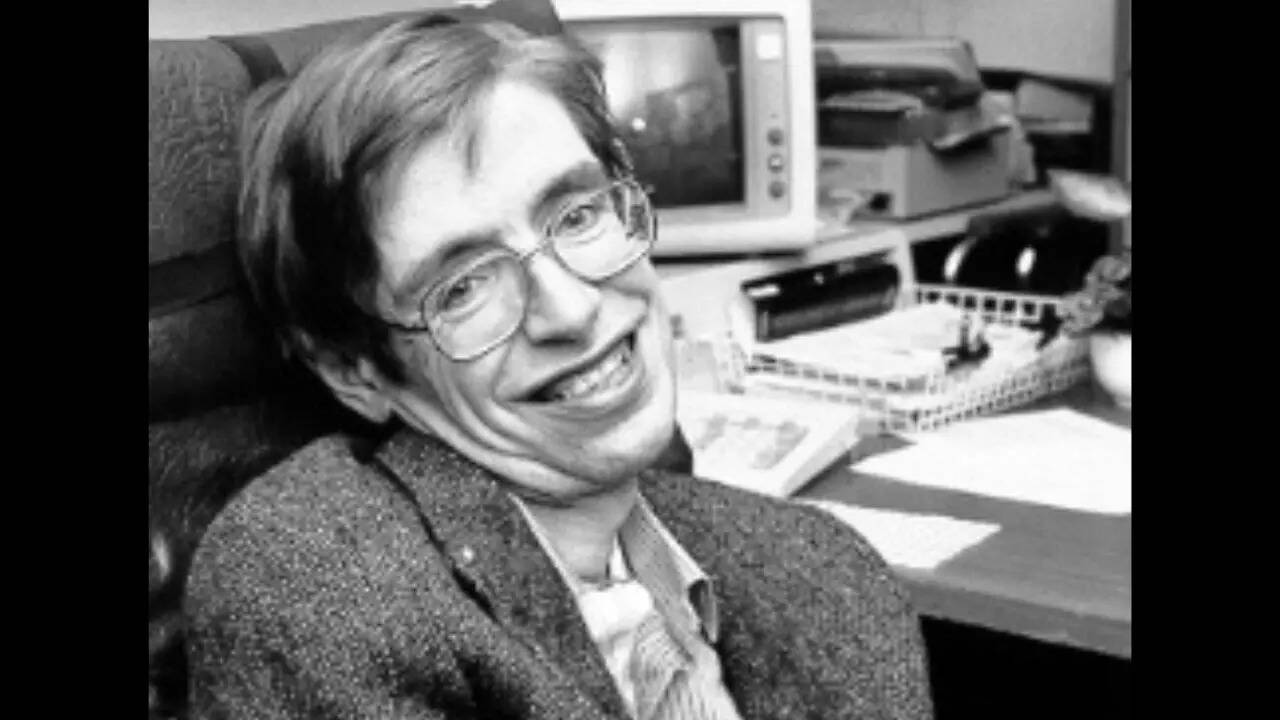
Stephen Hawking didn’t just study black holes. He studied how we think. You’ve likely seen the quote splashed across Instagram or etched into wooden plaques: “The greatest enemy of knowledge is not ignorance, it is the illusion of knowledge.” It’s a punchy line. It looks great on a coffee mug. But most people treat it like a simple pat on the back for being "open-minded."
They’re missing the point. For a deeper dive into this area, we suggest: this related article.
Hawking wasn't talking about being a little bit stubborn. He was talking about a fundamental glitch in the human brain that stops us from learning before we even start. If you think you already know how the world works, you’ve basically built a wall around your brain. You aren’t just wrong; you’re unteachable. That’s a dangerous place to be in 2026, where the speed of information makes today’s "facts" tomorrow’s punchlines.
The dangerous comfort of being right
We hate being wrong. Our brains actually process being "proven wrong" as a physical threat. It’s why you feel your chest tighten when someone corrects you in a meeting. Ignorance is just an empty space. It’s a blank page. You can write on a blank page. But the illusion of knowledge? That’s a page already filled with scribbles, errors, and bad logic. For additional background on this topic, comprehensive analysis is available on The Spruce.
When you think you understand a topic—whether it’s AI, climate change, or why your car is making that weird clicking sound—you stop looking for new data. You filter everything through what you think you know. Psychologists call this confirmation bias, but Hawking saw it as a roadblock to the entire species.
Think about the history of science. People didn't fail to understand the solar system because they were "ignorant" of the stars. They failed because they were absolutely certain the Earth was the center of everything. They had a model. It worked for their daily lives. Because they had that "knowledge," they didn't need to look for anything else. They were trapped by their own certainty.
Why the internet made the illusion worse
You’d think having all of human history in our pockets would make us smarter. It hasn't. It’s just made us more confident. We spend five minutes on a wiki page or watch a thirty-second clip and suddenly feel like experts. This is the Dunning-Kruger effect in high-definition.
The "illusion" Hawking warned about is now a billion-dollar industry. Algorithms feed you exactly what confirms your existing "knowledge." If you believe a certain diet is the only way to stay healthy, your feed will show you endless "proof." You aren't gaining knowledge. You’re just thickening the walls of your own bubble.
I’ve seen this happen in tech circles constantly. Someone learns a specific way to code or a specific business strategy that worked in 2022. They hold onto it like a holy relic. When the market shifts, they don't adapt. They can't. They "know" what works, so they ignore the flashing red lights saying otherwise.
How to spot the illusion in your own life
It’s hard to see your own blind spots. That’s why they’re called blind spots. But there are tells. If you find yourself saying "I already know that" whenever someone starts explaining a concept, you’re likely under the spell of the illusion.
True experts—the ones like Hawking who actually change the world—are usually the ones most obsessed with what they don't know. They don't protect their ideas. They try to break them.
Look at your social circle. Do you only talk to people who agree with your "knowledge"? If everyone around you is nodding, you aren't learning. You’re just participating in a group illusion. Hawking spent his life rewriting his own theories. He wasn't afraid to admit his previous work was incomplete or flat-out wrong. That’s real intellectual power.
Stop being a collector of facts
Knowledge isn't about hoarding facts like a digital packrat. It’s about building a better map of reality. Maps need constant updates. If you’re using a map of London from 1850, you’re going to get lost, even if you’ve memorized every street on that old piece of paper.
Most people are walking around with 1850 maps of 2026 reality. They’re confident. They’re certain. And they’re wondering why they keep hitting dead ends.
Practical steps to break the cycle
You have to actively fight the urge to be right. It sounds counterintuitive, but the goal should be to be "less wrong" every single day.
- Audit your certainties. Pick one thing you are absolutely sure of. Now, go find the smartest person who disagrees with you and read their best argument. Don't read it to debunk it. Read it to understand why a smart person would believe it.
- Change your vocabulary. Stop saying "I know." Start saying "My current understanding is..." It’s a small shift, but it leaves the door open for new information.
- Seek out friction. If your life feels too easy and everyone agrees with you, you’re stagnating. Find environments where your ideas get challenged.
- Admit when you're wrong publicly. It kills the ego. It also makes people trust you more. They know you care about the truth more than your reputation.
The next time you see that Hawking quote, don't just nod and keep scrolling. Ask yourself what you’re currently "certain" about that is actually blocking you from the truth. The smartest person in the room isn't the one with all the answers. It’s the one who’s most aware of how much they still have to learn.
Go find something today that proves you wrong. It’s the only way to actually get smarter.