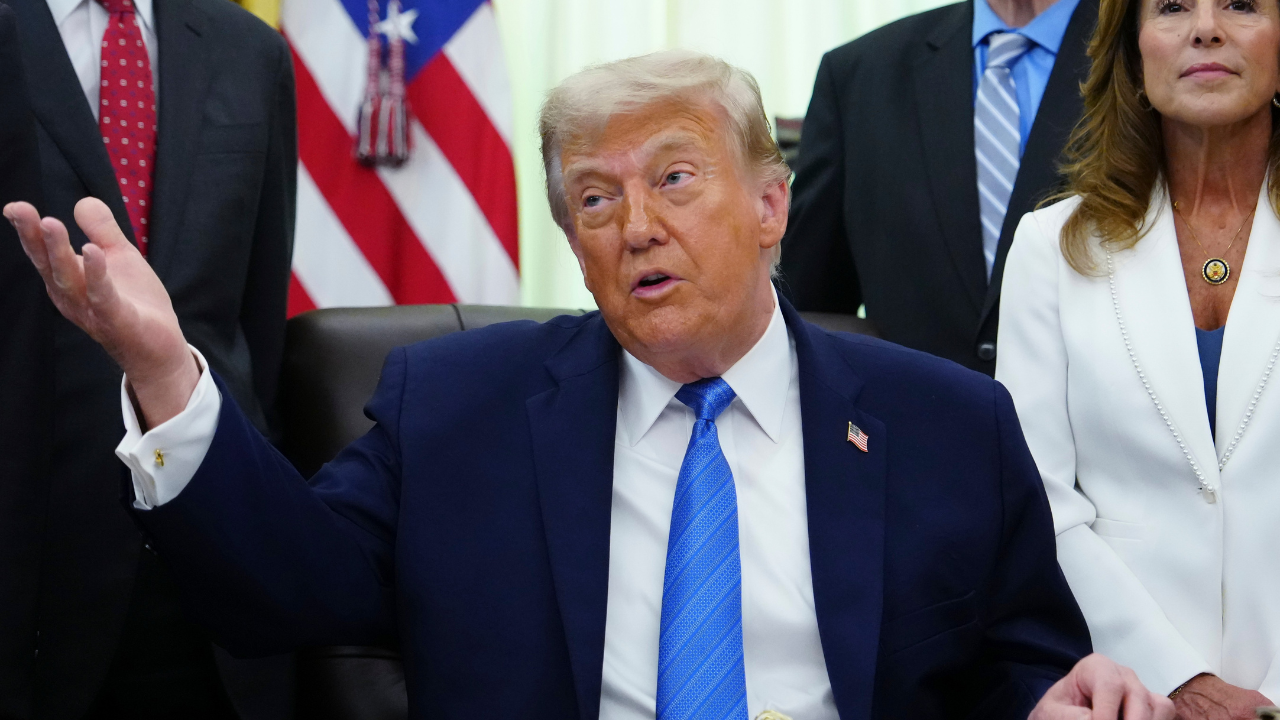
Donald Trump just dropped a bombshell about a secret military mission in the Strait of Hormuz. Speaking from the Oval Office, he claimed the US military snuck 22 massive ships past Iran in a single night. No lights. No transponders. Total radio silence. According to Trump, Tehran didn't have a clue because the US military previously blasted their radar systems to pieces.
If you believe the headlines, it sounds like a Hollywood movie script. Trump claims this covert operation has safely guided over 200 commercial ships and injected 100 million barrels of oil back into the global market since the strait was blocked after military clashes earlier this year. He says it's the only reason oil isn't sitting at $200 a barrel right now.
But if you look at actual shipping data and intelligence reports, the real story is much messier than a simple late-night stealth run. Trump is spinning a massive, coordinated logistical bypass into a personal cinematic victory. The reality of what's happening in the Persian Gulf involves international shell games, dark transits, and tactical blind spots that the mainstream media completely missed.
The Dark Fleet Strategy
Let's look at the numbers. Trump claims 100 million barrels of oil moved under Iran's nose. Is that even possible?
Yes, but not in the way he implies. This isn't American forces stealing Iranian oil. TankerTrackers, an organization that uses satellite imagery to monitor global shipping, explicitly confirmed that Iranian crude remains trapped at home, with dozens of their own tankers sitting idle. Instead, the US military is acting as an invisible shield for non-Iranian oil belonging to nations like Kuwait and the United Arab Emirates.
The secret isn't a magical invisibility cloak. It's a tactic called dark transits.
Commercial ships are legally required to broadcast their positions via Automated Identification System (AIS) transponders. Over the past month, dozens of massive tankers simply flipped the switch. They went completely dark before entering the narrow choke point. They move at night without deck lights and maintain strict radio silence.
The US military isn't necessarily sailing alongside them in a visible convoy like they did during Project Freedom back in May. That public escort mission was scrapped after just 24 hours to keep diplomatic channels open. Instead, US Central Command is quietly feeding these dark ships real-time intelligence, telling them exactly when and where to move to avoid the remaining Iranian coastal lookouts.
How the Ship to Ship Shell Game Works
You can't just hide a 300-meter supertanker forever. Eventually, you have to turn the lights back on. Satellite imagery from Bloomberg exposes the exact mechanism the US military is protecting.
- Gulf producers load oil onto local state-owned tankers inside the Persian Gulf.
- These tankers slip through the Strait of Hormuz completely dark.
- They meet up off the coast of Oman, an area that was completely empty a month ago but is now packed with ships.
- The dark tankers transfer millions of barrels of oil directly to international vessels via ship-to-ship transfers.
- The receiving ships, which never risked entering the dangerous waters of the gulf, sail off to Asia and Europe.
This keeps the oil flowing without triggering standard trade registries or alerting Iranian shore batteries. It's a high-stakes logistical hustle, not a stealth fighter mission.
Did the US Really Smashed Iran's Radar
Trump’s most dramatic claim is that the 22 ships went unnoticed because the US military "blasted the crap out of" Iran's radar capabilities during recent strikes.
There's some truth here, but it's exaggerated. Western intelligence confirms that US and Israeli retaliatory strikes earlier this year severely degraded Iran's air defense and coastal surveillance networks along the northern coast of the strait. They have massive blind spots right now.
However, thinking Iran is totally blind is a dangerous mistake. You don't need advanced military radar to spot a multi-ton steel behemoth moving through a waterway that is only 21 miles wide at its narrowest point. Iran still has lookouts, commercial radar, and basic visual surveillance.
The reason Iran didn't fire on those 22 ships isn't just because their radar screen was fuzzy. It's because they knew attacking state-owned vessels from neighboring Arab states under active US surveillance would trigger an immediate, devastating military response. Trump openly threatened to attack Iran "very hard" if ongoing diplomatic talks collapse following the recent downing of a US Apache helicopter. The silence from Tehran is about deterrence, not total blindness.
What This Means for Global Energy Prices
Trump is using this announcement to fight a political battle at home over sticky inflation numbers. By claiming credit for keeping oil around $85 a barrel, he's trying to prove his aggressive foreign policy is saving consumers at the gas pump.
If the Strait of Hormuz stayed completely choked off, energy analysts universally agree oil would have spiked past $150, dragging the global economy into a brutal recession. The quiet resumption of these transits has acted as a vital pressure valve for global markets.
But running an economy on ghost ships isn't a permanent strategy. Insurance premiums for entering the Persian Gulf are astronomical right now. Only state-owned enterprises can afford to take these risks because their governments absorb the liability. Private shipping companies are still refusing to go anywhere near the strait.
If you want to understand where the energy market is heading next, ignore the political theater and watch the ship-to-ship transfer zones off Oman. If those numbers keep rising, oil prices will stay stable. If Iran manages to patch its surveillance gaps or decides to risk a confrontation, the dark fleet strategy won't save the market from a massive price shock. Watch the satellite tracking data, not the press briefings.