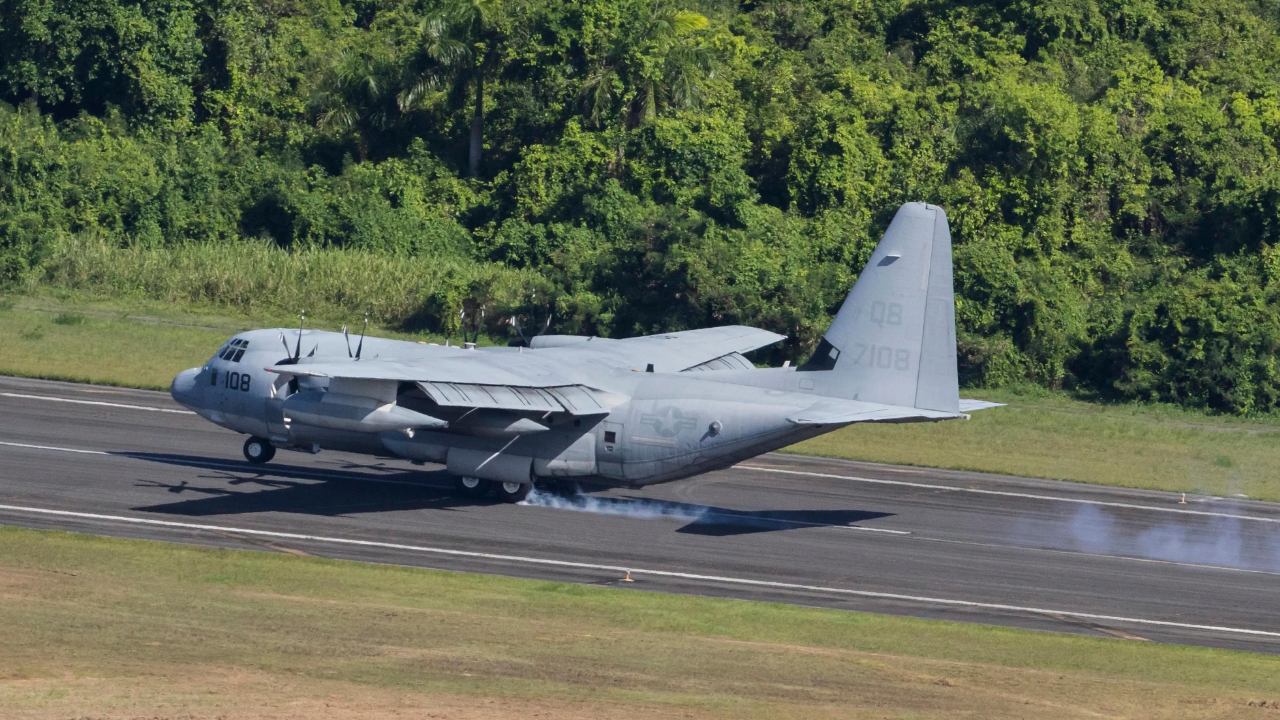
When headlines flash that the US is pulling military aircraft out of a UK air base following an Iranian threat, social media immediately spirals into panic. People start talking about World War III, abandoned allies, or imminent missile strikes on British soil.
That reaction misses the entire point of modern military logistics.
Honestly, moving planes out of an airfield during a spike in regional tension isn't a retreat. It's standard force protection. When intelligence points to potential retaliation from Tehran—whether through long-range ballistic missiles, one-way attack drones, or covert proxy strikes—leaving billions of dollars worth of irreplaceable airframes sitting wingtip-to-wingtip on a predictable tarmac is just bad military math.
The Reality Behind US Air Force Dispersal Tactics
If you've spent any time following defense aviation or tracking open-source flight data, you know this playbook well. The United States Air Force operates major hubs across the United Kingdom, including RAF Fairford, RAF Lakenheath, and RAF Mildenhall. These bases are the critical logistics and strike bridges connecting North America to Europe and the Middle East.
Because they are so vital, everyone knows where they are. Every satellite in orbit and every intelligence agency in Tehran has the exact coordinates of the runways, fuel depots, and maintenance hangars in Gloucestershire and Suffolk.
When threat levels climb, commanders execute what military planners call dispersal. Instead of keeping high-value assets clustered at one primary operating base, they scatter them.
- Tankers like the KC-135 Stratotanker might shift to smaller, less predictable airfields across mainland Europe.
- Bombers such as the B-52 Stratofortress or B-1B Lancer routinely rotate forward or pull back depending on where the immediate threat envelope sits.
- Fighter squadrons get broken up into smaller packages so a single strike can't wipe out an entire wing.
It looks dramatic on public flight-tracking radar when a dozen transponders light up over the English Channel at once. To an untrained observer, it looks like an evacuation. To a defense analyst, it looks like a shell game designed to ruin an adversary's targeting solution.
Why Iran Threats Reach All the Way to British Runways
You might wonder why a threat from Iran would force aircraft movements thousands of miles away in the UK. Geography used to protect European bases from Middle Eastern conflicts. Those days are over.
Iran's missile and drone programs have evolved rapidly over the last decade. Systems like the Khorramshahr and Sejjil medium-range ballistic missiles already put parts of southeastern Europe within reach. Tehran has also demonstrated an aggressive willingness to use proxy networks and asymmetric tactics far outside its immediate borders.
Even more importantly, UK bases aren't isolated from Middle Eastern operations. They are the launchpad.
During previous escalations—including direct exchanges between Iran and Israel and joint US-UK strikes against Houthi targets in Yemen—aircraft flying out of British bases played a direct supporting role. Aerial refueling tankers from Mildenhall and strike aircraft from Lakenheath keep the entire operational chain alive. If Tehran decides to target the logistics tail rather than just the tip of the spear, UK bases suddenly move up the target list.
The Vulnerability of Concentrated Airpower
Modern airfields have a massive Achilles' heel. They're built for efficiency during peacetime, not survivability during a missile exchange.
Walk onto a major air base during normal operations and you'll see rows of aircraft parked neatly in the open. Hardened aircraft shelters exist, especially at older Cold War bases like Lakenheath, but they don't fit everything. You can't squeeze a massive strategic bomber or a wide-body refueling tanker into a standard fighter bunker.
That leaves giant, expensive targets sitting under open skies. A single swarm of long-range drones or a handful of ballistic missiles carrying submunitions could shred millions of dollars in electronics, engines, and airframes in seconds. Moving those planes before the first warning siren sounds isn't weakness. It's basic survival.
How Open-Source Intelligence Shapes the Headlines
Part of the reason these stories blow up so fast today is the rise of OSINT—open-source intelligence.
Ten years ago, if the Pentagon quietly repositioned a squadron of aircraft from England to Germany or back to the continental United States, almost nobody outside the fence line noticed. Today, thousands of aviation enthusiasts and independent researchers monitor ADS-B transponder data and high-resolution commercial satellite imagery around the clock.
When a cluster of US military callsigns suddenly departs a UK base in quick succession, screenshots hit X and Telegram within minutes. News outlets pick up the chatter, pair it with diplomatic warnings about Iranian retaliation, and publish breaking alerts about an "evacuation."
The terminology matters here. Journalists love the word evacuation because it carries urgency and drama. Military officials prefer terms like repositioning, force posture adjustment, or agile combat employment.
The US Air Force has actually built an entire doctrine around this concept called Agile Combat Employment (ACE). The whole idea is to train crews to pack up fast, leave major hubs behind, and operate out of austere, decentralized locations with minimal footprint. What looks like a panicked exit on a news ticker is often an intentional execution of ACE doctrine under real-world pressure.
The Role of UK Base Security and Defense Posture
Whenever Washington adjusts its air posture in Britain, London is deeply involved. These aren't purely American sovereign bases; they are Royal Air Force stations hosting US visiting forces under long-standing defense agreements.
When intelligence warns of an elevated threat from Iran or its affiliates, the response on the ground involves tight coordination between the Ministry of Defence and US European Command (EUCOM).
- Perimeter and counter-drone security tightens immediately. Following suspicious drone sightings near several US-operated bases in eastern England in late 2024, both British and American forces significantly upgraded their local airspace monitoring and electronic warfare defenses.
- Air defense assets get shuffled. Protecting a base isn't just about flying planes away; it's about bringing air defense radars and interceptor systems closer to defend the infrastructure that can't move.
- Diplomatic signaling kicks into high gear. Moving aircraft sends a dual message. It tells Tehran that its threats are being taken seriously enough to harden targets, while signaling to allies that Western forces are actively preparing for contingencies rather than waiting to be hit.
What History Tells Us About Strategic Repositioning
We've seen this exact pattern play out multiple times in recent years.
In January 2020, following the US strike that killed Qasem Soleimani, American forces across the Middle East and Europe quietly dispersed aircraft and personnel hours before Iran launched ballistic missiles at Al Asad Air Base in Iraq. Early warning systems and rapid dispersal saved dozens of lives that night, even though buildings on the base took heavy damage.
We saw similar choreography in April 2024 and October 2024 during direct missile and drone exchanges between Iran and Israel. Ahead of both events, US tankers, cargo planes, and combat aircraft shifted bases across Europe and the Mediterranean. Some moved closer to intercept incoming threats. Others pulled back from exposed runways so they wouldn't be caught on the ground.
Every single time, early reports framed the movements as either an imminent invasion or a frantic retreat. Neither turned out to be true. The movements were calculated adjustments to keep aircraft safe and ready to launch the moment orders came down.
Stop Reading Flight Radars Like a Doomsday Clock
If you follow geopolitical news closely, it's easy to get sucked into the minute-by-minute panic whenever military planes change parking spots. Public flight trackers are fantastic tools, but they only show you where a plane went, never why the order was given.
A transponder disappearing over the North Sea doesn't mean a plane crashed or went dark for a secret bombing run; half the time, military crews simply switch off public tracking modes once they leave civilian-controlled corridors. Similarly, a sudden exodus of tankers from RAF Mildenhall doesn't mean the US is abandoning Europe. It usually means commanders decided those tankers are safer operating from three different airfields instead of one.
The next time you see breaking news about the US pulling aircraft out of a UK base over an Iranian threat, look past the headline. Check whether the planes are actually leaving the theater entirely or just spreading out across NATO airfields. Watch for follow-on tanker bridges heading east, which signal active deterrence rather than withdrawal, and pay closer attention to official Pentagon and UK Ministry of Defence posture statements than viral social media maps.