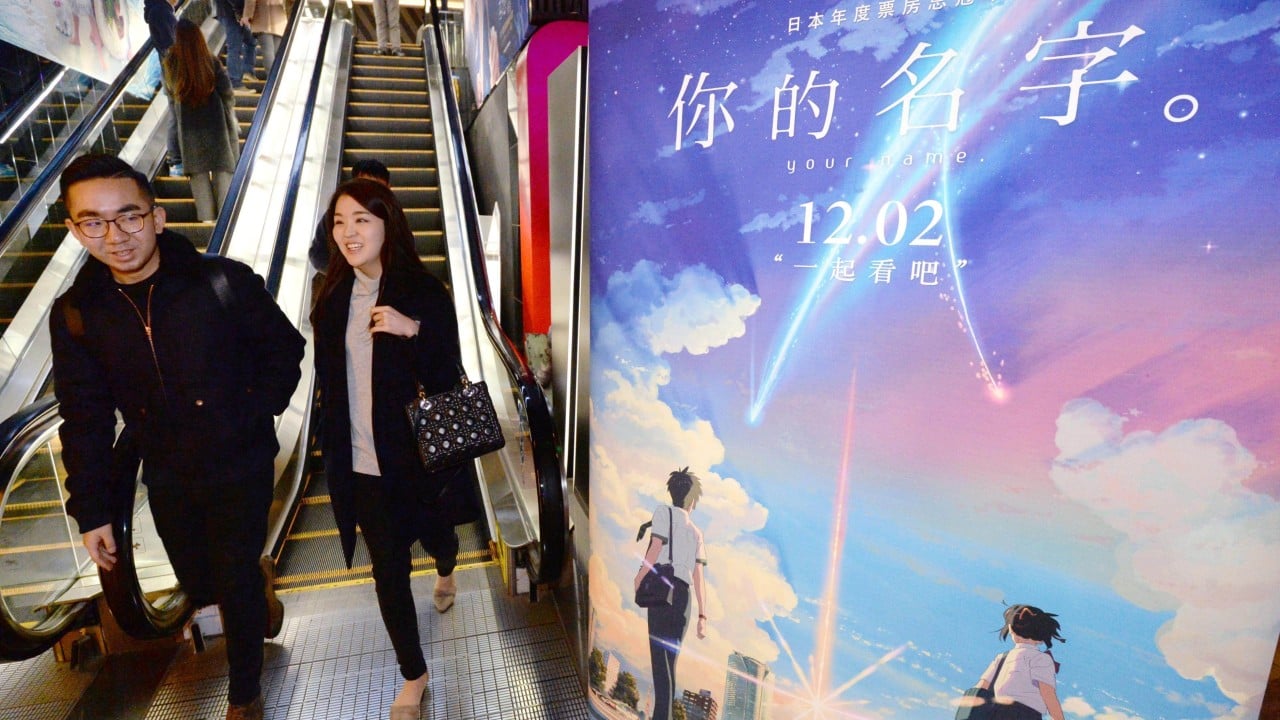
Walk into a comic convention in Shanghai or Chengdu, and you'll see thousands of twenty-somethings dressed as characters from Demon Slayer, Jujutsu Kaisen, or Genshin Impact (which is Chinese-made, though heavily inspired by Japanese aesthetics). Just a few blocks away, or even inside the exact same venue, wearing a Rising Sun flag patch or posing at a replica of a wartime shrine will get someone shouted down, filmed, and canceled across Chinese social media within minutes.
To Western observers, this looks like massive hypocrisy. How can the same generation obsess over Japanese anime, J-pop, and Harajuku fashion while erupting in fury over Japanese historical symbols?
Honestly, it isn't hypocrisy at all. Once you look at how modern Chinese youth separate cultural products from state politics, the contradiction completely disappears. They aren't confused. They've simply drawn a razor-sharp boundary between modern creative expression and imperial nostalgia.
Why Pop Culture Gets a Free Pass While History Doesn't
Western media often treats national sentiment as an all-or-nothing package. Either a country likes Japan or it hates Japan. That binary thinking completely misses how Gen Z and millennials in China actually consume culture.
For someone born in China after 1995, Japanese anime isn't "foreign propaganda." It's just childhood. They grew up watching Naruto, One Piece, and Detective Conan on Bilibili and local TV networks. By the time they hit high school, Miyazaki films and Makoto Shinkai movies were cultural touchstones shared with their friends. You don't suddenly hate the stories that raised you just because of diplomatic friction in the East China Sea.
War-era symbols occupy an entirely different mental category.
In the Chinese education system, the Second Sino-Japanese War (1937–1945)—known domestically as the War of Resistance Against Japanese Aggression—isn't a dusty chapter in a textbook. It's the foundational trauma of modern China. From elementary school onward, students learn about the Nanjing Massacre, Unit 731, and the tens of millions of Chinese casualties.
When a celebrity, an anime creator, or a cosplayer touches a war-era symbol, young Chinese fans don't see it as edgy fashion or harmless historical trivia. They see it as an explicit endorsement of the ideology that tried to wipe out their grandparents' generation.
The Unspoken Rules of Chinese Fandom
If you spend time on Bilibili, Weibo, or Xiaohongshu (Little Red Book), you quickly realize that Chinese anime and gaming communities operate under strict, self-policed rules. The state censors definitely exist, sure. Yet most of the backlash against war symbols doesn't come from government bureaucrats sitting in Beijing. It comes from the fans themselves.
Here's how that boundary works in practice:
- Art is welcome, militarism is toxic. Fans will happily buy imported figurines, learn Japanese to translate manga, and travel to Tokyo for anime pilgrimages. The second a creator expresses right-wing nationalist views, the fandom turns on them instantly.
- Guilt by association kills careers. Even accidental proximity to controversial sites triggers massive boycotts.
- Patriotism comes first. Among young Chinese netizens, there's a common phrase: "Guojia mianqian wu ouxiang"—which translates to "Before the nation, there are no idols." Fandom loyalty is real, but national identity overrides it every single time.
Look at what happened to My Hero Academia in 2020. The manga was hugely popular in China until the author named a villainous doctor "Maruta Shiga." In Japanese, maruta means "log"—which was the exact dehumanizing code word Imperial Japan's Unit 731 used for human victims subjected to lethal biological experiments. Within hours, Chinese platforms pulled the series, fans burned their physical manga volumes, and the franchise effectively vanished from the mainland market.
Real Flashpoints That Defined the Line
You can't understand this dynamic without looking at the specific incidents that hardened these attitudes over the last decade. These weren't minor misunderstandings. They were massive cultural collisions.
The Yasukuni Shrine Effect
In Tokyo, the Yasukuni Shrine honors Japan's war dead, including 14 convicted Class-A war criminals from World War II. For many people in Japan, visiting the shrine is a routine way to pray for fallen ancestors or celebrate festivals. For people in China and South Korea, it's the ultimate symbol of unrepentant Japanese militarism.
In 2021, Chinese actor Zhang Zhehan—who had just skyrocketed to fame in the hit drama Word of Honor—had old photos resurface showing him smiling at Yasukuni Shrine and attending a wedding at Nogi Shrine (named after a general involved in the First Sino-Japanese War). His career evaporated in less than 48 hours. Brands dropped him, streaming platforms deleted his shows, and his own fans led the charge in condemning him.
Japanese voice actress Ai Kayano faced a nearly identical fate that same year after casually mentioning on a podcast that she had visited Yasukuni Shrine because the air felt pleasant. Chinese mobile games like Azur Lane and Arknights immediately removed her voice lines to avoid fan revolts.
The Rising Sun Flag and Historical Memory
Western rock stars and fashion designers occasionally slap the Rising Sun flag onto jackets or album covers because they think the design looks cool. In East Asia, that flag carries the exact same weight as a Nazi swastika in Europe. It was the battle flag of the Imperial Japanese Army and Navy during their conquest and occupation of Asia.
When any Japanese anime, video game, or fashion brand includes Rising Sun imagery—even stylized rays that vaguely resemble it—Chinese fans spot it immediately. Companies like Capcom, Square Enix, and major sneaker brands have all been forced to issue apologies or alter designs for the Chinese market after online pushback.
What Western Observers Always Miss
If you read English-language commentary on these controversies, you'll usually see two lazy explanations. The first claims that Chinese youth are completely brainwashed by state media. The second claims they're secretly rebelling against their government by consuming Japanese pop culture.
Both takes are wrong.
Chinese Gen Z is arguably the most digitally savvy, globally connected generation in the country's history. They use VPNs, follow global trends, and debate art and politics with nuance. They aren't mindless drones. At the same time, they aren't using anime as a political protest against Beijing.
Instead, they practice what sociologists call compartmentalization. They separate cultural Japan (the Japan of Studio Ghibli, Nintendo, ramen, and street fashion) from political and historical Japan (the Japan of wartime atrocities, territorial disputes over the Diaoyu/Senkaku Islands, and right-wing revisionism).
Honestly, people everywhere do this to some degree. Plenty of international audiences love American movies, hip-hop, and tech while sharply criticizing US foreign policy. Chinese youth are doing the exact same thing with Japan, just with much higher historical stakes.
How Global Brands and Creators Navigate This Divide
If you're a creator, marketer, or media analyst trying to understand the Chinese market—or just trying to make sense of East Asian pop culture—ignoring this distinction is a guaranteed way to get burned.
The rules aren't hidden, and they aren't arbitrary. When Japanese creators respect historical boundaries, Chinese fans reward them with massive loyalty and spending power. Take Suzume by Makoto Shinkai, which grossed over $110 million in China in 2023, outperforming its box office haul in Japan. Or look at The First Slam Dunk, which pulled in nearly $90 million in China the same year because nostalgia for the 1990s basketball anime transcended every political barrier.
If you want to understand or work within this cultural space, keep a few practical realities in mind:
- Never treat wartime imagery as mere aesthetic. Rising Sun motifs, imperial uniforms, and references to colonial-era landmarks aren't neutral design elements in East Asia. Vetting creative assets for historical sensitivity before launching anything globally isn't optional.
- Separate the audience from the headlines. Geopolitical tension between Tokyo and Beijing makes great cable news, yet commercial demand for Japanese IP in China remains massive. Look at box office numbers and Bilibili streaming metrics rather than just political commentary to gauge real consumer behavior.
- Recognize the power of fan self-regulation. Don't assume every backlash in China is orchestrated from the top down. Grassroots fan communities monitor creator behavior closely and hold their favorite franchises to strict ethical standards.
Young Chinese fans don't see a contradiction between loving an anime character and rejecting an imperial flag because, to them, those two things belong to completely different worlds. One represents imagination, friendship, and shared youth culture. The other represents a past they refuse to let anyone whitewash.