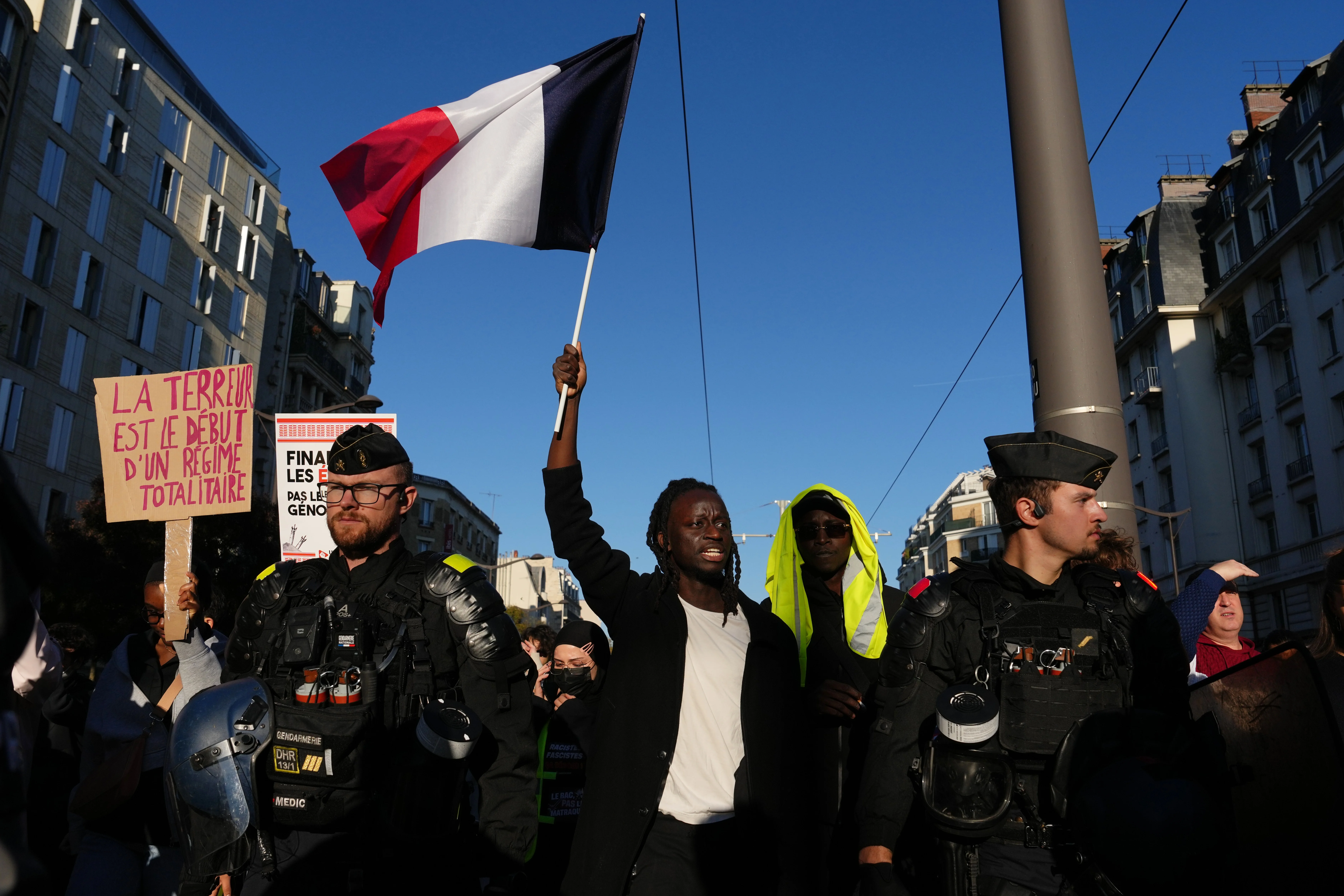
Turn on the news any given week and you'll see tear gas billowing over a Parisian boulevard. The headlines always read the same. France is burning again, and angry young people are leading the charge across Europe.
Most outside observers treat this like a seasonal hobby. They think French students just love skipping class to overturn trash cans, or that European Gen Z is uniquely lazy and entitled. That reading isn't just lazy journalism—it's completely backward.
When youth-led protests sweep through France and spill into neighboring capitals like Madrid, Berlin, or Athens, you aren't watching random chaos. You're watching the canary in the economic coal mine. Young Europeans are staring down a broken social contract where working harder no longer buys you a basic adult life, and they're the only demographic with enough energy and free time to call bluff on the system.
Why France Always Ignites First
If you want to understand why protests in Europe almost always catch fire in France before spreading outward, you have to look at how French civic culture actually works. In the United States or the UK, taking to the streets is usually treated as a last resort after every polite channel fails. In France, street mobilization is the primary bargaining chip.
It's baked into the republic's DNA. From the student uprisings of May 1968 to the Yellow Vests movement and the massive pension reform strikes of 2023, the French public views direct action as a legitimate check on executive power. Because the French constitution gives the president sweeping authority to bypass parliament—most notoriously through Article 49.3—citizens often feel the ballot box isn't enough between elections.
When the government forces through legislation without a parliamentary vote, the street becomes the real opposition party.
Young people in France don't start these fires alone, either. Unlike in many countries where student movements operate in a vacuum, French high school unions (lycéens) and university groups routinely link up with massive, established labor confederations like the CGT. When an 18-year-old student in Lyon marches alongside a 50-year-old railway worker, the state suddenly has a genuine crisis on its hands.
It Isn't Just About One Law
Media coverage loves a neat, single-issue villain. A raised retirement age. A hike in university tuition. A controversial climate bill.
Don't fall for it. The specific policy on the banner is almost always just the spark, never the fuel.
Spend five minutes talking to the 20-somethings standing on the cobblestones in Paris, Rome, or Amsterdam, and you'll hear the exact same anxieties repeating on a loop. They're angry because the math of adulthood doesn't add up anymore.
Consider what young Europeans are actually dealing with right now:
- Housing has become a rigged game. In major hubs like Paris, Dublin, Lisbon, and Berlin, rents have detached entirely from entry-level wages. Even with a master's degree and a full-time job, plenty of young adults are stuck sharing cramped apartments well into their thirties, with homeownership feeling like a fairy tale from another century.
- Precarious work is the new normal. European labor markets often protect older workers with ironclad contracts while funneling young hires into endless cycles of unpaid internships, temporary gigs, and short-term contracts. You get all the stress of modern capitalism with none of the traditional European safety nets.
- Climate anxiety isn't abstract anymore. For a 19-year-old in Southern Europe, record-shattering summer heatwaves and severe droughts aren't future projections on a graph. They're happening right now, while governments continue subsidizing fossil fuels and dragging their feet on green transitions.
- The pension squeeze hits them twice. When governments raise the retirement age to keep aging populations afloat, young people realize they're paying higher taxes to fund a system they seriously doubt will exist when they get old.
When you stack all of those pressures together, a sudden transit fare hike or an unpopular education reform isn't just an annoyance. It feels like an insult.
How Protests Jump Borders Across Europe
People often wonder how a local dispute in a Paris suburb turns into synchronized demonstrations across half a dozen European countries within days. It doesn't happen by accident, and it rarely relies on traditional political parties.
Modern European youth activism runs on decentralized networks and shared cultural friction.
First, European students are hyper-connected. Programs like Erasmus have spent decades mixing young people from Spain, Germany, France, Italy, and Poland into the same classrooms and social circles. When a student in Barcelona sees their friend from Toulouse getting hit with riot shields on TikTok or Telegram, the solidarity is instant.
Second, the grievances are identical because the economic policies are often dictated from the same places. Decisions made by the European Central Bank or austerity targets set in Brussels ripple across the entire Eurozone simultaneously. Inflation doesn't respect national borders. Neither does a housing shortage.
Look at how quickly the tactics cross-pollinate too. The blockades of high schools and universities perfected in France show up in Italy within weeks. Climate sit-ins pioneered in Germany get copied in the Netherlands and the UK. Organizers share digital toolkits on how to bypass police kettling, how to scrub metadata from protest videos, and how to handle tear gas exposure.
They aren't waiting for union bosses to print flyers anymore. They coordinate in real time, adapt on the fly, and stay leaderless on purpose so the police can't kill a movement by arresting three people at the top.
The Myth of the Violent Rioter
Watch enough cable news clips of burning barricades and shattered bank windows, and you'd think every young protester in Europe is an anarchist looking for a fight. That framing is gold for politicians who want to ignore the actual demands of the crowd.
Here's what actually happens on the ground.
In almost every major European demonstration, 95% of the crowd is completely peaceful. You have teenagers holding cardboard signs, university students chanting slogans, families, and off-duty workers marching down designated routes.
Then, on the margins, you have the black bloc—small, tightly organized groups of radical militants dressed in black who show up specifically to clash with riot police and smash corporate storefronts. They know the cameras will ignore ten thousand peaceful marchers the second one trash can catches fire.
And governments know it too. Focusing the national conversation on property damage lets ministers dodge awkward questions about why half the country's youth can't afford groceries or rent. Worse yet, heavy-handed policing—like the aggressive use of flash-ball launchers and tear gas by France's BRAV-M motorcycle units—frequently escalates calm crowds into furious ones. When peaceful 18-year-olds get shoved, beaten, or arbitrarily detained, they don't go home quietly. They come back next week angrier.
What Governments Keep Getting Wrong
European leaders keep reaching for the exact same playbook every time young people hit the streets, and it fails every single time.
They start by lecturing. Politicians go on television and tell young people they don't understand economics, that sacrifices are necessary, and that democracy happens at the ballot box rather than in the streets. Talking down to frustrated adults who are working two jobs to pay rent is political poison.
Next, they try to wait it out. Governments assume student movements have short attention spans—that once exam season hits or summer vacation starts, everyone will pack up their banners and go to the beach. Sometimes that works in the short term. The streets quiet down for a few months.
The problem is that waiting out a protest doesn't fix the underlying rot. It just pushes the anger underground until the next spark hits, usually bigger and harder to control than the last one.
The political establishment also massively misreads what youth disengagement at the polls actually means. When young Europeans don't show up to vote in traditional elections, pundits call them apathetic. They aren't apathetic. They've simply looked at center-left and center-right parties that offer identical economic policies and decided that voting for either side changes nothing about their daily lives.
So they take their politics directly to the pavement instead.
How to Read the Next Wave Properly
If you want to understand what's actually happening the next time Paris, Berlin, or Madrid erupts, stop looking at the flames and start looking at the structural pressures underneath them.
Pay attention to three specific indicators whenever a new wave of youth protests kicks off in Europe:
- Check who joins after week two. Student protests on their own rarely force a government to back down. Watch whether transit workers, teachers, energy sector unions, or healthcare staff walk out in solidarity. When the youth movement merges with organized labor, the government is in real trouble.
- Look at the geography beyond the capital. Paris always gets the cameras, and London or Berlin always dominates the headlines. The real danger sign for any European government is when tens of thousands of people start marching in mid-sized provincial cities—places like Nantes, Rennes, Leipzig, or Valencia—where people usually keep their heads down.
- Track the rhetoric from moderate voices. When mainstream student groups and non-violent climate activists start openly questioning the legitimacy of democratic institutions rather than just opposing a single bill, the social fabric is fraying faster than politicians want to admit.
You don't have to agree with every tactic used on the streets of Europe to recognize what those crowds represent. Young people aren't tearing up paving stones because life is too easy. They're doing it because the promise made to their parents—study hard, get a job, build a stable life—has quietly expired, and nobody in power seems willing to write a new one.