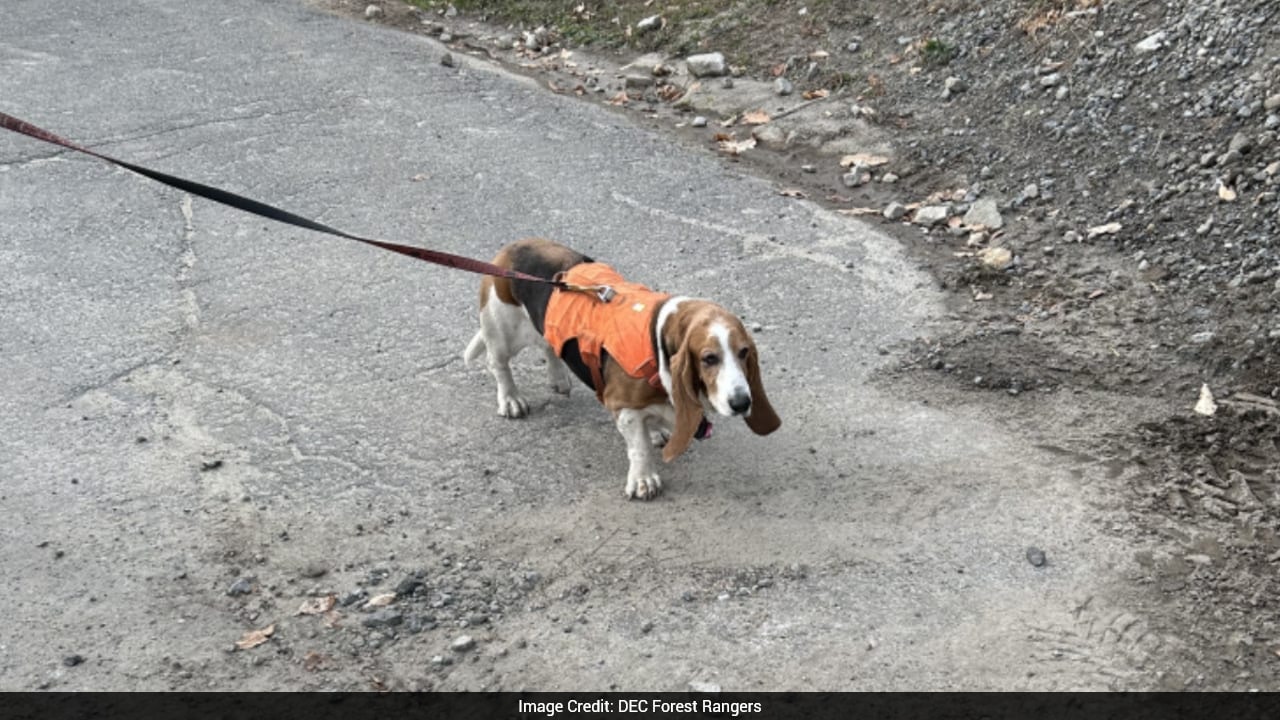
Everyone loves a heartwarming headline about a loyal pet saving its owner. When reports surfaced about a dog helping rescue a missing 69-year-old owner from a forest in New York, social media did what it always does. People shared the story, praised the animal's heroism, and moved on to the next feel-good clip.
They missed the real story. In similar updates, take a look at: The Quiet Arithmetic of a Ceasefire.
Having spent years studying wilderness search and rescue (SAR) operations and working alongside volunteer trail responders in the Northeast, I can tell you that a dog doesn't "call 911" through sheer magic. When a 69-year-old goes missing in dense New York woodland—whether in the Adirondacks, the Catskills, or the state forests of the Southern Tier—survival comes down to cold physiology, canine pack instincts, and how quickly human searchers read the terrain.
If you hike with a dog, or if you have older family members who walk wooded trails alone, understanding what actually happens during these rescues could save a life. NBC News has also covered this important issue in extensive detail.
Why Dogs Stay When Owners Get Lost in New York Forests
Most people assume a dog stays with a lost or injured owner out of pure, movie-style devotion. The reality is both simpler and more fascinating.
Domestic dogs retain deep social-pack wiring. When an owner stops moving—because of a fall, sudden disorientation, or hypothermia—a dog's instinct isn't to sprint miles back to a trailhead for help. In fact, dogs almost never "go get help" on their own unless specifically trained for search work, like an avalanche or wilderness air-scenting dog.
Instead, they anchor.
They stay within a tight perimeter around their person. That behavioral quirk is actually what saves lives. When New York State Department of Environmental Conservation (DEC) Forest Rangers or local sheriff's deputies deploy into thick timber, a stationary dog becomes a massive acoustic and visual beacon.
Think about the dense undergrowth in a typical New York state forest. Hemlock stands, mountain laurel, and fallen timber absorb sound at an alarming rate. A 69-year-old experiencing mild hypothermia or exhaustion often loses the ability to shout loudly. Their voice drops to a raspy whisper long before they lose consciousness.
A dog, however, reacts to approaching footsteps, breaking twigs, and unfamiliar voices from hundreds of yards away. Barking cuts through forest canopy far better than a weakened human voice. Even when a dog doesn't bark, rescuers tracking with thermal drones or ground teams often spot the animal's movement before they ever see a person lying in the leaf litter.
The Silent Danger Facing Older Hikers in the Northeast
Let's talk honestly about the demographics of wilderness rescues. According to annual incident reports published by the New York State Department of Environmental Conservation, a massive percentage of woodland search operations involve day hikers—not hardcore backcountry mountaineers.
People over 60 represent one of the fastest-growing groups on state trails. That's a great thing for public health, honestly, until a routine afternoon walk goes sideways.
Here is where things go wrong fast.
- Rapid temperature drops under forest canopy: Even in late spring or early autumn, temperatures in wooded New York valleys plummet the second the sun dips behind a ridge. Damp ground pulls heat out of a human body 25 times faster than cold air.
- The illusion of familiarity: Many older hikers get lost in woods they have walked dozens of times. A downed tree forces a detour off a blazed trail. Twenty yards into the brush, every direction looks identical.
- Medication and hydration gaps: A two-hour walk turns into an eight-hour ordeal. Blood sugar crashes. Blood pressure medications wear off. Confusion sets in, causing the hiker to walk deeper into rough terrain instead of staying put.
When a 69-year-old becomes immobilized in these conditions, body heat retention becomes the immediate crisis. A medium or large dog pressed against a hiker's torso acts as a literal living furnace. Dogs run a normal resting body temperature between 101°F and 102.5°F—significantly warmer than a human's 98.6°F. That physical contact slows the onset of severe hypothermia just enough to buy search teams an extra two or three hours.
What Search Teams Actually Look For First
When someone fails to return from a walk in the woods, local law enforcement and DEC Forest Rangers follow a strict containment protocol. They don't just wander into the trees yelling a name.
First, they establish the Point Last Seen (PLS). Usually, that's a parked car at a trailhead or a backyard bordering state land.
Second, they look at the dog's profile. Search coordinators immediately ask family members specific questions about the animal. Is the dog wearing a reflective collar or a GPS tracker? Does it react aggressively to strangers, or will it approach calling voices? What breed is it, and how old is it?
Knowing a missing person has a dog completely changes search geometry.
Searchers listen specifically for barking patterns. A rhythmic, alarmed bark coming from a fixed drainage or ravine tells ground teams where to push through heavy brush. In several documented New York rescues, troopers and forest rangers followed distant barking off-trail, cutting straight through steep terrain they otherwise wouldn't have searched until hours later.
There's a catch, though. Sometimes a protective dog becomes a barrier when paramedics finally arrive. Exhausted, stressed animals often guard their incapacitated owners fiercely. Experienced rangers carry slip leads and high-value treats specifically to secure a protective pet so EMTs can safely treat the patient.
Common Mistakes Hikers Make With Dogs on the Trail
If you take your dog into the woods, relying on their instincts as your emergency plan is a terrible strategy. Dogs get injured too. They chase wildlife, step on sharp rocks, or get spooked by storms.
I've seen well-meaning owners make three recurring mistakes before heading into New York's woods:
- Letting dogs roam off-leash without recall: If you get disoriented and your dog bolts after a deer, you just lost your biggest survival advantage. Keep a sturdy leash or a hands-free waist belt clipped on when visibility drops or terrain gets steep.
- Skipping basic gear for a "short walk": Almost every rescue starts as a "quick 45-minute loop." Nobody packs a bivvy sack for a 45-minute walk. Yet throwing a pocket-sized Mylar emergency blanket, a whistle, and a charged battery bank into a jacket pocket weighs less than a smartphone.
- Leaving no itinerary behind: Telling one person exactly which trailhead you're parking at cuts search time in half. When rangers have to check six different access points across a county, critical daylight evaporates.
Practical Steps Before Your Next Wooded Walk
Don't let news stories about lost hikers scare you off the trails. Just tighten up your habits before you step under the tree line.
- Put a bright vest or bell on your dog: A neon orange vest makes your dog visible to hunters and search drones alike. A simple brass bear bell helps you keep track of them—and helps others hear you if you can't yell.
- Carry a pealess plastic whistle: Human vocal cords give out fast in cold air. Three sharp blasts on a whistle carry up to a mile and require almost zero energy.
- Share your live location before losing cell service: Drop a pin at the trailhead and text it to a family member before you start walking. Even if signal dies ten minutes up the trail, searchers know your exact starting coordinates.
- Teach your dog a reliable "stay close" cue: Reward your dog consistently for checking back in with you every few minutes on the trail. When a crisis hits, a dog conditioned to stay within arm's reach won't panic and run.
A loyal dog can buy you precious time in the dark, keep you warm when the temperature drops, and lead forest rangers straight to your side. Give them—and yourself—the basic preparation needed to make sure that rescue actually happens.