Diplomats love big speeches. They hand out glossy press releases about mutual trust and shared prosperity, shake hands for the cameras, and fly home.
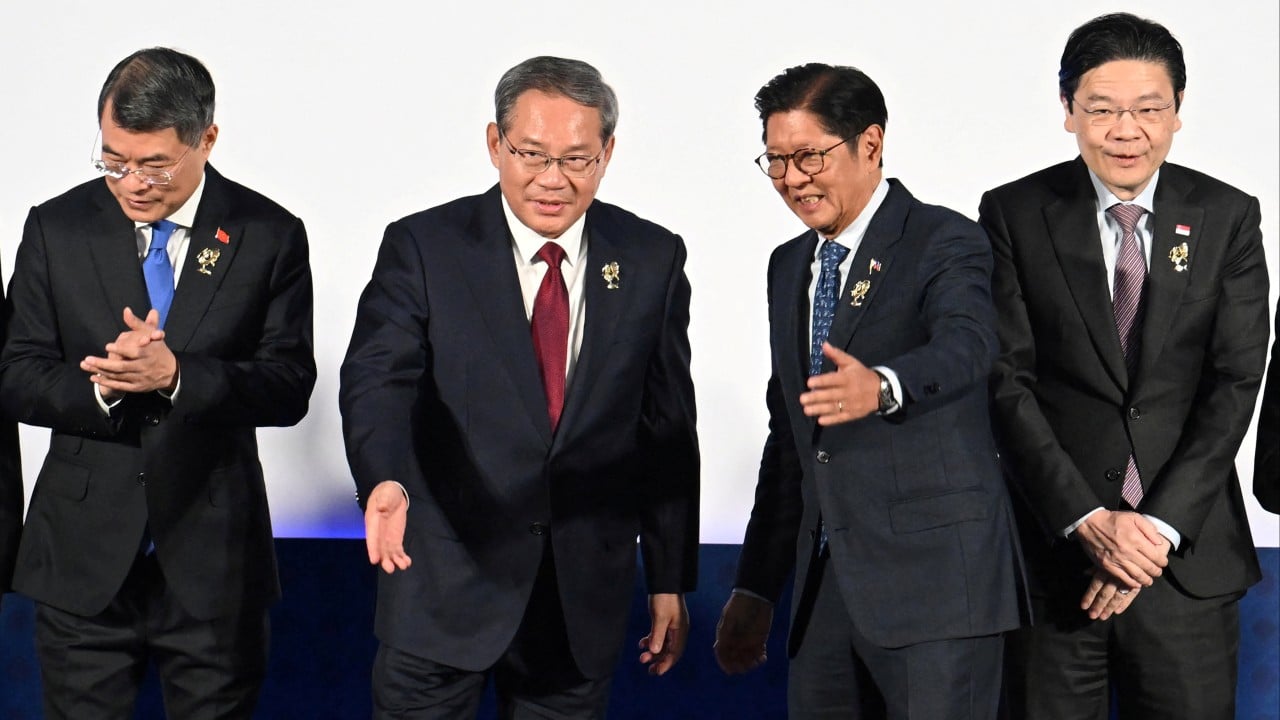
When Chinese Premier Li Qiang took the stage at the ASEAN summit in Manila, the headlines focused on his pledge for deeper artificial intelligence and trade cooperation with Southeast Asia. Most coverage treated it like standard diplomatic choreography. That's a mistake. If you actually look at what's happening on the ground in supply chains from Vietnam to Indonesia, this isn't just polite summit talk. It's a calculated response to tightening Western tech restrictions and a race to lock in Southeast Asia's digital infrastructure before Washington or Brussels can offer a cheaper alternative.
You can't separate China's AI push in ASEAN from its traditional trade dominance. They're two sides of the exact same coin.
Why Manila Matters Right Now
The Philippines hosting the ASEAN meetings adds an obvious layer of friction. Manila and Beijing have spent years locked in tense maritime disputes in the South China Sea, making any warm economic rhetoric from a Chinese premier stand out sharply against the regional security backdrop.
Yet economics rarely waits for geopolitics to cool down. China has remained ASEAN's largest trading partner for over a decade, and the ten-member bloc is likewise China's top trading partner. Bilateral trade routinely clears hundreds of billions of dollars annually, anchored by the Regional Comprehensive Economic Partnership (RCEP) and ongoing upgrades to the ASEAN-China Free Trade Area.
Li Qiang isn't walking into Manila asking for favors. He's walking in with massive leverage, manufacturing scale, and a clear pitch to Southeast Asian leaders who care deeply about economic growth.
The Real Reason Behind the AI Push
Why did AI share top billing with traditional trade? Because hardware and traditional manufacturing are no longer enough to keep supply chains sticky.
Think about how industrial ecosystems work. If a factory in Malaysia or Thailand runs on Chinese cloud architecture, uses Chinese industrial automation software, and relies on Chinese large language models tuned for local languages, switching suppliers later becomes painfully expensive. It creates technical lock-in.
Western tech giants like Microsoft, Google, and Amazon have poured billions into Southeast Asian data centers over the past few years. Beijing watched that capital flow and realized it risked losing the software and compute layer of a region where it already owns the physical supply chain. Li's pitch in Manila is about closing that gap fast.
What Deeper Trade Cooperation Actually Looks Like
When officials talk about upgrading trade ties, they usually mean three specific bottlenecks that businesses deal with every day.
First, customs clearance and digital trade paperwork. Moving components across borders between Shenzhen, Hanoi, and Penang still involves too much friction. Standardizing electronic certificates of origin and cross-border e-commerce rules saves exporters real money.
Second, green energy and electric vehicle supply chains. China has massive industrial capacity in solar panels, batteries, and EVs—and faces steep tariffs in both the United States and the European Union. Southeast Asia offers both a growing consumer market and an assembly hub.
Third, agricultural imports. ASEAN countries want easier access for tropical fruits, seafood, and raw commodities into China's massive consumer market. Beijing regularly uses agricultural market access as a practical carrot during regional summits.
Here's what most commentators miss about this trade dynamic. Southeast Asian governments aren't naive. They know China needs export markets to offset domestic economic pressures, and they're using that urgency to demand actual technology transfer and local job creation rather than just accepting cheap finished goods.
The Infrastructure Reality on the Ground
If you've ever worked with cross-border logistics or tech procurement in Southeast Asia, you know policy announcements only matter if companies actually adopt the tools.
Chinese tech firms—Alibaba Cloud, Huawei, Tencent, and ByteDance—haven't waited for summit communiqués to build in ASEAN. Huawei has spent years building 5G networks and cloud regions across Thailand, Indonesia, and Malaysia, often undercutting Western competitors on price and offering flexible financing. Alibaba Cloud has localized data centers across the region and actively courts Southeast Asian startups with free credits and engineering support.
Li Qiang's remarks in Manila give top-level political backing to deals these companies are already pitching.
Compute, Data, and Standards
AI cooperation isn't just about chatbots. It comes down to three unglamorous things:
- Cross-border data flows: Countries like Vietnam and Indonesia have strict data localization laws. Negotiating trusted data corridors lets Chinese firms train models and run enterprise services without violating local rules.
- Technical standards: Whoever writes the rules for AI governance, smart ports, and digital payments shapes how regional commerce operates for the next twenty years.
- Talent pipelines: Beijing consistently bundles scholarships, joint AI labs, and technical training programs into its diplomatic packages. Training a generation of ASEAN engineers on Chinese AI frameworks pays dividends for decades.
The Catch for ASEAN Economies
It's easy to look at incoming capital and cheap tech and call it an automatic win. It isn't.
Southeast Asian policymakers face three serious trade-offs when they lean closer into Chinese AI and trade frameworks:
- The U.S. compliance trap. Washington has steadily tightened export controls on advanced semiconductors and AI compute. If a data center in Malaysia or Singapore uses restricted chips or becomes a backdoor for Chinese firms to access banned compute, it risks U.S. sanctions or secondary restrictions. Companies operating in ASEAN have to walk a tightrope between American hardware rules and Chinese software ecosystems.
- Local industry hollowing. Cheap Chinese industrial goods and subsidized e-commerce exports have already pressured local manufacturers in Indonesia and Thailand. Adding AI-driven supply chain efficiency can make Chinese imports even more competitive, squeezing domestic small businesses unless governments enforce strict local-content rules.
- Cybersecurity and surveillance concerns. Enterprise AI and smart-city infrastructure touch sensitive national data. Governments in Manila, Jakarta, and Hanoi face constant domestic and international scrutiny over who controls the servers and who gets access to the underlying data.
ASEAN's classic strategy is hedging. Take the infrastructure financing and market access from Beijing, take the semiconductor investments and security guarantees from Washington, and refuse to pick a side.
Common Misconceptions About China-ASEAN Tech Ties
A lot of Western analysis treats Southeast Asia as a passive chessboard where Washington and Beijing move pieces around. That view is outdated and frankly condescending.
ASEAN governments actively pit superpowers against each other to get better terms. When Indonesia pushed for nickel processing plants, it used Chinese capital and refining tech to build an onshore battery industry that now supplies global automakers. When Malaysia positioned itself as a neutral semiconductor packaging hub, it attracted billions from both U.S. chipmakers and Chinese tech firms.
Another myth is that Chinese AI in Southeast Asia is purely a copy of Silicon Valley. In reality, Chinese firms have aggressively built open-weight models and specialized enterprise tools for manufacturing, logistics, and fintech—areas that match ASEAN's immediate economic needs far better than consumer-facing software.
What Businesses and Investors Should Do Now
If you operate a business, manage supply chains, or invest in Southeast Asia, don't treat the Manila summit as background noise.
Audit your vendor dependencies immediately. Map out where your cloud hosting, logistics software, and hardware components originate, because diverging U.S. and Chinese tech standards will force bifurcated setups in sensitive sectors. If you're selling into ASEAN, look closely at cross-border digital trade frameworks under RCEP—tariff reductions and simplified customs rules are creating real margin advantages for companies that actually file the right origin paperwork. Finally, watch how national regulators in Indonesia, Thailand, and the Philippines implement local AI governance rules over the next twelve months, because those regulatory frameworks will decide which tech ecosystems win the region's enterprise contracts.