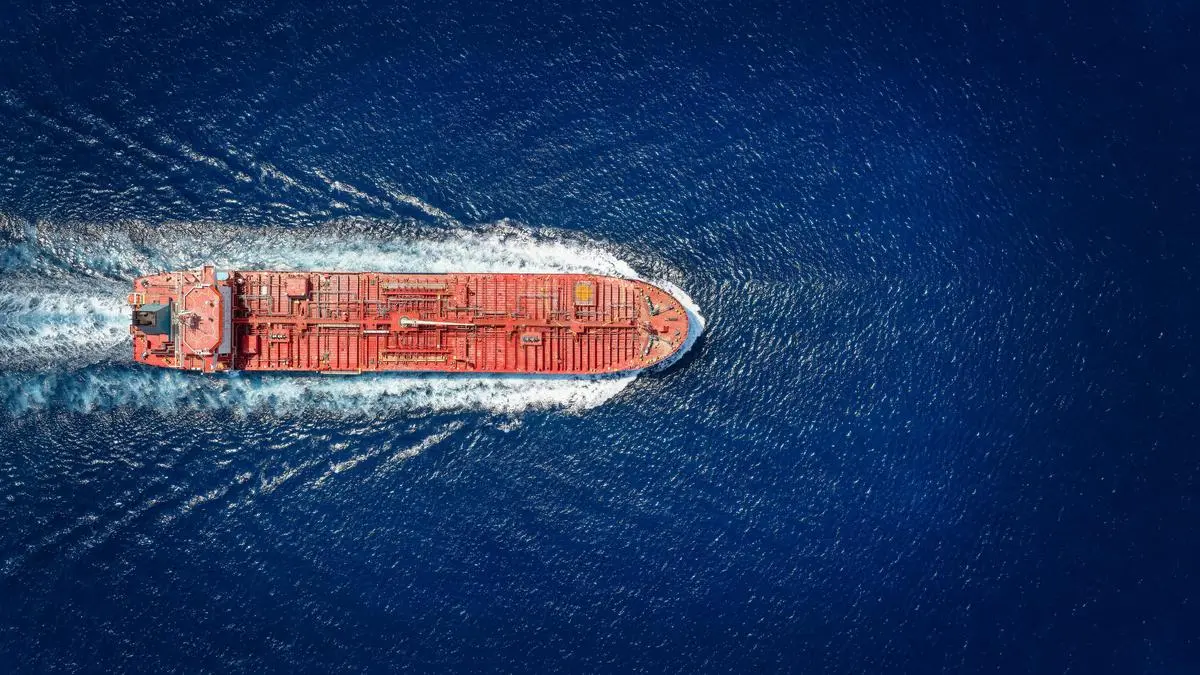
Geopolitical analysts love a good ghost story, and nothing spooks the energy markets quite like a supertanker slipping through the Strait of Hormuz. Whenever an Very Large Crude Carrier (VLCC) packed with two million barrels of Iraqi Basrah Medium heads out into the Arabian Sea during diplomatic negotiations, the financial press sounds the alarm. They track the transponders. They interview risk consultants. They imply that the global economy is one rogue drone away from collapse.
It is a exhausting, predictable cycle. It is also entirely wrong.
The lazy consensus across financial desks is that these physical ship movements are reliable indicators of geopolitical leverage or imminent supply shocks. The media treats a tanker's departure as a chess move in a high-stakes game between OPEC factions, Western diplomats, and regional powers.
They are misreading the map.
The movement of Iraqi crude out of the Persian Gulf is not a barometer of political tension. It is the boring, automated consequence of inflexible infrastructure, rigid long-term supply contracts, and clearing banking credits. If you are trading oil or shaping corporate strategy based on the daily shipping manifest of the Persian Gulf, you are chasing ghosts while missing the real structural shifts in global energy finance.
The Physical Myth: Why Ships Can't Stop
The core mistake mainstream commentators make is assuming that oil infrastructure possesses operational agility. They believe that a state-owned marketing entity like Iraq's SOMO (State Organization for Marketing of Oil) can simply pause or accelerate loadings to signal displeasure or compliance during international talks.
Having spent two decades analyzing maritime logistics and crude supply chains, I have watched trading desks lose millions trying to read the tea leaves of tanker schedules. Here is the reality: a supertanker is not a sports car. You do not turn it around because a diplomatic meeting in Geneva went sideways.
Consider the mechanics of the Al Basrah Oil Terminal (ABOT). Iraq's southern export infrastructure relies on a continuous, high-pressure flow from fields like Rumaila and West Qurna.
- Storage Constraints: Onshore storage capacity at Al Fao is finite and frequently bottlenecked. If you stop loading VLCCs, the oil has nowhere to go.
- Upstream Disaster: Shutting in production at the wellhead to adjust for a political narrative damages reservoir pressure. It can take months and millions of dollars to recover that flow.
- Demurrage Penalties: Chartering a VLCC costs tens of thousands of dollars per day. Leaving a vessel idling off the coast because negotiations are delicate is a financial non-starter for any rational state enterprise.
The ship leaves because the tank is full and the contract demands it. The idea that a single tanker exiting the Gulf represents a shift in regional dominance is a narrative invented by journalists who have never looked at an infrastructure blueprint.
Dismantling the PAA: What the Market Constantly Misunderstands
When retail investors and supply chain executives look at regional energy data, they inevitably ask the wrong questions. Let us dismantle the flawed premises that dominate the industry.
Is a tanker bottleneck in the Persian Gulf a sign of imminent war?
No. Ninety percent of the time, congestion at the Strait of Hormuz or around the southern Iraqi terminals is caused by weather delays, mechanical failure at the loading buoys, or payment processing delays through the Central Bank of Iraq. War scares sell newsletters, but bad bureaucratic paperwork is what actually stops the flow of global energy.
Does increased Iraqi export volume mean OPEC+ compliance is failing?
Not necessarily. OPEC+ quotas focus on production, not strictly exports. Iraq has internal consumption needs, power generation requirements, and complex domestic refining realities. Furthermore, tracking visible waterborne exports ignores the opaque flow of crude via cross-border trucking or blending operations that happen far away from satellite tracking systems. Relying on visual tanker tracking to determine quota compliance is like trying to calculate a corporation's net worth by counting the delivery trucks leaving their warehouse.
Should businesses hedge supply chains based on Gulf transit headlines?
If you hedge your fuel exposure based on breaking news alerts about Persian Gulf transit, you are donating your margin to Wall Street market makers. The paper market prices in these phantom risks long before the physical ship even clears the premium insurance zones.
The Real Leverage Is Written in Yuan and SDRs
If you want to see where the real power plays are happening, look away from the water. Stop tracking the hulls and start tracking the settlement currency.
The true disruption in Gulf energy logistics is the quiet fragmentation of the petrodollar. While the media watches an Iraqi tanker sail past Iran, they ignore the fact that the financial rails underneath that transaction are shifting. The real story is the increasing volume of bilateral energy trade settled outside the Western banking apparatus.
+------------------------+----------------------------------+----------------------------------+
| Feature                | Traditional Petrodollar System   | Emerging Bilateral Clearing      |
+------------------------+----------------------------------+----------------------------------+
| Settlement Mechanism   | SWIFT / US Dollar                | Local Currencies / CIPS / Yuan   |
| Risk Profile           | Vulnerable to Treasury Sanctions | High Counterparty Credit Risk    |
| Transparency           | High (Publicly Audited Banks)    | Low (Opaque Sovereign Ledgers)   |
+------------------------+----------------------------------+----------------------------------+
When Iraq explores settling trade with non-Western partners using alternative currencies, it fundamentally alters global liquidity. A tanker moving through the Gulf within the traditional dollar framework is just another Tuesday. A tanker moving under a sovereign barter arrangement or a non-dollar clearing system is an existential threat to Western financial hegemony. Yet, the mainstream press focuses entirely on the physical location of the steel hull.
The Downside of Disregarding the Narrative
To be entirely fair, ignoring the mainstream geopolitical narrative comes with its own set of risks. Even if the panic surrounding a tanker's movement is completely manufactured, market psychology is a real force.
Algorithms programmed to scrape news headlines for keywords like "Persian Gulf," "Iraqi Crude," and "Strait of Hormuz" will trigger automated buying sprees. This can spike the price of Brent crude by two to three dollars in a matter of minutes.
If you are a physical buyer of fuel or a corporate treasurer, you cannot completely ignore these narrative-driven spikes. You have to endure the irrational volatility created by traders who still believe the physical myth. The trick is recognizing that the spike is an artificial liquidity event, not a structural shift in supply.
Stop Reading the Shipping Manifests
The obsession with real-time satellite tracking of tankers is a symptom of data overabundance and analytical scarcity. We have more access to information than ever before, which makes us vulnerable to overinterpreting minor operational events.
Imagine a scenario where every time an international freight train crossed a border in Europe, the financial markets speculated on the stability of the European Union. That is exactly what we do with oil tankers in the Middle East. It is unsustainable, inaccurate, and unprofitable.
The next time you see a breaking news alert about a supertanker exiting the Gulf amidst tense international talks, do not log into your brokerage account to buy energy futures. Do not revise your corporate supply chain risk assessment.
Turn off the television. Open the balance sheets of the major national oil companies. Look at the sovereign debt yields of the importing nations. Look at the regional inventory data in Rotterdam, Cushing, and Qingdao.
The physical ship is just a delivery truck on a wet highway. The money, the power, and the structural shifts are happening entirely in the dark, far away from the cameras.